Categories
It Happened to Me Tampa Bay The Current Situation

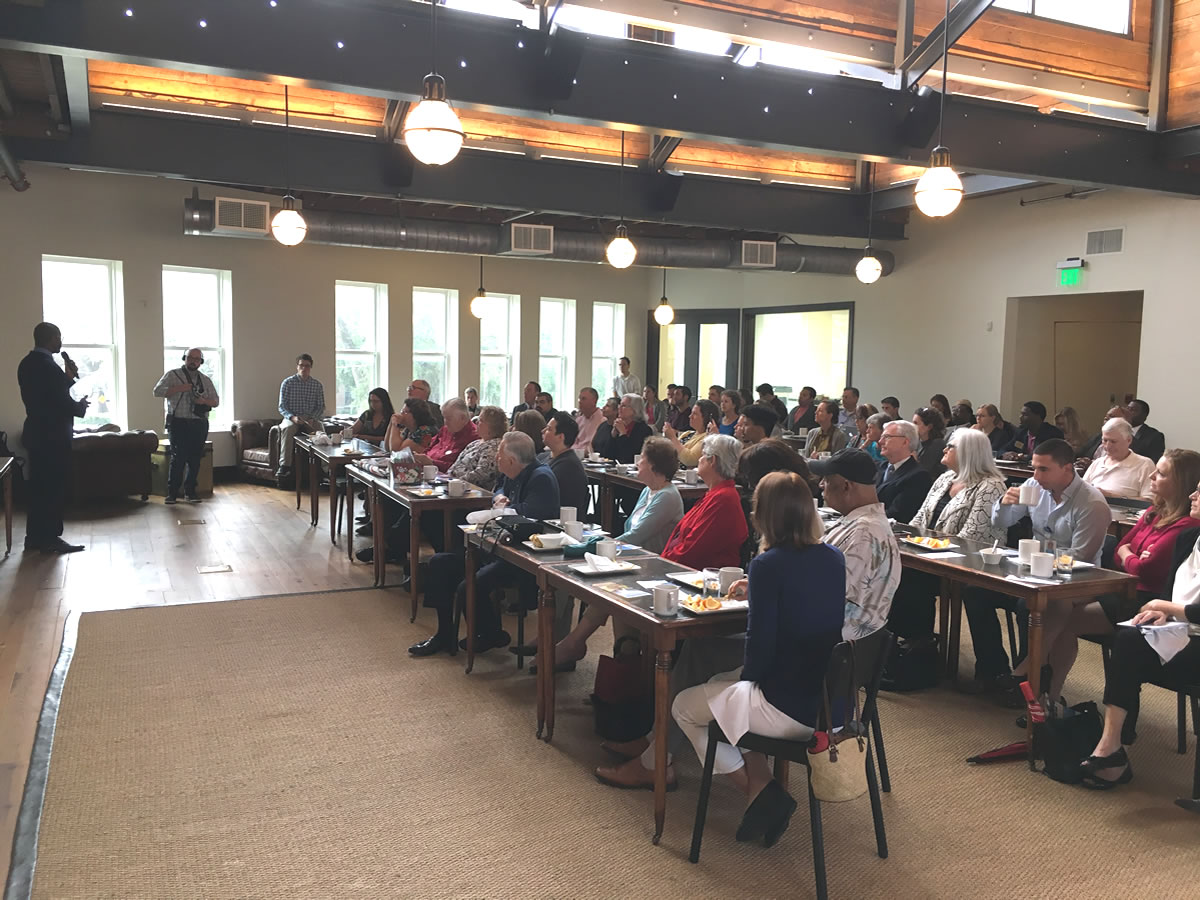
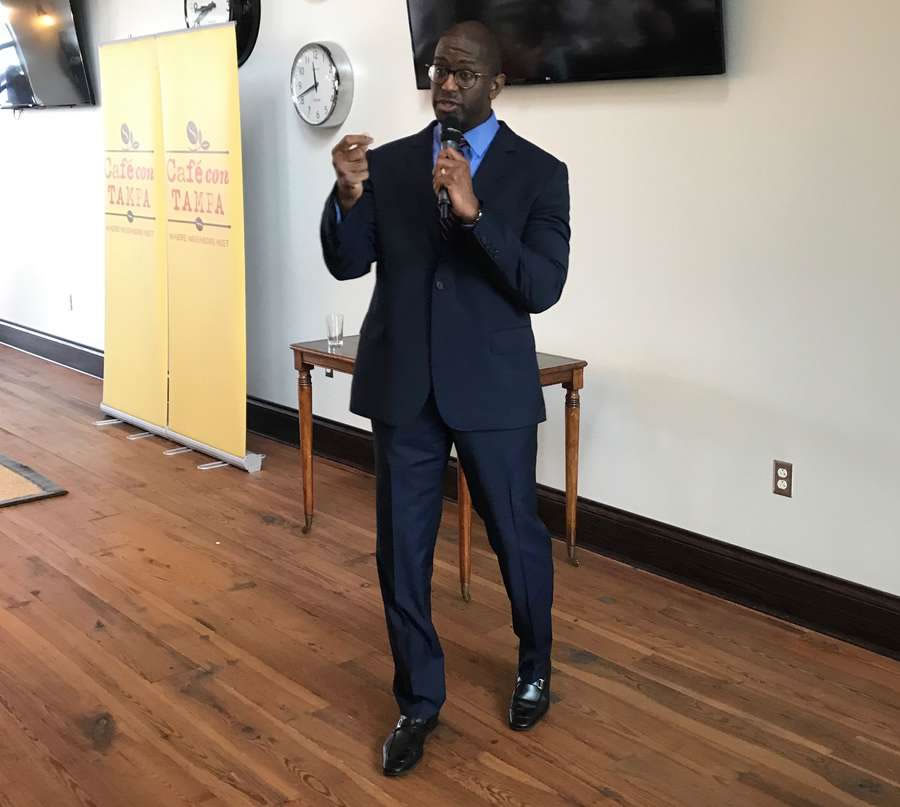
Tallahassee mayor and Florida gubernatorial candidate Andrew Gillum at Café con Tampa

Photo by Tampa Bay Times. Click to see the source.

Someday, perhaps a decade from now, when we’re all looking back at how far the Tampa Bay area has come, we’ll look back and remark at the key role that Café con Tampa played. Every Friday from 8:00 a.m. to 9:00 a.m. in the Oxford Exchange’s Commerce Club, Tampa’s most active, engaged, involved, and well-dressed citizens gather to hear important topics given by interesting speakers while enjoying a delicious breakfast in beautiful surroundings.

Friday’s speaker at Café con Tampa was Tallahassee mayor Andrew Gillum, who’s campaigning in the Democratic primary and aiming to become Florida’s next governor.
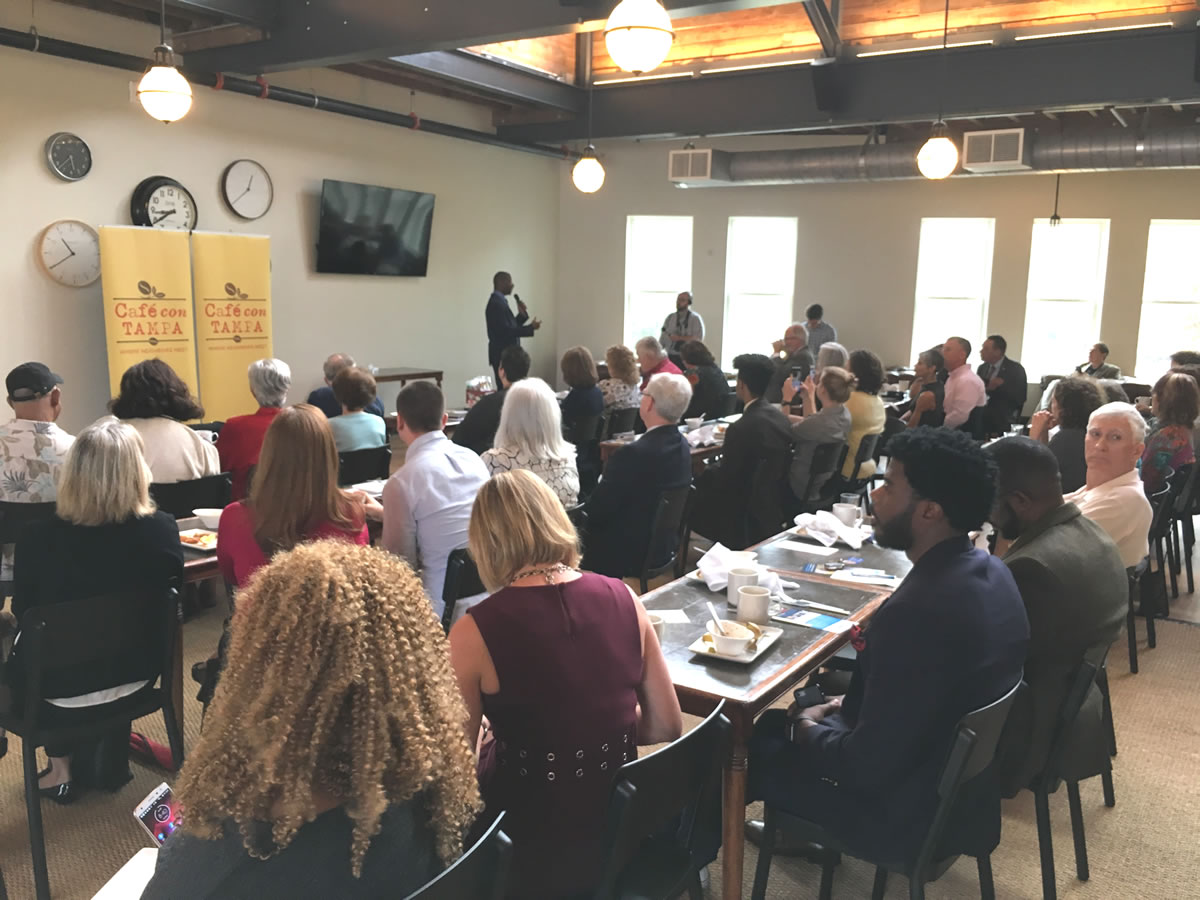
Photo by Yours Truly. Click to see at full size.

It’s been a while since I’ve had a chance to attend Café con Tampa, as work and my speaking and conference schedule have kept me busy. This was the first one I’d been able to attend in weeks. It was good to be back.

Traffic and a shortage of parking spaces (there’s a lot of construction around Oxford Exchange) meant that I missed the first twenty minutes of Gillum’s appearance. As I entered and paid my admission — $12 well spent, in my opinion — I was told “You’re in time for Q&A…the best part!”
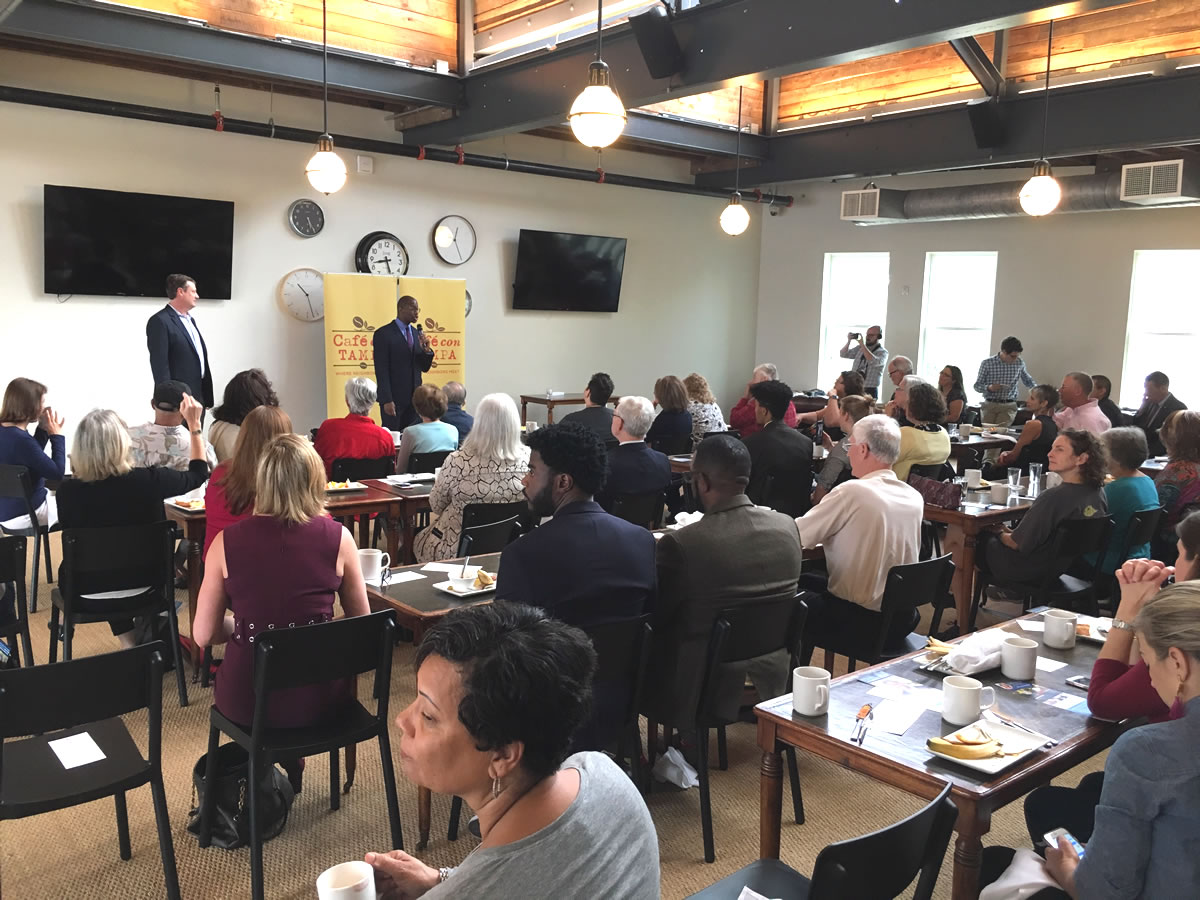
Photo by Yours Truly. Click to see at full size.

I walked in just in time to catch a rather aggrieved older gentleman asking where Gillum got the notion that the law preventing former felons from voting even though they have served their time in prison is a relic from the days of Jim Crow. Gillum, who’s probably no stranger to this sort of question, explained the true intent of this kind of voter disenfranchisement with great aplomb and considerable charm.
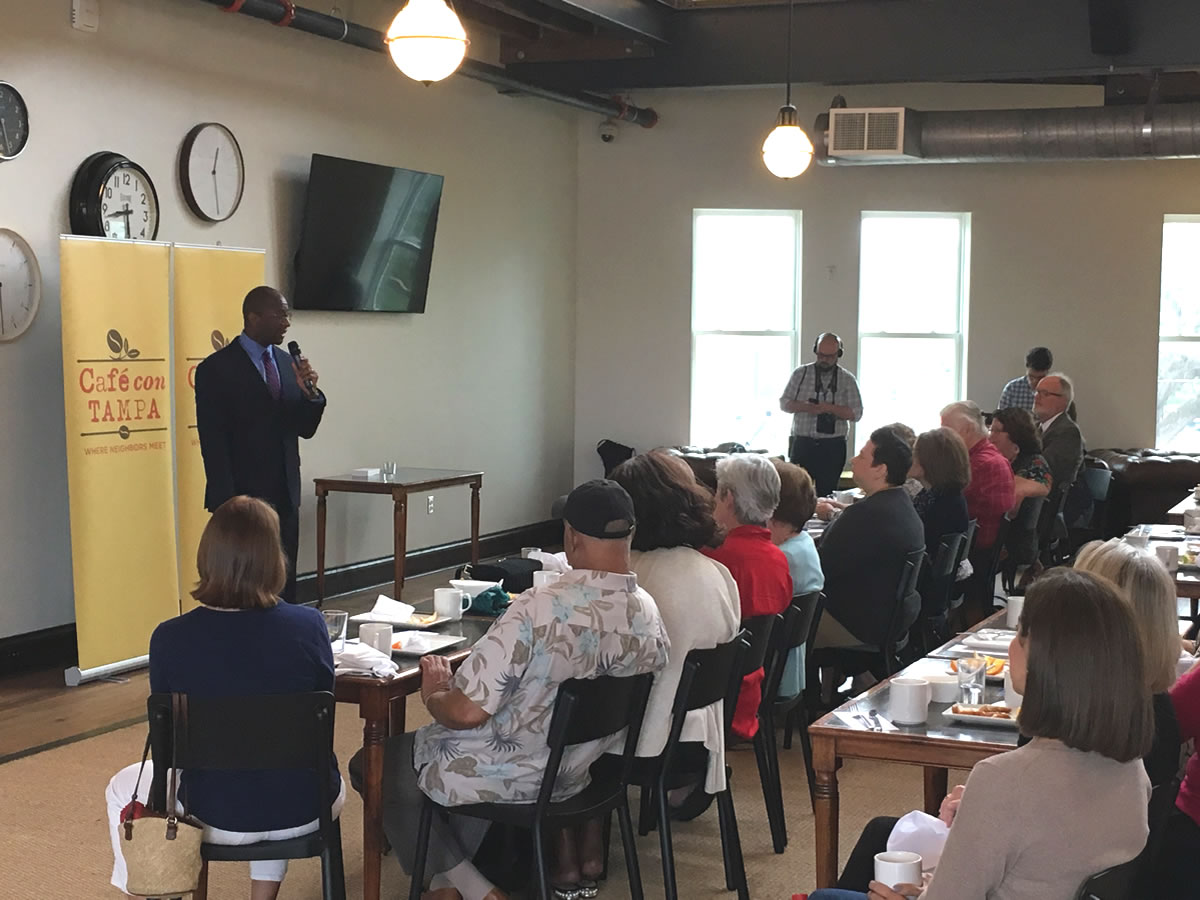
Photo by Yours Truly. Click to see at full size.

Among the other topics discussed were:

Photo by Yours Truly. Click to see at full size.

Near the end of his session, Gillum talked about the traditional greeting of the Masai people of southern Kenya and northern TanzaniaKasserian engeri?, which translates as “And how are the children?” He pointed out how that greeting underscores the high value that the Masai assigned to the well-being of children, and how much better we all could be if we adopted the same attitude.

Note: There’s a little more to the greeting “And how are the children?”. According to this 2012 Guardian article, the typical Masai greeting is sopa, which translates as “Hello”, and it’s the start of a long greeting process which can include “How is the homestead?”, “How is the weather?”, “How are the cows?”, and “How are the children?”. This isn’t all too different from conversations that any one of us may have had here in North America, where the question “And how’s your family” is likely to come up. Still, the fact that the use of “How are the children?” as a greeting is surprising enough to be a memorable rhetorical device while “How’s business?” isn’t illustrates where our priorities lie.
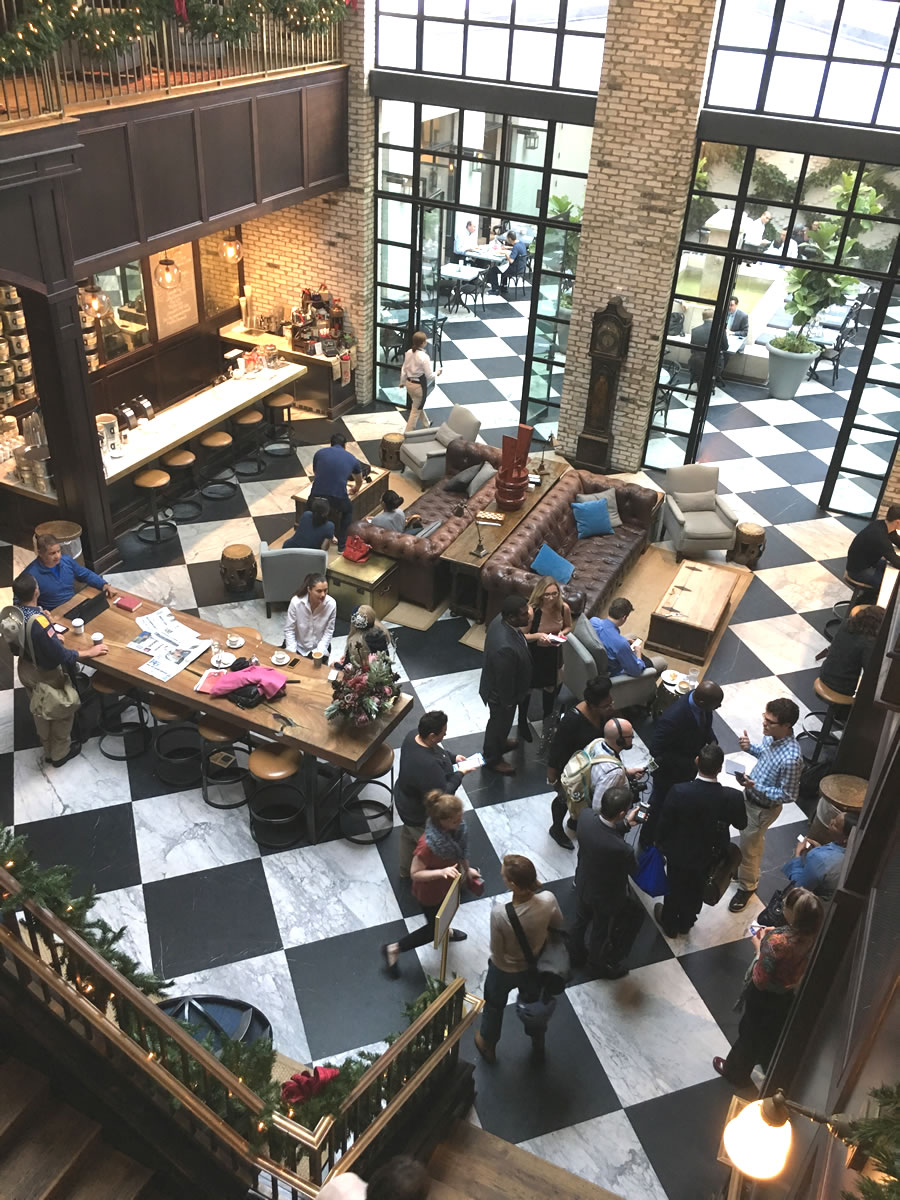
Photo by Yours Truly. Click to see at full size.

As with most Café con Tampa gatherings, there were more questions than time for them. The questions continued in the atrium, with Gillum surrounded by all manner of recording devices:

Photo by Yours Truly. Click to see at full size.

I went down to the atrium to hear the questions they were asking Gillum, and in the process met with two gentlemen from St. Petersburg’s ACT (Arts Conservatory for Teens): Herbert Murphy and Alex Harris, who spoke at Café con Tampa a couple of weeks ago. They saw the accordion — which I bring to events like this because it starts conversations — and we got into a great conversation about music, technology, and where the two intersect. Herbert and I even talked about having me do a presentation with their students, and I’d be more than happy to take them up on that offer. If you want to meet interesting people in Tampa Bay, and possibly collaborate with them and start something potentially great, you should check out Café con Tampa.

Café con Tampa is a weekly gathering where people interested in the issues that affect Tampa Bay and the world beyond meet to learn and share ideas with interesting, entertaining (and sometimes infuriating) guest speakers. It takes place every Friday between 8:00 and 9:00 a.m. in the wonderful setting of Oxford Exchange, a combination of restaurant, book store, gift shop, co-working space, design studio, event venue, and one of the best “third places” I’ve ever set foot in. It’s attended by an interesting audience that’s often a mix of movers and shakers from the worlds of arts, business, academia, and government, and put together by local heroes Del Acosta and Bill Carlson, President of the communciations agency Tucker/Hall. Admission is $12.00, and it not only lets you into the event, but also gets you Oxford Exchange’s delicious breakfast spread. If you want to see interesting presentations and have great conversations with some of the area’s movers, shakers, and idea-makers — myself included — you should attend Café con Tampa!

Here are Café con Tampa presentations that I’ve written about:


Categories
Accordion, Instrument of the Gods It Happened to Me

Hurricane Irma report #6: When my Android phone (and its FM radio) proved clearly more useful than my iPhone

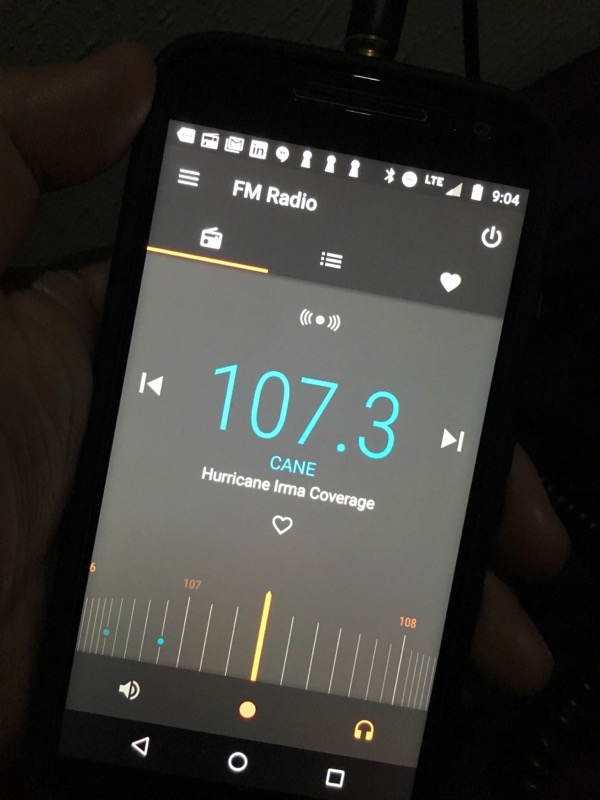
Moto G4 Android phone displaying its FM Radio app. The screen shows that the radio is tuned to 107.3, and the readout below the frequency reads 'CANE - Hurricane Irma coverage.
A photo I took during Hurricane Irma, which shows my Android phone with the FM radio app on.

When Hurricane Irma closed in on the Tampa Bay area Sunday evening, the power went out at around 7:30, and soon afterward, cellular service became spotty and then disappeared entirely. However, we weren’t cut off from information about Irma because we fell back on a 1930s technology, FM radio, which is built into every smartphone, and accessible on many Android phones (including mine).

In the age of the smartphone, you might think your Android or iPhone can replace a radio receiver as a lifeline during a disaster. After all, while a radio receiver is audio-only and one-way, your smartphone can both send and receive text, audio, picture, video, and location information — but only if the cellular towers nearby are up and running. If the nearby tower is damaged, loses power, or gets overloaded, you’ll be cut off and left with the dreaded “No Service” indicator on your phone.

Consult just about any disaster preparation guide for a checklist of “must-haves”, and one of the items on that checklist will be a battery-powered radio. When phone and internet service fails, you can fall back on radio as long as you have batteries. (Better still, if you have a radio with a hand-crank generator, you don’t even need batteries.)

We have a nearly century-long tradition of radio stations providing vital information during disasters of all kinds. In the case of Irma, they did one better and teamed up with TV newsrooms. During the storm, many radio stations in the Tampa area teamed up with TV stations to provide continuous coverage of and information about the storm, such as where it was, how quickly and in which direction it was moving, and what to do. It was a valuable resource for many people, and it may have even saved a few lives.

You may think that you don’t own a portable FM radio, but chances are that you do. It’s just hidden away in your smartphone.

Just about every mobile phone maker — even the big ones who manufacture their own processor and graphics chips, such as Apple and Samsung — gets their cellular modem chipsets from a single manufacturer: Qualcomm. In fact, Qualcomm pretty much has a monopoly on these chipsets, which in addition to sending and receiving cellular signals, have an FM receiver baked in. You wouldn’t know it in the U.S., as fewer than half the smartphones have the FM receiver enabled, and they’re all Androids.

My Android phone is a Moto G4, and in addition to having an enabled FM receiver, it also comes “out of the box” with the FM Radio app, which simply provides a user interface for the FM radio capability. When the power went out in our part of Tampa on Sunday at around 7:30 p.m. and the cell service disappeared shortly after, I fired up the FM Radio app and we had updates on the storm’s progress all night long. In fact, I also used the phone’s FM radio and all day the next day — and there was still battery power to spare and the end. That’s because FM radio uses considerably less power than just about any smartphone function (and it uses no data at all!).


My iPhone doesn’t expose its FM radio capability, and it was useless as a source of updates until the cellular connectivity improved the next day, well after the storm had passed. I can’t say for certain, but I’ll just blame Apple designer Jony Ive, who’s never met a much-loved traditional feature that he didn’t like to remove. I get the feeling that FM radio is too distastefully old school to include as an iPhone capability, even though it’s already there.

While I experienced the usefulness of FM radio in smartphones during an emergency firsthand for the first time during Irma, it’s been clear to broadcasters and public safety officials — FEMA (the Federal Emergency Management Agency) included (see the video above) — that there are great benefits to unleashing this capability. The National Association of Broadcasters (NAB) has been lobbying to require the FM radio capability to be enabled in smartphones, and even Ajit Pai, chairman of the Federal Communications Commission (FCC) has been advocating for this (but he won’t go beyond advocacy). At an NAB event in February, he said:

“It seems odd that every day we hear about a new smartphone app that lets you do something innovative, yet these modern-day mobile miracles don’t enable a key function offered by a 1982 Sony Walkman.”

In Mexico, where there’s a strong radio culture (and a rise in non-commercial and community radio over the past decade), the Federal Telecommunications Institute (CIRT) approved a new rule in April requiring all smartphone manufacturers to enable the FM receiver. CIRT’s rationale was that in emergencies and disasters, having the FM capability would make it possible for people to get alerts and vital information when cellular networks failed. Mexico is the first country to pass such a law, and it’s hoped that other countries will follow suit.

Find out more

The go-to place for the movement to make the FM radio capability that’s already in our phones, waiting to be unleashed, is FreeRadioOnMyPhone.org. It has the latest info on the movement to enable FM radio on smartphones, including:

  • How to get FM radio working on your Android phone
  • How to contact Apple to ask them to enable FM radio listening on their phones
  • How to contact the FCC and ask them to require FM radio be made available on phones
  • The latest new about the movement

You may also find these articles of interest:

And finally, an article that needs to be pointed out because it’s dead wrong (and unsurprisingly, published by 2010-era Business Insider, from the time they were almost stealing content): Mandatory FM Radio: A Dumb Idea For Smart Phones, in which its clueless author says that it’s just a move to prop up the dying terrestrial radio industry.

As with other articles in this series, I’m including an appropriate music video:

Click here to see all articles tagged with “Hurricane Irma Report”.

This article also appears in Global Nerdy.

Categories
Geek It Happened to Me

Would you be able to perform this simple household repair?

Between getting ready for Hurricane Irma, which is headed our way in a couple of days and is threatening to become a category 5 storm

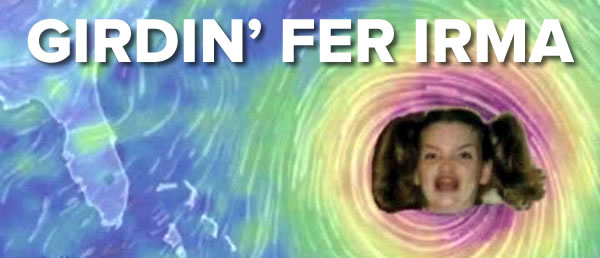
Girdin’ for Irma: Hurricane map with the 'ermagehrd' girl in the eye of the storm.

…and doing some “round tuit” household chores (“I’ll do it when I get a round tuit”) on Labor Day Monday…

A round wooden token with the word 'TUIT' on it.

…it was time to gather up the flashlights at home.

Anitra ran to get me one, and came back annoyed.

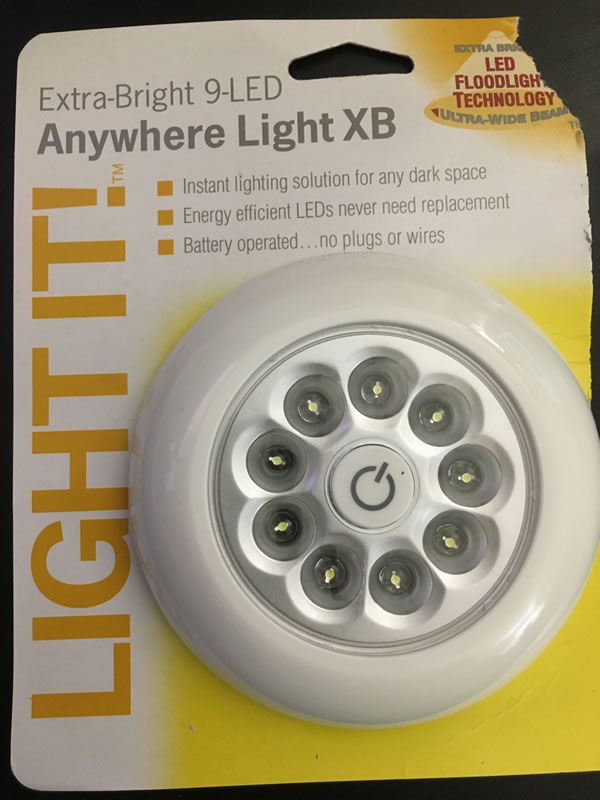
Our "Light It!" brand 9-led hand lamp, with its packaging.
The flashlight in question.

“I bought this ages ago,” she said, “and it was still in the packaging. The battery compartment’s all screwed up!

“Screwed up how?” I asked.

She opened up the back of the flashlight to show me what she meant. This is what I saw:

You had one job!: The battery terminals of the lamp before Joey fixed them. One battery receptacle has a positive and negative terminal, another has 2 positive terminals, and another has 2 negative terminals.
Click the photo to see it at full size.

In the photo above, the leftmost battery receptacle is set up properly. It has a negative terminal (the one with a spring) and a positive terminal.

The other two terminals are a carnival of half-assery:

  • One of them has two positive terminals, and
  • the other has two negative terminals.

Wow,” I said. “That is screwed up. I should submit this to the You Had One Job Twitter account.”

A diagram of a simple circuit for a light featuring battery, bulb, switch, and the wire connecting them.

From an electric circuit point of view, this isn’t really a problem. As long as the terminals can make contact with the battery, current will flow, and the bulbs will light up.

The problem is more about fit:

  • The battery fit in the receptacle with the two positive terminals is too loose, and the battery won’t make contact with the terminals.
  • The battery won’t fit into the receptacle with the two negative terminals — two springs takes up too much space.

“I can’t even return it!” Anitra said. “I don’t have the invoice anymore.”

“Maybe we won’t have to,” I said, and I took the flashlight to my desk in the home office. I wasn’t going to be beaten by a simple manufacturing defect.

Sign: Keep calm and do it yourself.

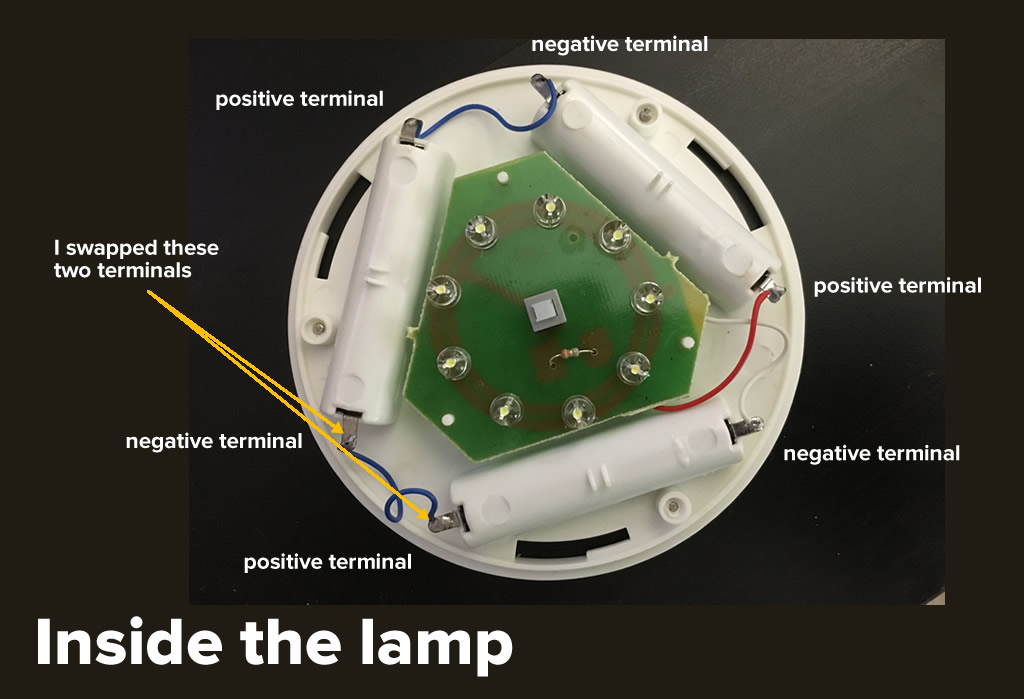
I removed the three screws holding the flashlight together and saw that the fix was easy. It would be a simple matter of swapping two terminals, which would result in each receptacle having one positive and one negative terminal. The terminals slide out of the receptacle easily once you bend the metal tab holding them in place:

Inside the lamp: The inside of the lamp that Joey repaired, with positive and negative terminals pointed out.
Click the photo to see it at full size.

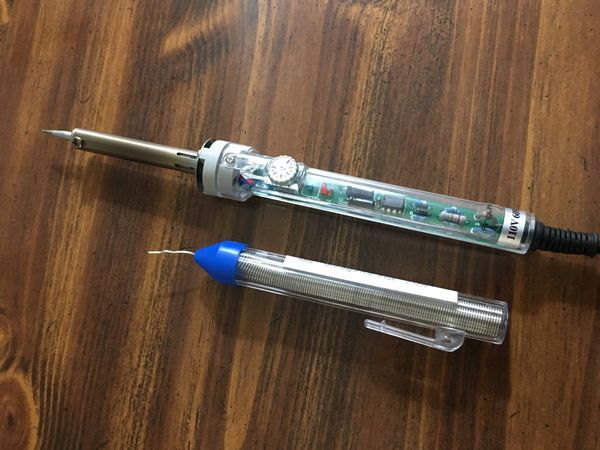
However, in the process of swapping the terminals, you need to disconnect at least one of them from the wire. Once you swap them, you have to reestablish the connection. It was time to break out the Christmas present that my in-laws gave me:

Joey's soldering iron and solder

Late last year, they’d asked me what I wanted for Christmas. I suggested that I could use a soldering iron, and they delivered. Then things got crazy, what with suddenly having to search for a job and all the madness that ensued, so this ended up being my first chance to break it out.

I plugged in the iron, let it heat up, and moments later, I unsoldered one of the terminals. I then swapped the terminals, and then reconnected the loose terminal with a proper joint:

A close-up of the fine soldering job Joey did on one of the terminals.

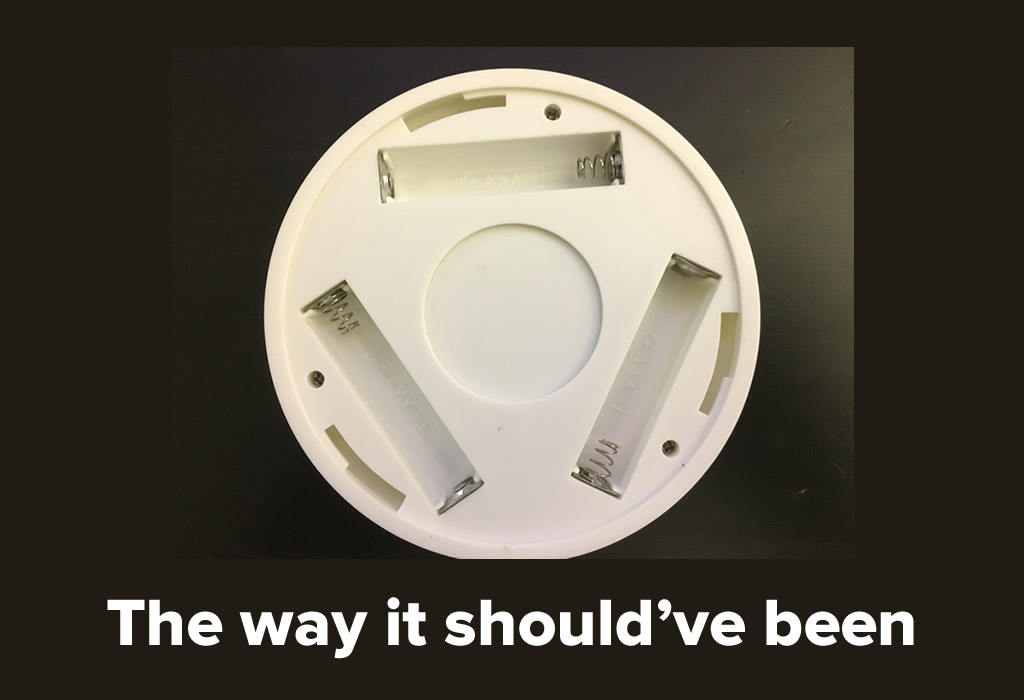
With the repair complete, I screwed the unit back together, and the battery receptacles now looked like this:

The way it should've been: The battery terminals of the lamp after Joey fixed them. All battery receptacles now have 1 positive and 1 negative terminal each.
Click the photo to see it at full size.

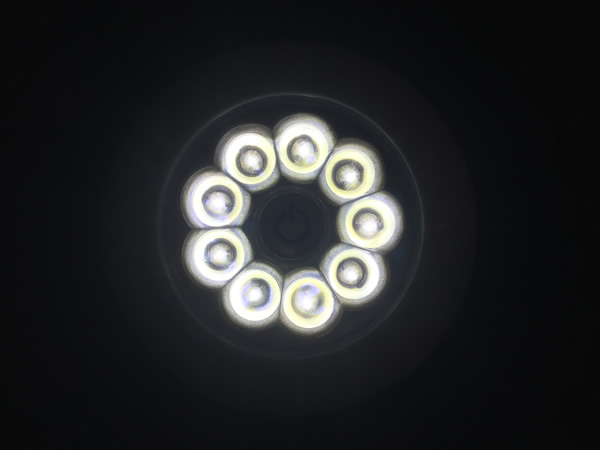
I inserted three fresh AAA batteries into the flashlight, closed the battery compartment, flipped it over, and pressed the power button. Here’s what happened:

The fixed lamp, lit.

Success!

I brought the flashlight to Anitra, who was impressed with my work. Red Green was right:

Red Green and his nephew Harold: 'If the women don't find you handsome, they should at least find you handy'

am mindful of the fact that I’m fixing only one flashlight at my leisure, in the comfort of the ergonomic chair in my air-conditioned home office, and not hundreds or thousands every day on a barely-maintained assembly line in a non-air-conditioned factory in the Third World for a laughably tiny wage.

The repair I made would be considered laughably simple by an electrician or electronics tech, and I’m willing to bet it would’ve been within the abilities of most of the regulars at Tampa Hackerspace. They might even be amused that I found this incident worthy of writing a whole blog article, complete with photos.

But it is worthy of a blog article. I’m willing to bet that this repair would’ve been beyond most people, who — without a way to return or exchange the flashlight — would’ve simply tossed it in the trash or recycled it. That’s a pity, because in spite of the increasing complexity of our devices, a good number of them are still repairable with a modicum of skill, and as the do-it-yourselfers say, “If you can’t fix it, you don’t really own it.”

iFixIt.com's Repair Manifesto poster.
Click the poster to see it at full size.

I’m not going to claim that I can do every kind of repair, but I’m glad that I’ve been able to do a number of them around the house, from this flashlight to the sensor in our washing machine to patching the chip in our granite kitchen counter to replacing the faucet in our kitchen sink.

It may actually be easier to perform a lot of household repairs yourself these days, thanks to the proliferation of YouTube repair videos. I wish I’d thought of recording one while repairing the flashlight. If you find yourself needing to fix something, search YouTube — the odds are goods that there’s a “how to fix it” video.

Another good source of “repair recipes” is iFixit, which is home to tens of thousands of electric and electronic repair guides, and they’re the people behind the Repair Manifesto featured above. I don’t know if they’ll ever come close to their stretch goal — a repair manual for every device in the world — but I applaud them for it.

People making things at Tampa Hackerspace.

And finally, if there’s a hackerspace or makerspace in your area — here in Tampa Bay, we’ve got places like Tampa Hackerspace, The Hive, and others — check it out, join it, support it, learn, and take control of the things you own.

A stopwatch sitting on various denominations of US currency.

There’s a price to be paid for fixing things yourself: time. What you save in money and from the landfill, you pay in the time invested in the repair, and if need be, learning how to do it.

But there’s a payoff — being able to fix things helps build a “can do” mindset. That’s something that you’ll bring with you wherever you go, and it’ll take you far in work, life, and play.

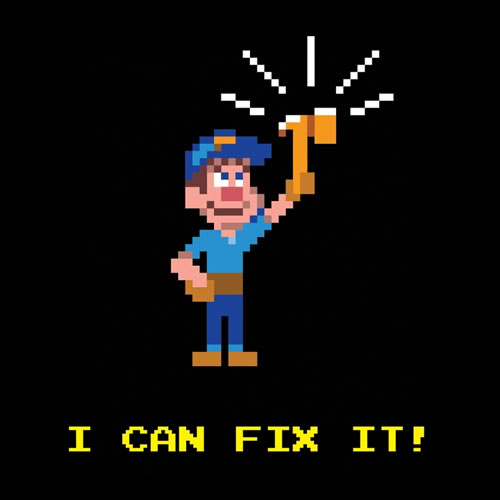
Fix-It Felix: "I can fix it!"

Categories
America It Happened to Me The Current Situation

I had to disavow the Nazis. Why can’t the president?

That’s me on the right, on Thursday, January 26, 2017, celebrating the acquisition of my permanent resident status in the United States. It means that I am in possession of what’s colloquially known as a “green card”.
Of the many things you have to do to qualify for a green card, one of the is filling out the I-485 form, which is more formally known as the Application to Register Permanent Residence or Adjust Status:

Part 8 of the I-485 is called General Eligibility and Inadmissibility Grounds, and is made up of 67 questions, one of which asks you if you somehow were involved with the Nazis:

Here’s the text of the question:

During the period from March 23, 1933 to May 8, 1945, did you ever order, incite, assist, or otherwise participate in the persecution of any person because of race, religion, national origin, or political opinion, in association with either the Nazi government of Germany or any organization or government associated or allied with the Nazi government of Germany?

That’s right: In the process that determined whether I was allowed to call this place home, I had to disavow any connection with the Nazis. And I did so easily, gladly and proudly.

So why can’t the President?

He was uncharacteristically silent for the first part of Saturday, when stories about the torch gathering the night before and neo-Nazis on the street that morning were already circulating:

When he finally made a statement that afternoon, it was this weak sauce…

…and his televised speech was equally mitigated:

It’s uncharacteristic of him — he’s usually pretty quick to “name names”:

The slow, faint response wasn’t lost on former Ku Klux Klan Imperial Wizard and high-profile white nationalist David Duke, who took it as implicit support…

…as did his sleazebag buddies at the Daily Stormer:

Here’s the text from that screenshot (because there’s no way in Hell that I’m linking to the Daily Stormer):

3:46 p.m.: Trump comments were good. He didn’t attack us. He just said the nation should come together. Nothing specific against us.

He said that we need to study why people are so angry, and implied that there was hate…on both sides!

So he implied the antifa were haters.

There was virtually no counter-signaling of us at all.

He said he loves us all.

Also refused to answer a question about White Nationalists supporting him.

No condemnation at all.

When asked to condemn, he just walked out of the room.

Really, really good.

God bless him.

I’ll say it again:

I easily, gladly, and proudly disavowed the Nazis in front of witnesses, including my wife, my lawyer, and a U.S. government official.

Why can’t the President do the same in front of the American people?

Also…

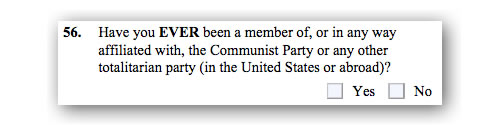
It’s a shame that the I-485’s “Nazi question” is limited to the time period from March 1933 through May 1945. Even a kid who turned the minimum qualifying age — 10 — for the junior division of the Hitler Youth on V-E day would be 82 years old at the time of this writing. I think that it should be phrased more like question 56, the “Communist question”, which asks if you’ve ever, during any point in time, in any country, been part of or tied to the Communist Party or any other totalitarian party:

Categories
America It Happened to Me

Our green card interview

Joey deVilla eats a burger -- that most American of dishes -- after successfully acquiring a green card.
Celebrating my green card status the American way at Burger 21.

Last Thursday — January 26, 2017 — I acquired permanent resident status in the United States, colloquially known as “getting my green card”. The process took about nine months and a little over US$4,000 in processing and lawyer fees, but it’s done, and from a cursory reading of recent news headlines and from what I heard at the U.S. Citizenship and Immigration Services offices, not a moment too soon.

In case you’ve forgotten or don’t know me that well, there’s a reason why I moved from Toronto to Tampa…

Anitra Pavka and Joey deVilla walk down the aisle at their wedding on St. Pete Beach, with palm trees in the background.
A great day: March 7, 2015, St. Pete Beach.

…and she’s why I started the green card process last April.

With the help of our lawyer, Gerry Seipp, we started the process with me filling out an I-485 form (Application to Register Permanent Residence or Adjust Status) and Anitra filling out an I-130 (the interestingly named “Petition for Alien Relative” document). Using a lawyer wasn’t strictly necessary, but I found that it was well worth the $2,500 to have some professional assistance in navigating through the myriad forms, byzantine processes, and potential pitfalls.

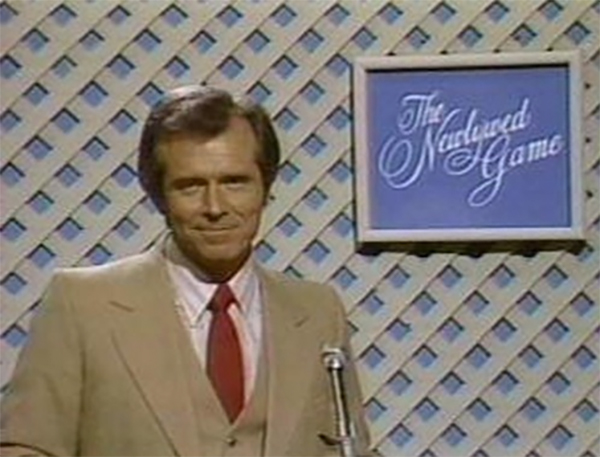
Bob Eubanks, host of The Newlywed Game.

Nine months of paperwork, payments, processes (including a medical exam), and a lot of waiting in between culminated in last Thursday’s appointment at the Tampa U.S. Citizenship and Immigration Services office. The appointment is an in-person interview, and its purpose is to confirm that ours was a genuine marriage and not just one of convenience for the purpose of securing a green card.

Gerry told us that in some of these sessions, they separate the spouses and interview them separately, asking questions intended to reveal whether or not they are truly a couple. “Don’t worry about that part,” our lawyer said, “you’re a real couple, and it’ll be just like being on that old game show, The Newlywed Game.

The problem with that reassurance is that when I think of The Newlywed Game, I always think of the infamous moment on the show, often referred to (somewhat incorrectly) as the “That would be the butt, Bob” moment:

Great, I thought. Now that’s all I’ll be able to think of during the interview.

I was planning on wearing a blazer, dress shirt, and dress pants, but asked if I should wear a tie. Since this is Florida, and since not all of Gerry’s clients are professionals, he told us that he’s seen people show up for the interview in shorts and flip-flops.

“You know what?” I said. “I’m going to wear a tie.”

uscis sign
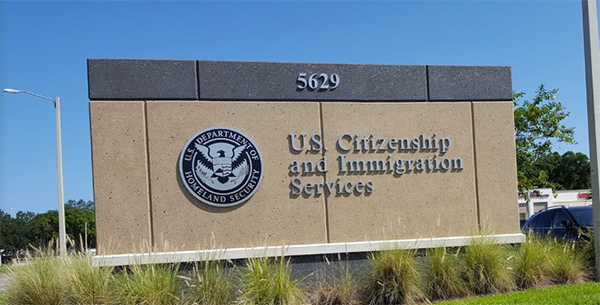
The sign outside the USCIS field office in Tampa.

Our appointment at the Tampa U.S. Citizenship and Immigration Services office was scheduled for 12:15 p.m.. We met up with Gerry a half hour prior in order to have some time to talk and go through the airport-style security line, complete with metal detector and baggage x-ray machine.

This was not my first visit to Citizenship and Immigration Services; I’d been there a couple of times before for other parts of the green card application process. Maybe it was our impending interview, but the mood there was noticeably different this time (and keep in mind that this was the day before what’s now known as the Muslim Ban). There was a general level of anxiety in the waiting applicants’ faces that I didn’t see during my previous visits. It probably didn’t help that the TV screens in the waiting room were tuned to various news stations, all of whom were showing the then-breaking story that Mexico’s President Nieto had canceled his meeting with President Trump over his official announcement that the U.S. would build a border wall that Mexico would pay for.

The local immigration lawyers seem to know each other. While we waited for our interview, a number of other lawyers came up to Gerry to say hi. He introduced us to all of them, and we had some brief — and very interesting — conversations with them:

  • One lawyer whose clients had just completed the interview said that the questioning had become more extensive. “My couple got nearly a hundred questions,” he said.
  • The next lawyer shared his observation that the interviewers were becoming increasingly hard on less articulate candidates. “That shouldn’t be a problem for me,” I said, to which he replied “Radio voice. That’ll help.”
  • Another lawyer, who was waiting with his clients for their interview, said “Things are different with you-know-who in charge,” saying “you-know-who” using the same tone of voice that Harry Potter characters use to say “Voldemort”.
  • The most interesting comment came from a lawyer who remarked “If your last name begins with ‘Al’ and ends with ‘i’, let’s just say that you’re not gonna have a good time in that room.”
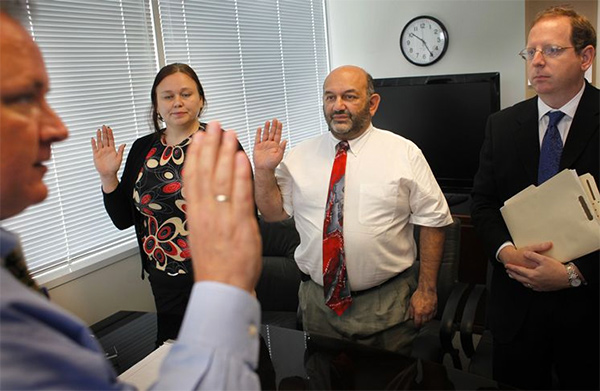
Kateryna and Arshameh Taidi’s green card interview in Tampa, 2010. Click the photo to read about their interview.

Our turn came, and interviewer was a friendly guy with an easygoing demeanor. In another life, he could’ve easily been in sales or marketing. After the usual introductions and handshakes, he walked us to his office, where Anitra and I took seats in front of his desk, and Gerry took a seat behind us. The seating arrangement wasn’t all that different from the one pictured above.

After a brief swearing-in where we affirmed that everything we would say in the interview was the truth, it began. First came a review of the forms we’d filled out months ago to ensure that all the information they contained was accurate. Then came our turn to provide supporting documentation:

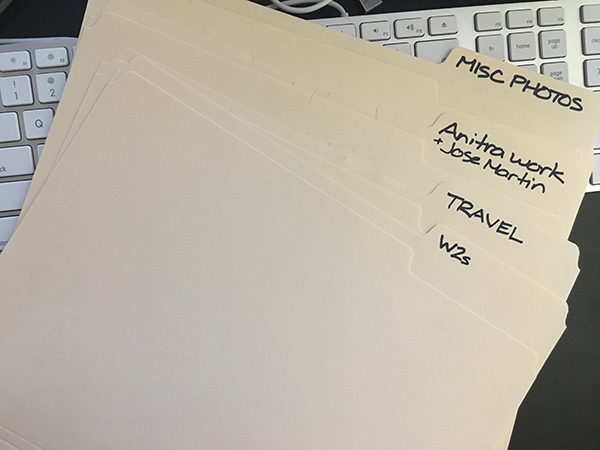
The actual folders I used in the interview. I got to keep the folders, but their contents are now in a file somewhere in the USCIS office.

The guidance on how much supporting documentation to bring to a green card interview is pretty vague — the general rule seems to be “more is better”. I tried to strike a balance between having enough material to prove beyond a shadow of a doubt that our relationship was genuine and not spending an inordinate amount of time and printer ink on preparing it. In the end, I believe I printed out about 60 pages’ worth of material, including:

  • Proof that Anitra and I were both professionals with good prospects and jobs that paid well,
  • statements that showed that we had joint bank accounts, insurance policies, and other jointly-owned assets,
  • photos, photos, photos: from our wedding, as well as from life before and after we got married, including our trips to places both near (Disney World, Charleston, Savannah, Bahamas, Toronto, Montreal, Quebec City, Grand Canyon, Las Vegas, San Francisco, and most recently, New York) and (Manila and London, both of which we visited in 2016), and
  • flight itineraries showing that we saw each other monthly before I moved to Tampa in March 2014.

We also provided a sealed envelope containing the results of a medical exam performed specifically for my green card application. The exam took place in August, and a couple of weeks later, I was given in the results in a brown envelope marked “USCIS only — DO NOT OPEN”. Our interviewer opened it, saw that I’d been given a clean bill of health, and then noticed that whoever filled out the paperwork within forgot to specify the clinic where I’d been examined.

“The doctor signed it, which is the important part,” the interviewer said, “but I need to enter a name for the clinic into the system.”

“Mind if I check my phone?” I asked, and a moment later, I had the name and address of the clinic.

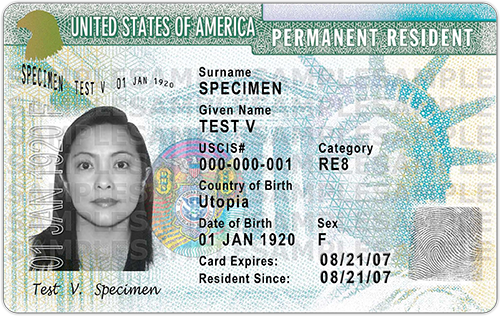
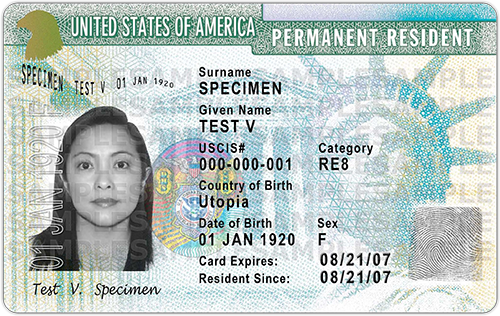
The current sample green card.

We must’ve presented well, because the interview wrapped up shortly after that. Aside from being asked if we lived in the same house and if I’ve ever been convicted of a crime or been denied entry into the United States, I don’t recall being asked any of the questions typically asked in a green card interview. We spent most of the interview reviewing the contents of the folders that I brought.

A half-hour after the interview began, it concluded with our interviewer saying “Congratulations. You are now a legal permanent resident of the United States.” He said I should expect the actual green card in the mail in a couple of weeks.

Since my status was gained through marriage and since Anitra and I have been married less than two years, my permanent residence status is conditional and temporary. Two years from now, we’ll have to file an I-751 (Petition to Remove Conditions on Residence) form to seal the deal.

In case you were wondering how I’ve been working in the U.S. since 2014 without a green card: From March 2014 until last summer, I’ve been here under TN-1 (NAFTA Professional) status, and in the process for applying for a green card, acquired I-512 “Advance Parole”.

Categories
America It Happened to Me The Current Situation

My take on last night’s election results

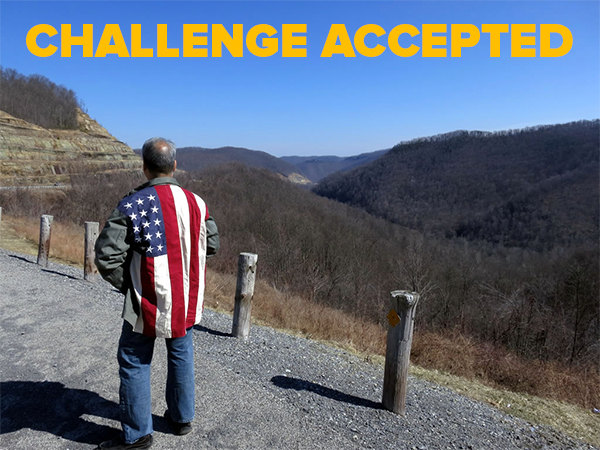
challenge-accepted

I moved from Canada for her…

…and I’m staying for the same reason.

My plan for these soon-to-be interesting times is simple: carry on, watch my back (this year, two people in red caps have yelled at me to “go back to China” — wrong country, guys), speak truth to power and fight the good fight when needed (and oh wow, will it be needed), play the accordion, and follow the wisdom of  Canadian poet Dennis Leigh:

“Work as if you live in the early days of a better nation”.

Categories
It Happened to Me

This week’s “duct tape fixes EVERYTHING” experience


Nearly eight years ago, I started using a CPAP (pronounced “SEE-pap”) machine while sleeping. I have sleep apnea, which I wrote about in April 2008:

Sleep apnea is caused by the upper airway being closed off when the muscles relax during sleep. This cutting off the of the airway leads to a loss of oxygen, which triggers an automatic fight-or-flight response from the cardiovascular system and brain, which causes a waking response. This sort of thing, repeated over and over again, messes with your sleep and puts undue strain on the heart.

The difference between my pre- and post-CPAP life, if you’ll forgive the expression, is like night and day. I feel completely refreshed when I wake up, and I no longer have that mid-afternoon lull where I’m useless and just want a nap. I now use my CPAP every night, and I take it with me when traveling.

I’m wrapping up a week-long business trip to the corporate HQ of my workplace, GSG, in Concord, Massachusetts. When I unpacked my bag on Sunday night, I realized that I’d somehow left behind the straps for my CPAP mask. They’re a key part of the system, as they hold the mask to your face as shown in the picture below:

cpap mask with straps

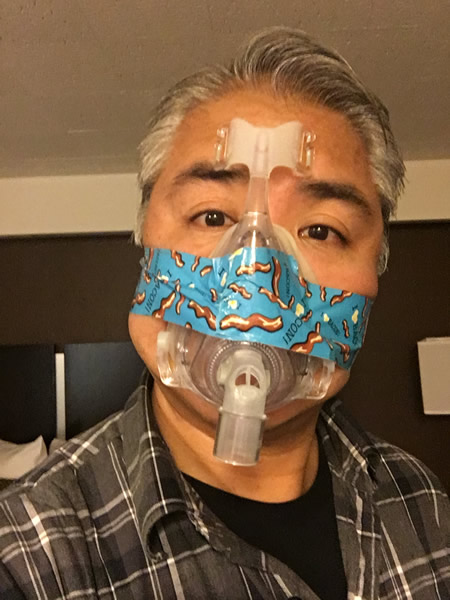
Luckily for me, I always carry a roll of duct tape in my laptop knapsack. Here’s what my quick-and-dirty test run looked like:

joey devilla inprovised duct tape cpap mask strap

Version 2.0 incorporates a hotel face towel on the back of my head so I’m won’t rip out my hair when I remove the mask in the morning. As for the bacon images, it’s my belief that life’s too short for plain duct tape.

bacon duct tape