Categories
Uncategorized

Current situation: Wednesday, May 7, 2014, 5:30 p.m., at home

Joey deVilla, in a blue and green aloha shirt, outdoors in Tampa in front of a white fence.

It’s 5:30 p.m. in Tampa on the 7th of May, and it’s 90 degrees F (32 degrees C). I’m still in business attire, which is a short-sleeve shirt, shorts, and flip flops. I’ve put it a full day’s work at the home office, and managed to squeeze 60 lengths across the pool earlier this afternoon.

Categories
Uncategorized

The optimal way to watch the Star Wars films: The Machete Order

may the 4th be with youIt’s May the 4th, also known as Star Wars Day, thanks to the fact the “May the 4th be with you” is a pretty good pun on the Jedi catchphrase.

According to Wikipedia, the “May the 4th” pun was first used in mass media on May 4th, 1979 as a way of congratulating British Prime Minister Margaret Thatcher on her taking the office. The first organized Star Wars Day celebration was co-organized in 2011 in Toronto by my friend Sean Ward at the Toronto Underground Cinema, and in 2013, Disney Parks started celebrating the event.

I’m celebrating by joining some friends in a game of Edge of the Empire (in my opinion, a vast improvement over previous Star Wars role-playing games) and posting some Star Wars-related stuff on the blog. Enjoy, and remember: let the wookiee win!

IV, V, II, III, VI: The Machete Order

machete order

Rod Hilton, on his site, No Machete Juggling, like most sensible people, considers episodes I, II, and III to be of little value. However, they’re part of the canon now, and you can be sure that they’ll be referenced in the upcoming episodes helmed by JJ “Lens Flare” Abrams. He’s come up with the optimal way to watch the movies if you must include both trilogies: The Machete Order. It’s pictured above, and spelled out below:

  1. Episode IV: A New Hope. Meet the most interesting characters and see the story that got the ball rolling.
  2. Episode V: The Empire Strikes Back. The best of the bunch, with some of the most memorable lines, including “Do, or do not. There is no try.”
  3. Episode II: Attack of the Clones. If you thought Luke was whiny, wait till you meet his dad! There’s some symmetry between episodes II and V, which makes the transition from 1980s cinematography and effects to 2000s filmmaking a little less jarring.
  4. Episode III: Revenge of the Sith. “The Chancellor’s all ‘dark side’ this and ‘Sith’ that. I think he’s trying to tell me something.” Anakin becomes Darth Vader, the Jedi Order is destroyed, and we know how the Republic became the Empire, which leads us to…
  5. Episode VI: Return of the Jedi. Ewoks. Ewoks everywhere. Yub nub!

Note that Episode I: The Phantom Menace is skipped entirely. In a single stroke, it eliminates a lot of the spaghetti that George Lucas threw against the wall and didn’t stick: the fact that Star Wars is all about a trade dispute, Jar Jar Binks, Jake “Spinning! I’ll try that!” Lloyd, immaculate conception, and the pod race. It also minimizes mention of midichlorians, and cuts the number of times the Empire is defatead by flying into their base and shooting at the weak spot from half the films to one-third.

Want to know more? Hilton goes into detail about his logic on his page about The Machete Order.

Categories
Uncategorized

“Spring Cleaning” post #10: The importance of knowing how to play “Wonderwall”

No matter how big or unusual your instrument is, if you’re a street musician performing numbers from the rock and pop genre, you should have this number down cold:

anyway heres wonderwall

Why Wonderwall? Well…

The chords he suggests sound a bit off. Having been a busker myself and profited well from playing Oasis’ most popular song…

Still the Google result for “Best Accordion Picture Ever”.

…my recommendation is not to dick around with fancy-pants “musically accurate” chords. That’s for the losers at band camp. You want money for nothing and chicks for free, and for that, you should go with easy-peasy chords so you can devote more time to your adoring fans. I recommend:

Em G D Asus4

for the meat of the song. Try it! Here’s a verse:

Em       G
Today is gonna be the day that they're

D                      Asus4
gonna throw it back to you

Em         G
By now you should've somehow

D                       Asus4
realized what you gotta do

Em                   G
I don't believe that anybody 

D               Asus4
feels the way I do 

          C      D   Asus4
About you now

Here’s the chorus:

    C
And all the roads we 

D                Em
have to walk are winding

    C
And all the lights that 

D                 Em
lead us there are blinding

C                 D
There are many things that I 

      G       D      Em
Would like to say to you,

      D          Asus4
but I don't know how

      C     Em  G
Cause maybe

Em
You're gonna be the one that 

C          Em  G
saves me

    Em    C   Em
And after all

G         Em
You're my wonder...

C        Em  G  Em  [dramatic fermata]  [dramatic Asus4, knowing wink]
...wall

Now get out on the street and play!

Previously, in Spring Cleaning

spring cleaningThis is the tenth article in the Spring Cleaning series, where I take articles that have languished unfinished for too long, finish them, and finally post them here on the Accordion Guy blog. In case you missed any of the previous nine, I’ve listed them below:

  1. Burgers. Burgers everywhere.
  2. Which beer is most likely to land you in the emergency room?
  3. Weber Cooks, the saddest cooking show
  4. Get on your bicycle!
  5. Fireworks and sensitive body parts
  6. Work!
  7. Storytelling, “Save the Cat”, and same-old-same-old in Hollywood
  8. The best financial advice fits on a 4-by-6-inch index card
  9. Spent, the minimum wage simulation
Categories
Uncategorized

Public bathroom graffito of the day

place sacrifice here

Click the photo to see the sacrificial altar at full size.

Categories
Uncategorized

“Spring Cleaning” post #9: “Spent”, the minimum wage simulation

Previously, in Spring Cleaning

spring cleaningWelcome to the ninth article in the Spring Cleaning series, where I take articles that have languished unfinished for too long, finish them, and finally post them here on the Accordion Guy blog. In case you missed any of the previous eight, I’ve listed them below:

  1. Burgers. Burgers everywhere.
  2. Which beer is most likely to land you in the emergency room?
  3. Weber Cooks, the saddest cooking show
  4. Get on your bicycle!
  5. Fireworks and sensitive body parts
  6. Work!
  7. Storytelling, “Save the Cat”, and same-old-same-old in Hollywood
  8. The best financial advice fits on a 4-by-6-inch index card

Spent, the minimum wage simulation

spent

Click the graphic to play Spent.

Even though I’ve recently bumped up against a few financial difficulties of my own — all thanks to an unscrupulous rip-off artist of a business partner and former friend — I’m still a long way from being in the situation of having no savings, few employment opportunities, and little hope. I’ve never been in the situation where I had to choose between paying the rent and eating, or falling back on that fastest-growing job category, retail work, to pay the bills. I have no idea of what it’s like to have nothing to work with. According to the demographic analytics package that I’m using, if you’re a regular reader of this blog, chances are that you have no idea, either. Welcome to the lucky club!

Spent is a simulation in which you start the month with a thousand dollars and have to make it to the end of the month without falling into debt. You’re unemployed, so you choose among the fastest-growing job categories today. They also happen to be the lowest-paying. Choosing “temp” puts you into a typing test to qualify for the job…

typing test

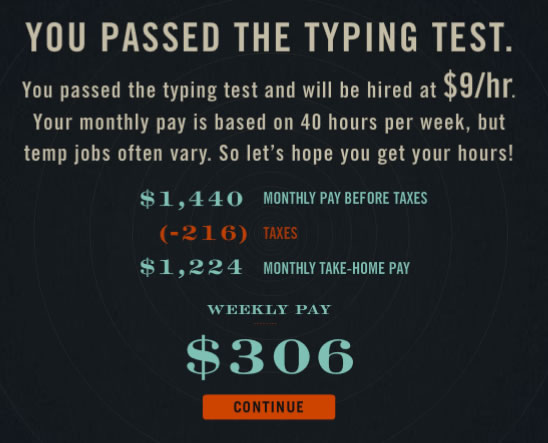
A piece of cake for me, but I’m someone who’s downsized to “just” two laptops. I landed the job, which nets me a weekly pay of $306:

spent 2

$9 an hour? The last temp job I took paid almost 9 times that.

Next task: find somewhere to live, balancing being close to work with being able to afford the place.

spent 3

My new place was too small for all my stuff, so I held a yard sale:

spent 4a

Dam right I kept this:

spent 6

Maybe next semester; I’m strapped:

spent 7

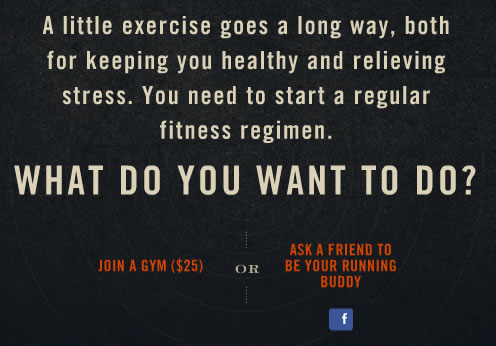
I went with the “running buddy” option for this one:

spent 8

Salad? What am I, Bill Gates? Besides, isn’t the McDouble the cheapest, most nutritious and bountiful food that has ever existed in human history?

spent 9

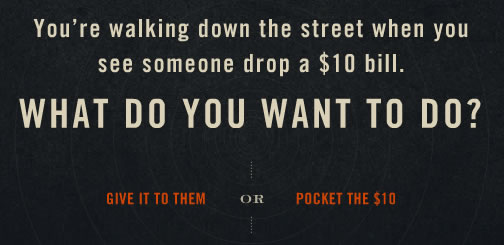
Oh, it’s on:

spent 10

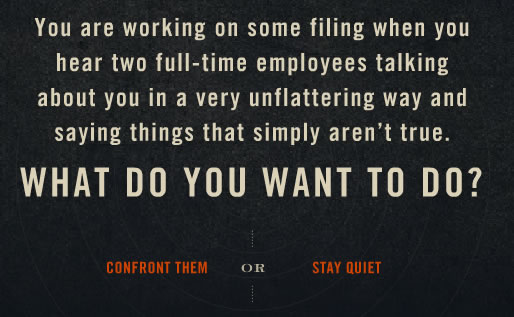
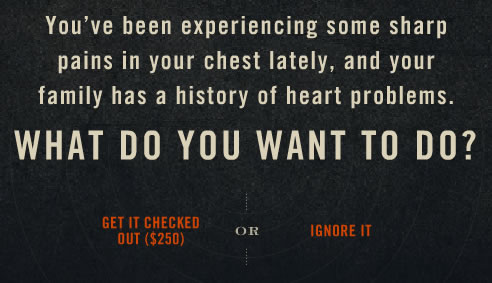
What the hell? Was I working for GitHub?

spent 11

Walk it off, plebe, walk it off:

spent 12

Bill time:

day 12

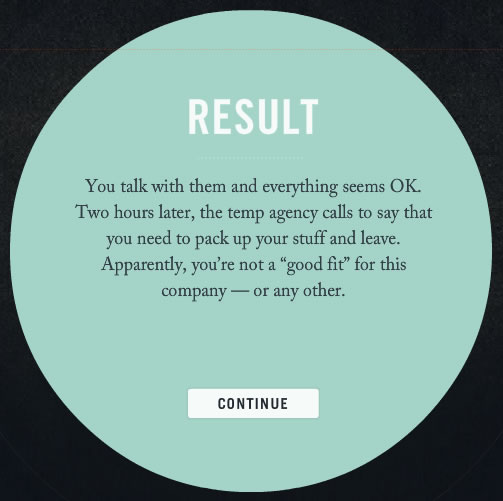
In a matter of a few minutes and an in-game month, I made it with money to spare by stiffing myself and my kid. The game is over; the real-life version requires you to wash-rinse-repeat for several dozen real-time months.

spent final

Want to give the game a try? Click here to play.

Categories
Uncategorized

“Spring Cleaning” post #8: The best financial advice fits on a 4-by-6-inch index card

spring cleaningWelcome to the eighth article in the Spring Cleaning series, where I take articles that have languished unfinished for too long, finish them, and finally post them here on the Accordion Guy blog. In case you missed any of the previous seven, I’ve listed them below:

  1. Burgers. Burgers everywhere.
  2. Which beer is most likely to land you in the emergency room?
  3. Weber Cooks, the saddest cooking show
  4. Get on your bicycle!
  5. Fireworks and sensitive body parts
  6. Work!
  7. Storytelling, “Save the Cat”, and same-old-same-old in Hollywood

In this installment, I look at financial advice…

The 4-by-6 card that has the best financial advice
4 by 6 card financial advice

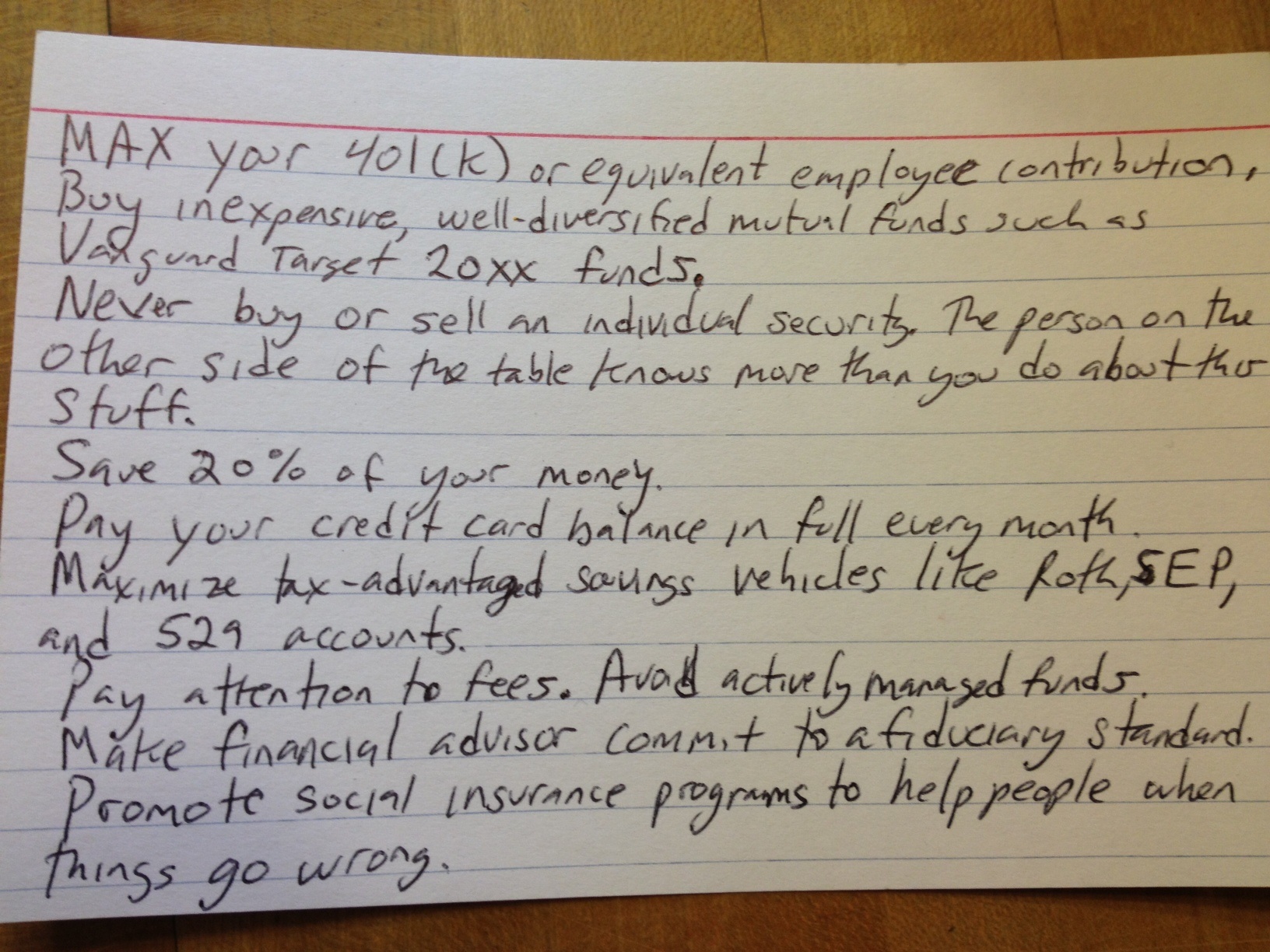
The 4-by-6 card with all the financial advice you’ll ever need.
Click the photo to see it at full size.

On financial matters, Harold Pollack of the blog The Reality-Based Community says that the best advice fits on an index card. After having a conversation with Helaine Olen, author of the book Pound Foolish: Exposing the Dark Side of the Personal Finance Industry, he took her advice and summarized it on a 4-by-6-inch index card, pictured above. The text of the card reads as follows:

  • Max your 401(k) or equivalent employee contribution. (In Canada, the closest analogue is the RRSP; see this quick summary on the MoneySmarts blog for the similarities and differences between 401(k)s and RRSPs.)
  • Buy inexpensive, well-diversified mutual funds such as Vanguard Target 20xx funds.
  • Never buy or sell an individual security. The person on the other side of the table knows more than you do about this stuff.
  • Save 20% of your money.
  • Pay your credit card in balance in full every month.
  • Maximize tax-advantaged savings vehicles like Roth, SEP, and 529 accounts.
  • Pay attention to fees. Avoid actively-managed funds.
  • Make financial advisor commit to a fiduciary standard.
  • Promote social insurance programs to help people when things go wrong.

Pound Foolish by Helaine Olen
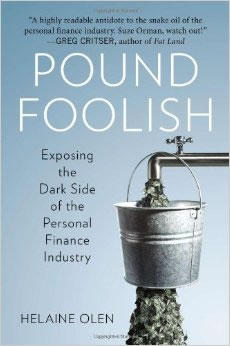
pound foolishPound Foolish is Helaine Olen’s look into the “myths, contradictions, and outright lies” that have been perpetuated by the personal finance industry, which started as a response to the Great Depression and has since grown to become a juggernaut that sells the illusion of financial security but provides little in the way of actual help. In Pound Foolish, Olen says that there are many myths about spending and saving, including these ones, which I’ve taken from the book’s site:

  • Small pleasures can bankrupt you: Gurus popular­ized the idea that cutting out lattes and other small expenditures could make us millionaires. But reduc­ing our caffeine consumption will not offset our biggest expenses: housing, education, health care, and retirement.
  • Disciplined investing will make you rich: Gurus also love to show how steady investing can turn modest savings into a huge nest egg at retirement. But these calculations assume a healthy market and a lifetime without any setbacks—two conditions that have no connection to the real world.
  • Women need extra help managing money: Product pushers often target women, whose alleged financial ignorance supposedly leaves them especially at risk. In reality, women and men are both terrible at han­dling finances.
  • Financial literacy classes will prevent future eco­nomic crises: Experts like to claim mandatory sessions on personal finance in school will cure many of our money ills. Not only is there little evidence this is true, the entire movement is largely funded and promoted by the financial services sector.

“Most of the financial advice published and dished out by the truckload is useless,” Olen writes, saying that it’s “oblivious to the messiness of the human condition.”

A former personal financial columnist for the Los Angeles Times herself, she says that most advice fails to factor in matters such as job loss, long bouts of unemployment (who are often caught in a vicious circle because employers don’t want to hire long-term unemployed), medical bankruptcy (which accounts for the majority of personal bankruptcies in the US), and high-interest debt. Many employers think of employees purely as costs…

…and believe that it’s a law of capitalism to pay their employees as little as possible. When people manage to save, their savings gets outclassed by the stagnation or drop in housing prices and interest rates, and other economic events well beyond their control. Even the good advice that comes out means little when you have little savings.

At the same time, the issue of staying afloat financially is seen in the hyper-individualistic culture of America as a problem one could deal with on one’s own rather than as a social problem. The quip commonly attributed to Steinbeck seems quite true: the American poor don’t see themselves as an exploited proletariat, but as temporarily embarrassed millionaires, which is why you end up with fake “heroes” like “Joe the Plumber”, who is neither named Joe more a licensed plumber, but is a staunch defender of tax cuts for the rich. This has created an industry of snake oil that feeds off people’s fear, especially as people approach retirement age; in 2009, the AARP found that one in ten people over 55 had attended a “free financial seminar” in the past three years.

Talking with Helaine Olen

Harold Pollack, who created the 4-by-6 index card above, talked to Olen in a two-part interview. In the first part, shown below, they discuss topics such as:

  • How she became a personal finance columnist,
  • Why divorce is bad for your financial health,
  • Why trusting financial advisors is generally a bad idea, even if your advisor is above ethical reproach,
  • The false hopes placed in personal financial skills to offset stagnant wages for millions of Americans,
  • That Suze Orman isn’t one of the world’s greatest financial advisors, but has found one of the world’s greatest sales gigs:

In the second part, shown below, they go on to cover things like those dinners where hucksters sell rip-off variable annuities to seniors afraid of outliving their savings. According to Pollack, “these salespeople predictably trash Social Security—the one solid source of annuitized wealth Americans can turn to in their retirement years”:

If you’d like to hear more about the ideas in Pound Foolish, here’s an hour-long presentation featuring Olen talking about the ideas in her book at a gathering put together by The New America Foundation’s Asset Building Program:


Categories
Uncategorized

Scenes from my new life in America, part one of many (or: “Taco yogurt? AWWW YISSS!!!”)

i was like whoa taco yogurt

Original found here; I cleaned up the typesetting.

I wanted so badly for taco yogurt to be real.