Here’s some information and advice — but not legal advice, because I’m not a lawyer — for anyone attending today’s “No Kings” protests.
- What’s “No Kings” all about?
- Where will the “No Kings” events in Tampa Bay be?
- What are Florida’s laws on protesting?
- How to prepare for a protest
- Know your rights
- Organizing a community response
- Personal safety guide
What’s “No Kings” All About?
From Donna Brazile’s op-ed piece in The Hill:
Millions of Americans opposed to President Trump’s attacks on our Constitution, democracy and the rule of law are expected to join some 2,000 peaceful No Kings Day protests around the nation tomorrow. The protests are a follow-up to the No Kings Day held on June 14 — Trump’s 79th birthday.
The protests are backed by a long list of nonprofits and will draw patriotic Republicans, Democrats, independents and third-party backers determined to defend the principle stated by Republican President Abraham Lincoln “that government of the people, by the people, for the people, shall not perish from the earth.”
The Founders’ genius was creating a Constitution that made America great in the first place — a place where the Bill of Rights guarantees us freedoms that many around the world only dream about. America has often failed to live up to its ideals, most notably with the acceptance of slavery, along with systemic discrimination against Black people, other minorities and women that has lessened, but stubbornly remains.
Unfortunately, Trump doesn’t even try to live up to the ideals or goals of the Constitution and Declaration of Independence; he actively ignores them.
Trump clearly idealizes strongmen like the leaders of Russia, China, North Korea and other dictatorships he so admires, who rule with an iron fist and have immense powers. He contends that Article II of the Constitution, which spells out the responsibilities of the president, gives him carte blanche “to do whatever I want as president.”
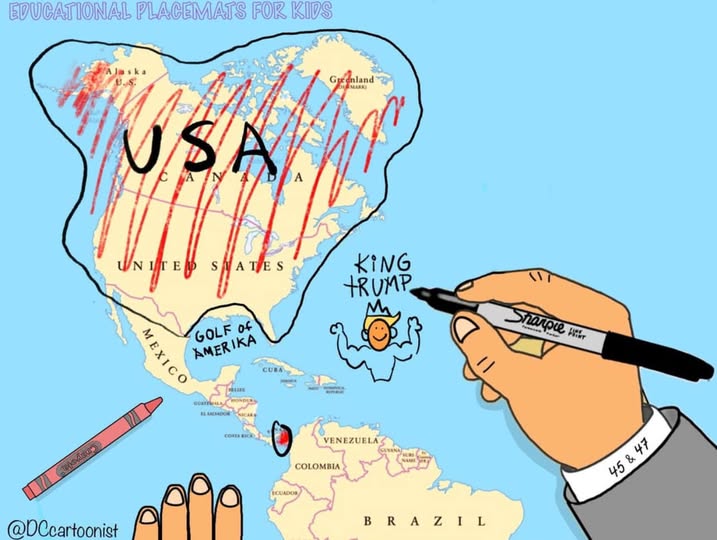
Simply put, it is a protest against a president who thinks he should have the power of a king.
Where will the “No Kings” events in Tampa Bay be?
- Tyrone Square 9:30 to 11:00 a.m.
- Gulfport Casino 10:30 a.m. to noon
- Duke Energy Trail overpass 10 a.m. to noon
- Clearwater mall area at Gulf to Bay & Park Place Blvd. 10 a.m. to noon
- Largo Central Park at East Bay Dr and Seminole Blvd 10 a.m. to noon
- Sun City Center 10 a.m. to noon
- Cortez Rd. in Bradenton 10 a.m. to noon
- Plant City (location TBD) 10 a.m. to noon
- State Route 50 & Mariner Blvd. in Spring Hill 10 a.m. to noon
- Little Rd. in Pasco Trinity noon to 2 p.m.
- N Florida Ave. in Lakeland 1 to 3 p.m.
- Tampa City Hall 4 to 7 p.m.
What are Florida’s laws on protesting?
Protesting is protected in the United States by the First Amendment provided streets and government buildings are not blocked, but Florida also restrict protests within 500 feet of a residence, cemetery, funeral home, house of worship, or other location when a funeral or burial has just occurred, will occur soon, or is occurring.
Florida also comes down hard on anything perceived as rioting, with penalties against anyone involved in the protest where it occurred.
And, as of this year, Florida has the HALO Law, which requires everyone to move 25 feet away from a first responder, including law enforcement, if asked to. The law is intended to protect first responders but critics worry that it will prevent anyone from shooting video or pictures of ICE arrests or police brutality.
The “No Kings” website tells participants not to bring any weapons, to always act in accordance with local laws, and de-escalate any potential confrontation with law enforcement or anti-protesters.
- Your rights are strongest in what are known as “traditional public forums,” such as streets, sidewalks and parks. You also likely have the right to speak out on other public property, like plazas in front of government buildings, as long as you are not blocking access to the government building or interfering with other purposes the property was designed for.
- Private property owners can set rules for speech on their property. The government may not restrict your speech if it is taking place on your own property or with the consent of the property owner.
- Counterprotesters also have free speech rights. Police must treat protesters and counterprotesters equally. Police are permitted to keep antagonistic groups separated but should allow them to be within sight and sound of one another.
- When you are lawfully present in any public space, you have the right to photograph anything in plain view, including federal buildings and the police. On private property, the owner may set rules related to photography or video.
- You don’t need a permit to march in the streets or on sidewalks, as long as marchers don’t obstruct car or pedestrian traffic. If you don’t have a permit, police officers can ask you to move to the side of a street or sidewalk to let others pass or for safety reasons.
- When you are lawfully present in any public space, you have the right to photograph anything in plain view, including federal buildings and the police. On private property, the owner may set rules about photography or video.
- Police officers may not confiscate or demand to view your photographs or video without a warrant, nor may they delete data under any circumstances. However, they may order citizens to cease activities that are truly interfering with legitimate law enforcement operations.
- If you are videotaping, be aware that there is an important legal distinction between a visual photographic record (fully protected) and the audio portion of a videotape, which some states have tried to regulate under state wiretapping laws.
What to do if you are stopped or detained for taking photographs:
- Always remain calm and never physically resist a police officer.
- Police cannot detain you without reasonable suspicion that you have or are about to commit a crime or are in the process of doing so.
- If you are stopped, ask the officer if you are free to leave. If the answer is yes, calmly walk away.
- If you are detained, ask the officer what crime you are suspected of committing, and remind the officer that taking photographs is your right under the First Amendment and does not constitute reasonable suspicion of criminal activity.
How to Prepare for a Protest
Protests can be strenuous and intense. They are most effective when we peacefully use our constitutionally protected rights of assembly and speech and properly prepare ahead of time. Use these practical tips to stay safe on the day of the protest.
Prepare Ahead of Time
-
Dress for the weather, including rain, heat, or cold.
-
Wear comfortable walking shoes.
-
Bring a water bottle and snacks.
-
Bring any medications you might need in the next 24-48 hours.
-
Fully charge your phone and bring a battery charger.
-
Ensure you have one emergency contact who knows your location and status!
-
Know your emergency contact numbers by heart – do not rely on your phone!
Protect Yourself Digitally Before & After a Protest
-
Encrypt your mobile device.
-
Remove biometric locking features from your devices and replace them with a strong pin or passcode.
-
Sign out of any accounts on your device such as email and social media.
-
Use a secure communication app such as Signal.
-
Back up your data in case your phone is lost or stolen.
-
Take videos or photos with your phone locked.
-
Scrub metadata before you post anything online.
-
Avoid taking or posting images of protestors’ faces.
How to De-escalate and Remain Safe
A core principle behind all No Kings events is a commitment to nonviolent action. We expect all participants to seek to de-escalate any potential confrontation with those who disagree with our values and to act lawfully at these events. Weapons of any kind, including those legally permitted, should not be brought to events.
-
Identify the threat – not all agitators need to be addressed. Identify the type of agitator and the threat they pose in order to determine if intervention is warranted. Intervening should be based on your personal risk assessment, how much of a disturbance the person is causing, and the threat the agitator poses.
-
Stay calm – When you see a threat, do not engage, and step away. Alert event organizer or safety lead.
-
Keep your distance – Record only if it’s safe. Alert event organizer or safety lead.
-
Avoid confrontation – Step away or help drown them out with chants/songs. Alert event organizer or safety lead.
-
Remain calm – low tone, non-threatening body language, keep a safe distance
-
Observe – keep eyes on the person’s hands and movements, as well as their proximity to other protesters and/or objects. Are tensions escalating? Are they becoming increasingly irate? Constantly evaluate the situation and adapt to your evolving risk assessment.
-
Listen – most often people act out and get more upset when they are not heard. Approach the person with curiosity and do not cut them off. Acknowledge where they’re coming from (even if you don’t agree with them).
-
Redirect attention – where possible, try to get the person to shift their attention to something else.
-
Create distance – situations typically escalate the more people are involved. If possible, help to guide the person you’re addressing off to the side or at a place further away from the rest of the protestors, without making physical contact.
How Non-Citizen Protestors Can Reduce Risks When Protesting
Please Note: None of the information found here should be construed as legal advice, and you should consult with an attorney or immigration expert about your situation and circumstances.
-
If you are an adult immigrant with a lawful status that requires you to carry proof of that status at all times, bring that documentation with you.
-
Have a contingency plan that includes a contact person who knows your location, your status, and who to reach out to for legal support.
-
Keep a copy of your immigration documents with someone you trust.
-
Carry a paper document that lists contact information about bail funds and contact information for legal support.
-
Memorize your immigration number (“A” number) and share it to a trusted contact.
-
Memorize your contact person’s number.
Know Your Rights
Protestors’ rights
-
The First Amendment of the U.S. Constitution guarantees the right to peaceful protest.
-
You have the right to protest on certain public property subject to certain localized restrictions.
-
You have the right to protest on private property if you have the consent of the property owner.
-
When you are lawfully present in a public space, you have the right to photograph anything in plain view.
-
Law enforcement may not confiscate or demand to view your photographs or video without a warrant, nor may they delete data under any circumstances.
-
If you are videotaping, be aware that the audio may be treated differently than the visual due to state wiretapping laws. Be aware of audio recording restrictions in your state.
-
The First Amendment does not protect acts of protest that become violent or the destruction of property.
-
Be aware of any curfew restrictions that are in effect.
-
Depending on your state, you may be subject to laws that prohibit wearing a mask.
-
These rights apply regardless of citizenship or immigration status, but be aware that the consequences of unjustified arrests may be greater for noncitizens.
Know Your Rights During An Arrest
-
Stay calm.
-
Record what is happening on your phone or ask a bystander to do it.
-
You have no obligation to speak to law enforcement or answer their questions.
-
You may invoke your Fifth Amendment right to remain silent. Say “I am exercising my right to remain silent.”
-
In some states, you must provide your name to law enforcement if you are stopped and told to identify yourself. But even if you give your name, you don’t have to answer other questions.
-
Ask them “Am I free to leave?” If yes, walk away calmly.
-
If they say no, tell them you wish to remain silent and ask for a lawyer immediately. Don’t give any explanations or excuses. Don’t say anything, sign anything, or make any decisions without a lawyer.
-
Do not lie or provide false documents to law enforcement. Lying to federal agents is a crime and can carry severe consequences.
-
These rights apply regardless of whether the law enforcement agency is local, state, or federal. They also apply to questioning by the National Guard or other military troops.
After You Are Released
-
When you are able, write down everything you remember, including officers’ badges and patrol car numbers, which agency the officers were from, and any other details. Get contact information from witnesses.
-
If you’re injured, seek medical attention immediately and take photographs of your injuries.
-
If needed, file a written complaint with the agency’s internal affairs division or civilian complaint board. In most cases, you can file a complaint anonymously.
-
If you have been arrested by police, you have the right to make a local phone call. The police cannot listen if you call a lawyer.
-
If you are arrested for a crime, you have the right to a government-appointed lawyer.
Know Your Rights If Confronted by ICE
Please Note: None of the information found here should be construed as legal advice and you should consult with an attorney or immigration expert about your situation and circumstances.
-
Stay calm.
-
You have the right to remain silent and do not have to discuss your immigration or citizenship status with police, immigration agents, or other officials. Anything you tell an officer can later be used against you in immigration court. If you wish to exercise that right, say so out loud. (In some states, you may be required to provide your name if asked to identify yourself).
-
Confirm it’s actually ICE. Ask for badge number, name, and the agency they work for.
-
Record what is happening on your phone or ask a bystander to do it.
-
Adult non-citizens granted a lawful immigration status (like a visa, or green card) must carry their immigration papers with them at all times. If requested by an immigration agent, they must state their status and show their documentation.
-
Nobody should ever present false documents or lie to an official about their status.
-
If an immigration agent asks if they can search you, you have the right to say no. Agents do not have the right to search you or your belongings without your consent or probable cause.
-
Ask them “Am I free to leave?” If yes, walk away calmly.
-
If it’s safe, take notes of the interaction.
-
You have the right to a lawyer. If arrested or detained say, “I need to speak with my attorney.”
Immigrants’ Rights if Detained by Federal Immigration Authorities
Please Note: None of the information found here should be construed as legal advice and you should consult with an attorney or immigration expert about your situation and circumstances.
-
You have the right to consult with a lawyer, but the government is not required to provide one for you if you are charged with a civil immigration offense, rather than a crime.
-
You have the right to contact your consulate or have an officer inform the consulate of your detention.
-
Don’t discuss your immigration status, where you were born, whether you are a US citizen, or how you entered the country, with anyone but your lawyer. While you are in jail, an immigration agent may visit you.
-
Do not answer questions or sign anything before talking to a lawyer. Read all papers fully. If you do not understand or cannot read the papers, tell the officer you need an interpreter.
-
While you are in jail, an immigration agent may visit you. Do not answer questions or sign anything before talking to a lawyer.
Organizing a Community Response
How to Prepare for a Rapid Response Rally
-
Define your message in clear, concise terms.
-
Ensure that you have permission to use the chosen location for the event, including obtaining permits when required.
-
Create a dedicated team to coordinate your event.
-
Plan out your resource needs and prepare ahead of time.
-
Prepare a safety plan.
-
Create a contact list for participants that can be mobilized day of.
-
Create a media contact list, including partners you’ve already built relationships with
-
Select your day/time/location (i.e,. 5pm local time on the day of the rights violation)
-
Select your speakers – give parameters on time and content.
-
Provide updates via social media.
-
Bring a table and provide information to your attendees.
How to Organize Against ICE in Your Community
-
Organize a vigil for immigrant and constitutional rights to draw public attention to the issue.
-
Host a Know Your Rights teach-in to better equip activists with tools and information.
-
Hold training safety seminars for local businesses in preparation for an ICE raid.
-
Build relationships and be present in targeted areas.
-
Talk to your local Sheriff and urge them not to support ICE in disappearing our neighbors.
How to Respond to Federal and/or National Guard Occupation
-
Form a local rapid response network or get plugged into an existing one.
-
Organize a Know Your Rights training.
-
Plaster your city with visual displays expressing opposition, with awareness of local rules/regulations.
-
If you are a veteran, record a video to share with your community, calling out this federal overreach.
-
If you are an elected official, demand transparency. Push back with legal and political tools.
-
If you are a member of the general public, demand accountability from elected leaders at every level of government. Apply pressure on state leaders: Governors, state representatives, state senators, etc.
-
Remember: No matter what uniform they wear, law enforcement and military troops are bound by the Constitution.
How to Respond to Campus Repression
Please note: University campuses are not generally public forums, and every university sets its own policy to restrict access to campus for safety or other reasons. Check with your university before planning an event or activity on campus.
-
Host a Know Your Rights workshop for students, staff, and faculty to prepare for ICE on campus.
-
Join a student organizing movement to push back against authoritarian practices.
-
Create a sign-on letter or petition to campus leaders, pressuring them to pass a resolution protecting the right to protest.
-
Host events and campaigns to generate engagement on your local campus.
Advocate to Defend the Right to Protest
-
Learn more about the attacks on your First Amendment rights by tracking anti-protest legislation.
-
Protect your right to protest by joining a state advocacy campaign.
-
Join a Federal campaign protecting the right to dissent by applying pressure on Congress to support bills like the Protecting Our Protestors Act of 2025.
Personal Safety Guide
Protest safety isn’t about fear; it’s about surviving long enough to win. Here a plan from a Nashville Redditor with experience in these matters.
Always remember that your #1 priority is getting home safely. We cannot continue to resist if we’re injured, dead, or jailed. This is a safety protocol + rights refresher for those that are headed out to a No Kings protest tomorrow.
1. Stay with your people.
Pick 1–2 people and form a buddy system. If someone has to leave, you all leave. Splitting up = vulnerable.
If you don’t have a friend to go with, make a friend as soon as you get there. I promise it’s NOT hard to make friends at protests like these. Tell them it’s your first protest, or that you don’t have any friends who think like you, and you’re looking to link up to stay safe.
2. Leave before it gets dangerous.
There will be plenty of people willing to stay to the bitter end, let them.
Your goal is to show up and speak up. This is for the long haul; we can’t resist if we’re in jail or the morgue. Safety is our priority if you want to erode the fascist regime.
Don’t wait for things to get bad; leave at the first sign.
If you see police in riot gear lining up, hear loud pops, or see people running, leave fast and calmly. Showing up and marching is just one of the many, many, many ways we can take action. We’ll live to see another day.
3. NO SITTING DOWN.
This one almost should be number one, to be honest, it’s that important. A lot of protest advice going around online advocates for just sitting down if things get violent. This is incredibly bad advice for a number of reasons.
Stay standing, stay moving, keep your eyes up and your ears open. Sitting makes it easy to become a target, get trapped, or get trampled., tear gas also clings to the ground. If you’re tired and need a rest, move to the edges of the crowd and find a safe spot to rest.
Yes, some movements have used linked arms and sitting to resist. We’re not there yet with these protests. Remember, staying safe is our priority.
4. Make an escape plan before you arrive.
The majority of protests tomorrow are going to be peaceful, but there are bad actors in our world. BEFORE YOU ARRIVE at your protest location, you should look at a map and familiarize yourself with the area and the surrounding streets if you are not already. Before you arrive, or as soon as you get there, you and your group should determine a rally point in case you get separated or things become chaotic.
Make sure you know more than one way home if streets get blocked, and be sure you park a bit away from the protest site so if you need to leave quickly, you won’t be in the bottleneck as you leave.
Your entire group should know the plan before you get going
5. Have a code word.
You and your group need to determine a code word that you use that means “no questions, we’re leaving now”.
When someone in your group uses the code word, you don’t debate; you just move to your safe space. You can always regroup and come back if it’s a false alarm. Safety is always your priority. Stay safe, so you can keep speaking up about what is happening.
6. DO NOT TALK TO OR ARGUE WITH POLICE.
This is just a good life lesson in general, but especially at protests: Police are not your friends, no matter how much of a law-abiding citizen you are. This is difficult for a lot of people to conceptualize, but stick around at a protest for long enough and you’ll understand why it’s common to chant “who do you protect, who do you serve”.
Law Enforcement is often emotionally frazzled and instructed not to tolerate drama. They won’t hesitate to escalate situations, so the best way to keep things peaceful is to not acknowledge police unless they’re giving you a LAWFUL order. Even if they’re not giving you a lawful order, the time to argue with police is in the courtroom room not the moment. Most people aren’t able to successfully de-escalate a situation with law enforcement, so the best plan is to just avoid them at all costs.
We’re going to speak up, not get arrested (for now).
7. Stay light + ready to go.
Wear comfy shoes that you can walk or run in. This means NO SANDALS, FLIP FLOPS, OR CROCS IN SPORT MODE. Tennis shoes and good socks. Bring water, ID, snacks, and masks. Nothing you’d be sad to lose.
Leave your phones and smart watches, and anything that connects to the internet, in the car or at home. We bring walkie-talkies to communicate with each other while we’re out and stay connected. If you want to take pictures, bring a DSLR, a Point & Shoot, or snag a disposable camera. Alternatively, bring a GoPro if you’d like. More than likely, there will be press and others with recording devices. You can take this moment as a chance to be present and free yourselves from making tech bro’s richer with the ads you get served while marching.
Backpacks are for basics, not for weighing you down. You never know if or when you’re going to need to move quickly. This is not a picnic in the park; it is a collective move of solidarity to show the establishment that we are in this together against the racist, fascist, and classist policies that are eroding the bedrock of our democracy.
8. If you’re scared, speak up.
No shame in needing to go. Even if nothing looks wrong, your feelings matter. You are at the end of a long chain of genetics from thousands of years of humanity. You may be piecing together a thousand tiny imperceptible things, and you should learn to trust your gut. Safety is our priority. If one person in your group says “I’m done”, be done. Solidarity matters.
9. KNOW YOUR RIGHTS.
The constitution does not grant rights, it protects and enshrines them. That doesn’t mean people won’t try and trample them. Your rights are yours regardless who is in office, what the law says, or who tries to trample them. They’re inalienable to you as a person simply because you exist here and now. Learn what your rights are, know them, and stand up for them. Even if you think you know, refresh yourself – knowledge is power.
Here is a good resource to learn more from the ACLU.
Most protests tomorrow will be peaceful. HELP KEEP THEM THAT WAY.
Be kind, watch out, and care for one another, clean up trash, and hold the line.
Protesting is important, but living a beautiful life filled with meaningful connections to people that you love and who love you in return is the thing we’re protesting for. No sense in giving that up yet.
Safety IS resisting. Trust your gut, and keep your eyes up and ears open. We’re in this together.