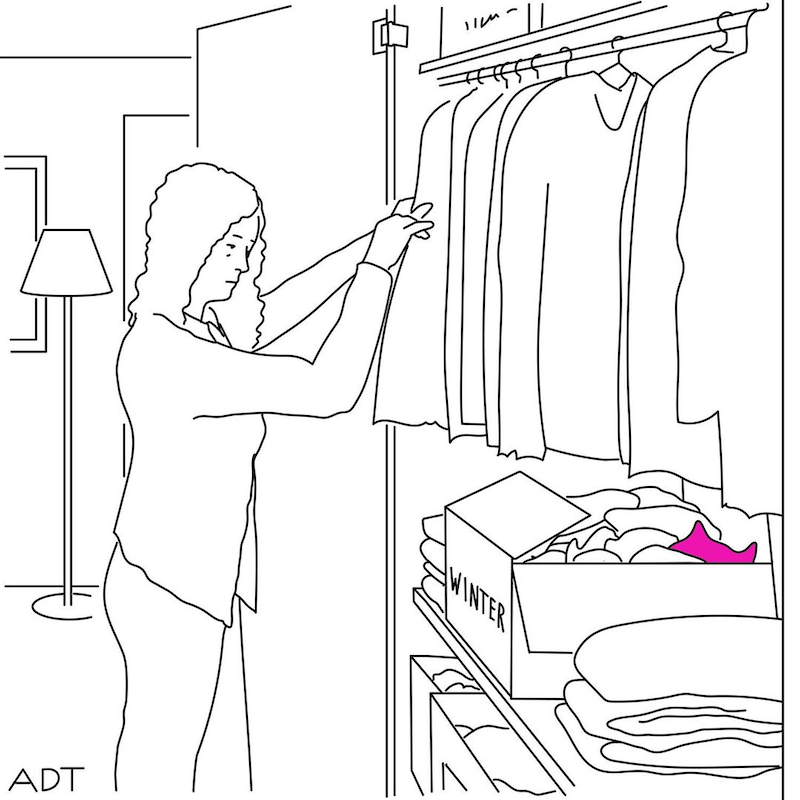
This one’s by Adam Douglas Thompson, and you can view the original here.
Also, I’m pulling this banner image out of mothballs:

This one’s by Adam Douglas Thompson, and you can view the original here.
Also, I’m pulling this banner image out of mothballs:

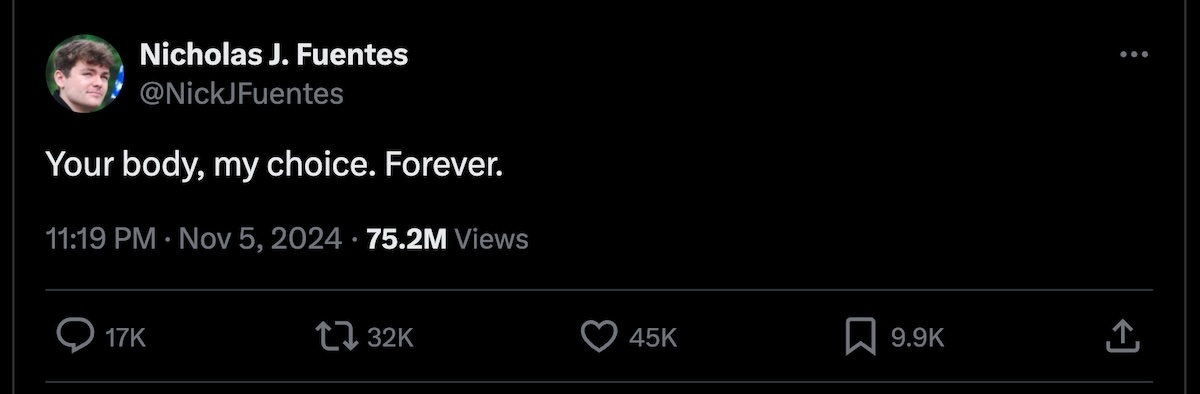
Election Day in the U.S. was only yesterday, but the results and impact will be big and consequential one, with over half the country voting for what is, in my opinion, recrudescence.
But that’s living in a democracy: sometimes the person you think should win, doesn’t. And modern democracy, as imperfect and crazy-making as it can be, is still preferable system under which to live than most others.
Thanks to yesterday’s “Emotional Support Canadian” post, I’ve been approached by a number of people asking if I could post something on the topic. It’s short notice, but I do have a rough idea of what to do next, or as the President-Elect would say: concepts of a plan.
Here they are in the form of two lists — things to not do, followed by things to do.
(I’ll probably do a more refined version of this article in the coming weeks as my thoughts coalesce.)

Work as if you live in the early days of a better nation.
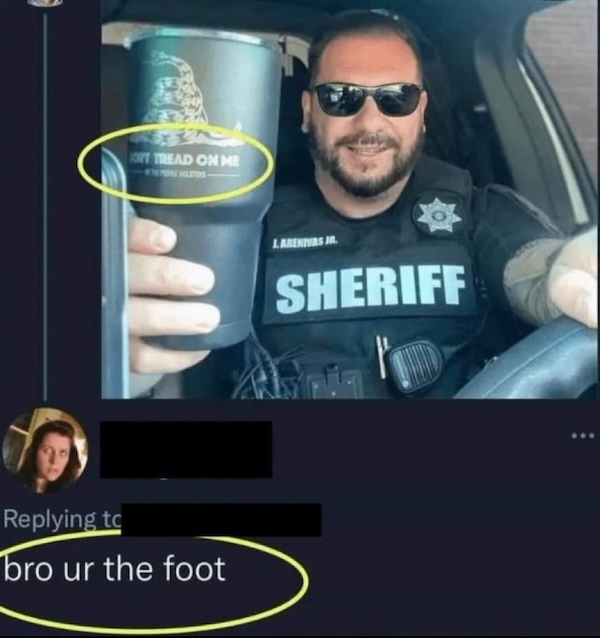
The Gadsden flag is often an indicator for “I peaked in high school.”
Join or Die is a film about why you should join a club — and why the fate of America may depend on it. And I want to get it screened in Tampa — at the Tampa Theatre.
Here’s the trailer for the film:
Join or Die is a feature documentary about community in America, as viewed through the lens of political scientist Robert Putnam’s research and the ideas from his 2000 book, Bowling Alone. The thesis of Bowling Alone is that:
The title Bowling Alone comes from a friend of Putnam’s who owned a bowling alley. The friend remarked that while bowling was up, bowling leagues and bowling as a group activity had gone down.
The decline of bowling as a group activity mirrored other declines. As Putnam says in interviews featured in the film:
How many times last year did you go to church? Down. How many times did you go to a dinner party? Down. How many times last year did you go to a club meeting?
In barely a couple of decades, half of all the civic infrastructure in America had simply vanished. It’s equivalent to saying half of all the roads in America just disappeared!
Robert Putnam, from the trailer for Join or Die
Here are some “bowling alone” stats, taken from the site for Join or Die:
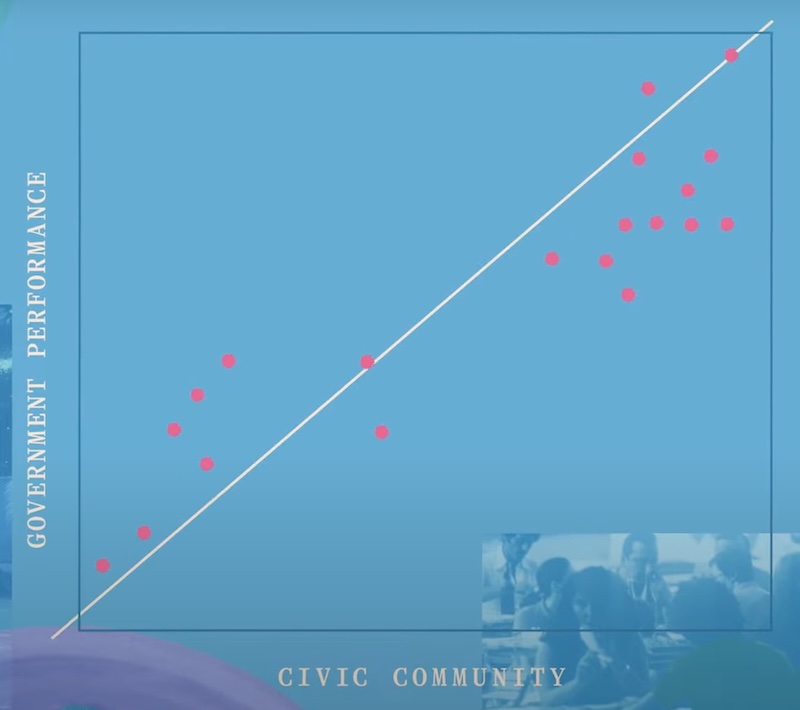
Putnam’s research is all about what makes a society succeed or fail, and he puts forth the idea that it’s about the connections and trust that people make, and the sense of “duty of care” that arise from them. If you get together, get to know your neighbors, build trust not just within a group (“bonding”) but between groups (“bridging”), there better things are — and not just for individuals within the society, but the entire society itself.
Putnam’s been studying this topic for a long time. His 1993 book, Making Democracy Work, was based on his study of regional governments in Italy, which were similar structurally, but different operationally — a difference that went back a whole millennium:
(By the bye, the next time some crank tries to tell you that America isn’t supposed to be a democracy, remember that they’re envisioning a southern Italy-like scheme and that they won’t be the peasants in that setup.)
Wikipedia sums up Putnam’s thesis nicely:
Putnam believes that for democracy to be successful there needs to be a level of mutual trust among the citizens and a more horizontal system of governing, all of which Northern and Central Italy has enjoyed. Putnam states in Making Democracy Work that civil society creates wealth, wealth does not create a civil society. The civic nature of Northern Italy and Central Italy dating back to medieval times has caused the region to be prosperous in modern times. Southern Italy, however, with its more feudal nature in medieval times has caused the region to be the origin of the Mafia and has created a less successful region. The Mafia’s hierarchical structure is very similar to Southern Italy’s feudal roots, according to Putnam.
https://en.wikipedia.org/wiki/Making_Democracy_Work#Author_thesis
I want to see this film — don’t you?
Here’s the challenge: it’s not available on streaming platforms and it’s not being distributed in the way more mainstream films are. If you want to see it, you have to contact the filmmakers and ask them to host a screening in your community.
So I did just that. I even suggested that Tampa Theatre would be a great venue for it.
Getting a screening here in Tampa will take more than just my effort, and it may take some money. I’m going to need help with this one, and if you’re interested in helping, drop me a line!
2024 will be an election year in the U.S., and it’s probably be a nasty one. One particular candidate — who faces a boatload of indictments, pretty much committed an act of treason (and possibly more than just that well-publicized one) — still has plenty of followers who see him as either a means to entrench their lofty position in society, or as an avatar into which they can channel their resentment.
That candidate has already campaigned on the fear of rising crime, with crime often being a code word for “the coloreds.” The Southern Strategy still lives.
But actual crime, it turns out, has been dropping:
The problem is that it’s all too easy to sell the idea of rising crime. The general perception, according to a recent Gallup poll, is that crime is up, in spite of the actual numbers. And for those who keep carping about “the illegals” contributing to the not-rising-but-rising crime, the numbers say that they’re may be less of a problem than other groups.
Expect a nastier news cycle in the new year.
Thanks to Los Angeles’ best blogger, Tony Pierce, for the find!