Election Day in the U.S. was only yesterday, but the results and impact will be big and consequential one, with over half the country voting for what is, in my opinion, recrudescence.
But that’s living in a democracy: sometimes the person you think should win, doesn’t. And modern democracy, as imperfect and crazy-making as it can be, is still preferable system under which to live than most others.
Thanks to yesterday’s “Emotional Support Canadian” post, I’ve been approached by a number of people asking if I could post something on the topic. It’s short notice, but I do have a rough idea of what to do next, or as the President-Elect would say: concepts of a plan.
Here they are in the form of two lists — things to not do, followed by things to do.
(I’ll probably do a more refined version of this article in the coming weeks as my thoughts coalesce.)
Things to not do
- Don’t capitulate. Yes, concede — once verified, acknowledge the results of the election, because that’s what you’re supposed to do in a democracy. But don’t capitulate. As Timothy Snyder wrote in his book, On Tyranny:
“Most of the power of authoritarianism is freely given. In times like these, individuals think ahead about what a more repressive government will want, and then offer themselves without being asked. A citizen who adapts in this way is teaching power what it can do.”
Also, don’t self-censor like the Washington Post and Los Angeles Times did when they decided to simply not endorse a presidential candidate. Activist and educator Daniel Hunter provides an important reminder: “Political space that you don’t use, you lose.” Unless it puts you in some kind of danger, do not “sit this one out.” - Don’t try and figure out who’s to blame, whether it’s the people who didn’t vote the way you did, or the people who ran the campaign, or the media, or whatever. There will be a lot of popular theories and post facto analysis over the next little while, a lot of which will be wrong, and all of which won’t really matter.
- Don’t take in the media for the next couple of days. You don’t have to, and really, aside from weather reports, most of the time you don’t need to. Why self-aggravate? Turn off the TV, put down the phone and stop doomscrolling — hell, if you need to, stop reading this article. It’ll still be here when you’re ready to get back.
- Don’t get despair and analysis confused. Again, Daniel Hunter: “The key to taking effective action in a Trump world is to avoid perpetuating the autocrat’s goals of fear, isolation, exhaustion and disorientation.” I’ll talk more about this a little later in this piece.
- Don’t storm the Capitol. It’s stupid, and accomplishes nothing.
- Don’t shut yourself in. It’s stupid, and accomplishes nothing.

Things to do:
- Freak out, but put a timebox on it. That’s a bit of sage advice from software developer relations guru Scott Hanselman — or more accurately, his mom, who gave him that advice. Feel your feelings, because if you don’t, they will find another, less healthy way to manifest themselves. But set a time limit on those feelings, because after that, it’ll be time to put on the grown-up pants and get gangsta.
- Learn the new regime’s game plan. They’ve published it in plain sight — Project 2025. Your new game plan is to counter this game plan. (I wrote about Project 2025 here.)
- Build trust. One of strategies of the Trump campaign was to foment and harness general distrust — of the media, the medical profession, subject matter experts, immigrants, women, and, if you’re not on board with general MAGA philosophy, even yourself. I consider all this a “south-pointing compass” and a guide for whom to trust and to build trust, which comes in a number of forms:
- Trusting yourself: If you were a kid in the 1970s, you might remember a series of educational shorts on TV called The Most Important Person. One of its main messages (and I think I remember at least a couple of other children’s shows saying this as well) was that you can’t love someone else if you can’t even love yourself. It’s the same with trust, and once again, I’m going to quote Daniel Hunter: “It includes trusting your own eyes and gut, as well as building protection from the ways the crazy-making can become internalized.”
- Being trustworthy. Tell the truth as you see it. Speak truth to power. Educate yourself, so that if you need to shoot off your mouth, your brain isn’t loaded with blanks. Be someone on whom your friends, family, and community can count on.
- Build networks of trust. With distrust comes isolation and loneliness, and authoritarian leaders rely on that, and the new regime is relying on the nation’s epidemic of loneliness to get what they want.
Here’s the thing: Authoritarians thrive in conditions where people are feeling social isolation and atomization, when people don’t form bonds, acquaintanceships, friendships, and trust.
I was incredibly young when it happened, but I distinctly remember the feeling of people turning inward when President Marcos declared martial law in the Philippines, a lot of what kept him in power for the next dozen years was a breakdown of social trust.
Around the same time and across the ocean in Chile under General Pinochet, people took care introducing themselves at social gatherings by name or forming anything more than casual acquaintances at those gatherings. One of them could be an informant or at least inadvertently get you on the radar of Chile’s National Intelligence Directorate (DINA) or other authorities. (And you’d better believe that there are MAGA people looking at Pinochet’s tactics approvingly and taking notes.)
And even if we didn’t have an authoritarian incoming government, there’s still a reason to build networks of trust: isolation and loneliness lead to deaths of despair.
Again, I turn to Daniel Hunter: “Get some people to regularly touch base with. Use that trust to explore your own thinking and support each other to stay sharp and grounded.” Get to know your neighbors.
And not just your neighbors on your side of the political fence, but people on the other side too! You probably know a family that had been staunchly anti-gay until a relative came out of the closet and then slowly inched towards acceptance. I have neighbors who initially viewed me with suspicion, but got to know me — one of them even refers to me as “his first Oriental friend.” You’ll find that what we have more in common than we’ve been told by campaigners.
- Trusting yourself: If you were a kid in the 1970s, you might remember a series of educational shorts on TV called The Most Important Person. One of its main messages (and I think I remember at least a couple of other children’s shows saying this as well) was that you can’t love someone else if you can’t even love yourself. It’s the same with trust, and once again, I’m going to quote Daniel Hunter: “It includes trusting your own eyes and gut, as well as building protection from the ways the crazy-making can become internalized.”
- Stand with minorities. There are people who are being targeted as “the problem” — immigrants (not just the undocumented ones, but Dreamers and documented ones as well), visible minorities, anyone in the letters LGBTQ+, and more. We’ll need to step up, and Pastor Martin Niemöller’s poem First They Came is truly applicable today.
- Stand with women. Depending on the circles you move in, you may know a few — or many — women who will be distressed by the election results, and in my opinion, rightfully so.
There’s been a cultural shift towards having women step back into more traditional roles, for some people because it’s Biblically ordained, and for others because it’s their destiny as decreed by biology. Look at the “tradwife” trend, or the fandoms of Jordan Peterson and Joe Rogan (or Lex Fridman, who’s the Luigi to Rogan’s Mario), that idea that Sydney Sweeney ended wokeness with her very nice breasts or most concerningly, the way both the incoming President and Vice President talk about women. The Republican campaign capitalized on this to capture the vote, remembering Andrew Breitbart’s doctrine: politics is downstream from culture. - Stand up for institutions. The CDC (Centers for Disease Control and Prevention), EPA (Environmental Protection Agency), and even the NOAA (National Oceaning and Atmospheric Administration, a valuable resource for hurricane warnings) are under threat by the incoming government. Speak out for them!
- Focus on your health. If you want to make change, you have to be healthy, and it’s going to be more of a challenge soon. RFK Jr. — or maybe someone else; Trump operates on whim — will start monkeying with health policy in all sorts of ways; I’m imagining a national Surgeon General like the quack we have here in Florida or Trump’s dictation-taking personal physician. Get in shape, eat well, or at the very least, brush more often with a fluoride or hydroxyapatite toothpaste, because RFK Jr. has bought into the fluoridation conspiracy.
- Get involved. Politics isn’t a thing you do at the ballot box every couple of years; it’s something you do every day. Every action you take, every word you say, every dollar you spend — each one of those is a vote for the kind of world you want to live in.
And politics isn’t just a thing at the national level, but the local level as well! The book bans in Florida happened because people who wanted those book bans started showing up at school board meetings — even if they didn’t have kids in those boards’ schools, or even if they didn’t have kids. And you can do more at the state level, especially now, with the emphasis on states’ rights — but only if you organize and get involved. - Pragmatic, Machiavellian tip 1: Invest! Wall Street looooves what happened last night. Times will get tougher if you’re on the bad side of income inequality, especially if the promise to put Elon Musk in charge of government efficiency comes true. You might as well harness the investor class’ love of the current situation to make your own situation better.
- Pragmatic, Machiavellian tip 2: Wait. Donald Trump and Elon Musk — the world’s most politically powerful evil overlord and the world’s most financially powerful evil overlord — may be a nightmare buddy combo right now, but remember that both are easily-butthurt raging narcissists.
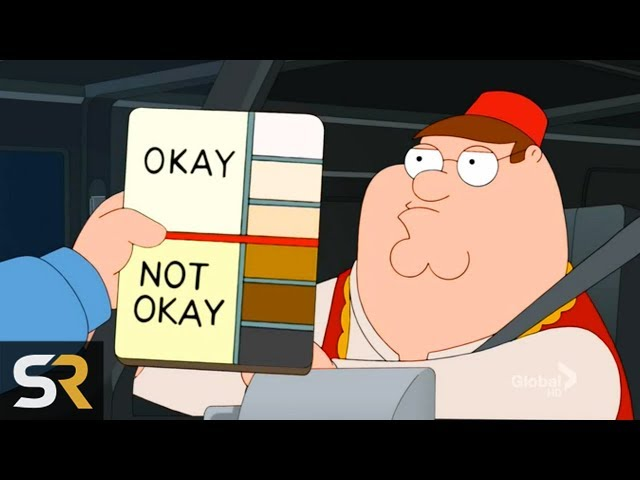
Remember, I work in developer relations, and I see this kind of personality clash of overpaid, over-entitled, under-worked , and un-self-aware assholes on a regular basis. Those two jamokes are eventually going to step on each other’s dicks, and the very stupid, very public spat will look like a big, overblown version of this:
- And finally, I have a motto for how to live in interesting times that you should adopt. It’s from poet Dennis Lee, a fellow Canadian:
Work as if you live in the early days of a better nation.