There was no acquittal in the Breonna Taylor situation: a refusal to charge for murder, yes, but there were charges that are going to trial. Yesterday was the Grand Jury’s charging decision. If it was a no knock warrant, executed lawfully, that may be the correct charging decision. But whether the no knock warrant should have been issued is a different question.
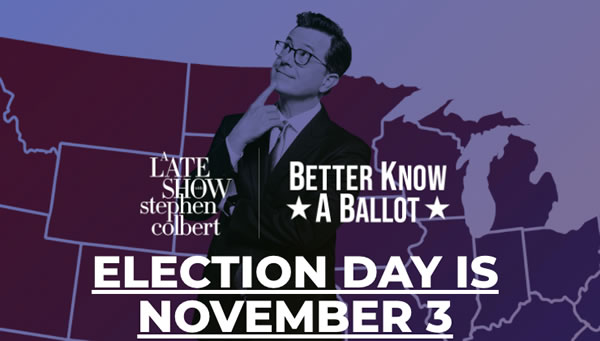
Voting in the U.S. can be confusing because the systems and rules aren’t organized federally, but by state. In order to help alleviate this problem and be interesting, late-night TV show host Stephen Colbert and his team have put together BetterKnowABallot.com, a site that explains how to register to vote, vote by mail and vote in person based on your state’s specific laws.
Michael Bloomberg and company pay Florida felons’ poll tax
If you’ve never seen John Oliver’s piece on felony disenfranchisement on Last Week Tonight back in September 2018, here it is:
The piece was focused on Florida (yup, where I live), where 1.5 million citizens — nearly 10% of the adult population — have completed sentences for felony convictions but still can’t vote.
Nearly 1 in 5 black adults is disenfranchised from voting.
In the 2018 midterm elections, Florida voters approved Amendment 4, which automatically restored voting rights in the state for people previously convicted of felonies, with the notable exception of those who were convicted of murder or sex crimes. It’s fair — if you’ve paid your debt to society, you should be able to vote.
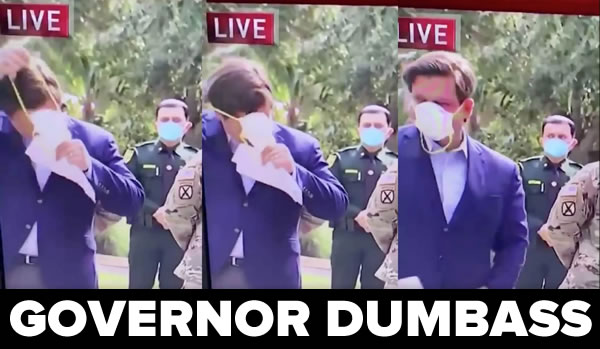
Florida’s governor — Ron “DipShantis” DeSantis, who hews very closely to Trump — has been fighting this tooth and nail. His most effective action was to add on a requirement that felons could have their voting right restored if and only if they pay all fines, fees and restitution.
Florida’s voter registration deadline is Oct. 5 and as many as 775,000 felons may have outstanding court debts — which include fines, fees and restitution — that preclude them from registering under the law passed last year by the Republican-controlled state Legislature.
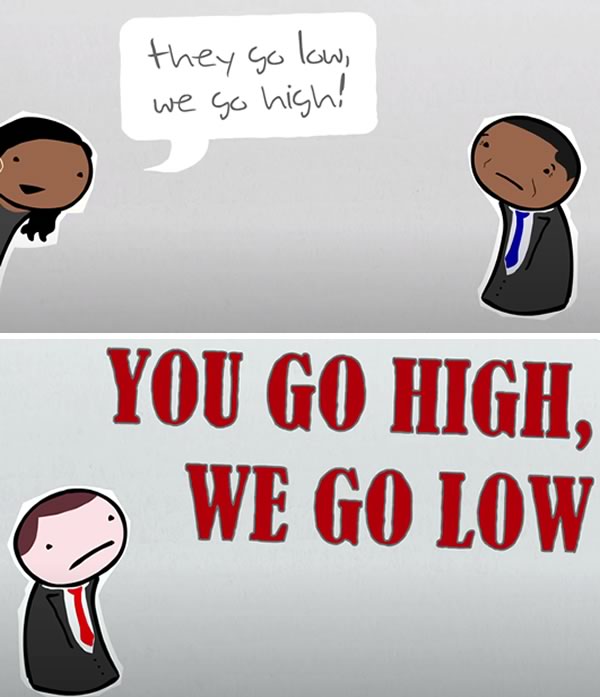
I want you to watch one video today: You Go High, We Go Low, which is one of the videos in Ian Danskin’s series, The Alt-Right Playbook. It’s especially important in light of Supreme Court Justice Ruth Bader Ginsburg’s passing.
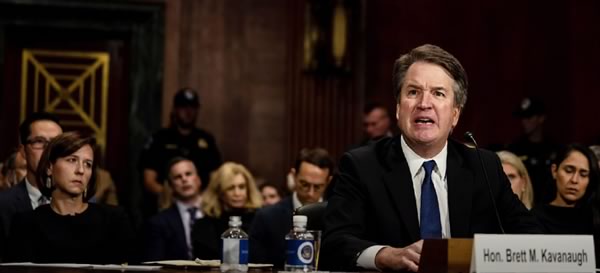
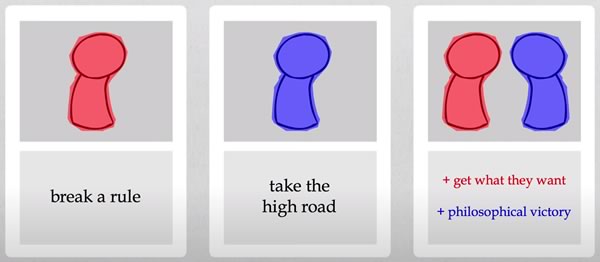
There’s going to be a battle over filling the vacancy in the Supreme Court, and the last time that happened, we had the Republicans breaking rules (or at least going outside them, and breaking sensible norms)…
and the Democrats taking the high road, giving us this…
and this:
Danskin argues that one of liberals’ weak points is that in embracing the idea that the ends do not justify the means, they tend to overemphasize the means and forget that the ends are the actual goal.
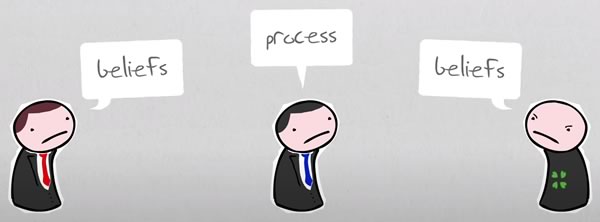
He points out that one of the key differences that separate liberals and conservatives — and which the alt-right has weaponized — is that conservatives primarily defend beliefs, and liberals primarily defend process. In this fight, liberals are playing by Harvard debating club rules of order, and conservatives are going by the norms of prison riots.
He reminds us of this important fact:
An action has no intrinsic value wholly separate from its outcome.
Remember, when you call out a conservative, MAGAt, or alt-righter and they reply “So much for the tolerant left,” they’re try to make us play by rules that they themselves aren’t following.
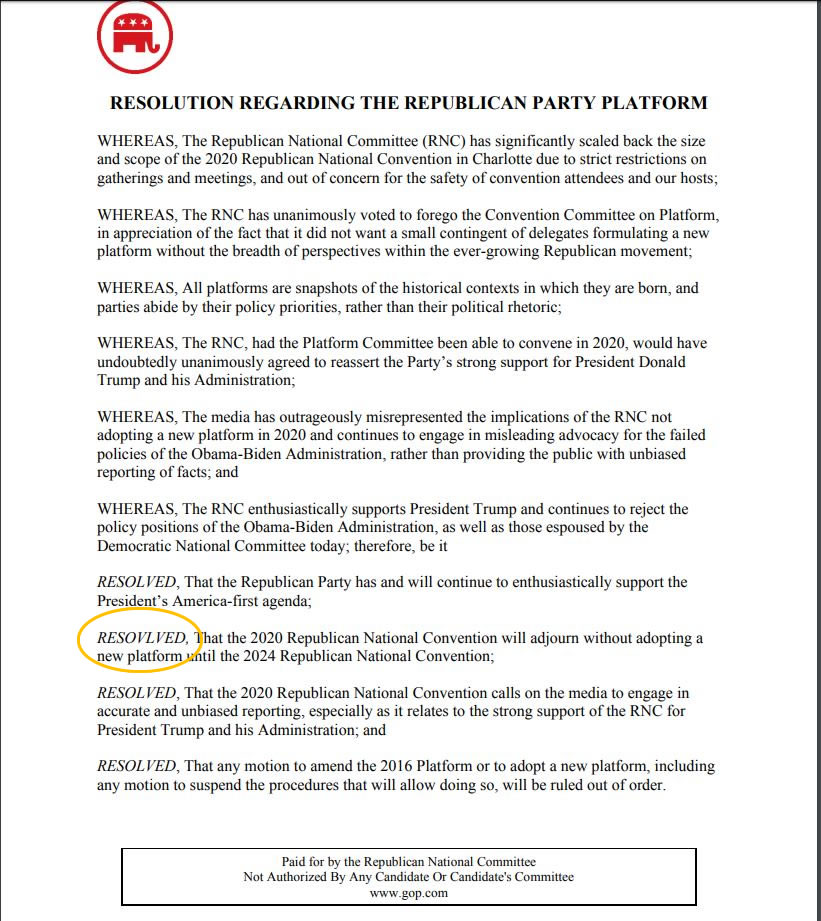
“RESOVLVED [sic],” the resolution reads, complete with a sloppy typo that would’ve been caught by an attentive proofreader or even a word processor from the previous millennium, “That the 2020 Republican National Convention will adjourn without adopting a new platform until the 2024 Republican National Convention…”
In short, they say they’re doing a great job, they’d like four more years of doing said great job with Trump nominally at the helm.
This election’s no longer a referendum on liberal vs. conservative — it’s been reduced to a choice between semi-competence and a toxic, self-serving, half-assed autocratic cult of personality.