From WFLA News Channel 8, Titusville, Florida (north of Cocoa Beach, northwest of Cape Canaveral):
Deputies say they were on active patrol when they spotted the flames on Craig Avenue in Titusville around 2:12 a.m. on Thursday.
According to police, the fire was in front of a man’s home who they visited around five times in the past six months for illegal burns. Officials say the fires ranged from being on the sidewalk, to taking up the entire street.
Officials say when they went to speak with suspect Scott Taylor he was sitting in his front yard holding a sword in his hand and had a knife in his waistband. Police say he was also actively drinking in front of them then began chugging from a half-gallon-sized Captain Morgan spiced rum.
Authorities say he dropped the knife and sword when asked but could not provide an answer as to why he started a fire in the roadway. He was arrested and taken to the Titusville Police Department.
The police encountered him at two in the morning, which means that the booking photo was probably taken at least an hour later. Very few people photograph well at that time — especially after drinking.
Do the police not give you “do-overs” for your booking photo? I figure that if you can ask to have your driver’s license photo re-taken, you should also have the same right for your mugshot.
Note to self: In case I succumb to the mysterious forces that cause residents to “go Florida,” I should work on my “mugshot face”.
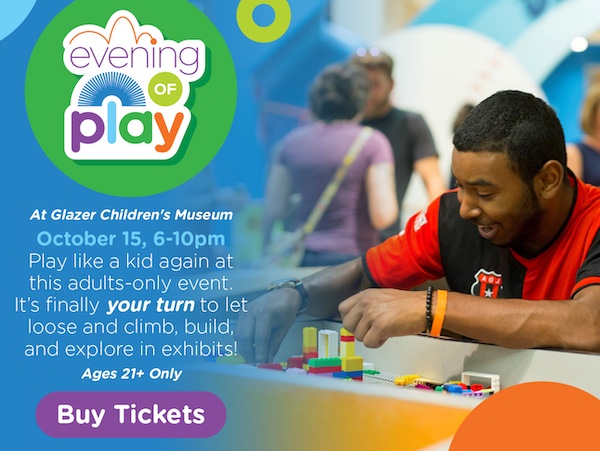
I’m going to be playing the accordion — and a lot of games, too — at the Evening of Play at the Glazer Children’s Museum this Friday, October 15th! Join me there!
What is the Evening of Play?
The Evening of Play is a fund- and awareness-raiser for the Glazer Children’s Museum, whose mission is to provide the children of Tampa Bay with a clean, safe, and fun outlet for imagination and discovery.
It happens this Friday, October 15th, from 6:00 p.m. to 10:00 p.m. at the Glazer Children’s Museum (110 West Gasparilla Plaza, Tampa). You’ll have access to all the exhibits in the Museum, enjoy drinks and food, and play classic children’s games with grown-up twists. All the proceeds will go to support this non-profit children’s museum.
Play is central to all the activities at the Museum, and it’s important for development in children. It’s through play that children learn resilience, problem-solving, risk-taking, and empathy.
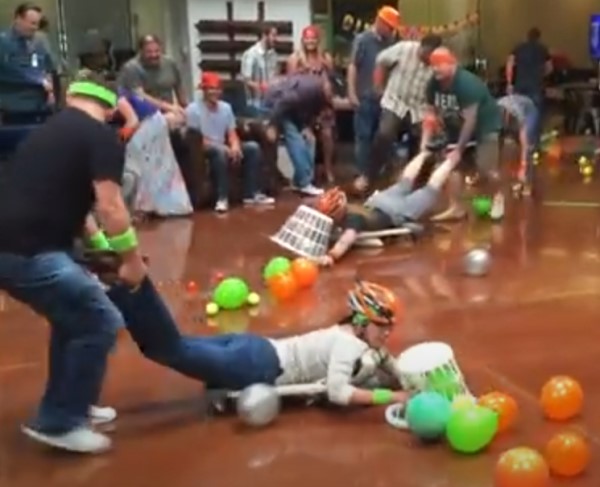
We’re bringing this classic game to life! Grab a laundry basket, a flat scooter, and your friend’s ankles, and get to work collecting as many giant marbles as you can! The team that collects the most marbles wins the game! Goofiness and giggles guaranteed.
Race up the Climber
Channel your childhood playground energy and climb through our popular Water’s Journey Climber! Find a friend and challenge them to race you to the top of the climber, which is over two stories tall. The first one to ring the bell wins the game!
Gaga Ball
It’s like dodgeball without the gym class anxiety of being picked last, phew! Hop into our gaga pit and get ready to yell GA-GA-GO! Bounce the ball around the pit and try to hit the other players below the knee. If you succeed, they’re out! The last person in the pit wins the game!
Parachute play
Are you nostalgic for parachute day at school? Us too! Gather your friends and grab a handle to join in a game of parachute play. Run under the parachute to trade places with a friend before the parachute touches you! Then see how far the group can lift the balls up into the sky.
Be the hamster and make an adult sno-cone!
Joe Donoghue’s company, Be the Hamster, is going to be at the event, along with the machine that inspired the company’s name: a giant human-scale “hamster wheel” that powers a sno-cone-making machine!
You’ll get the chance to hop into the wheel and go for a quick run, which will power a machine that shaves ice and dispenses it into a cup. You’ll also operate hand cranks that will take the cup down a conveyor belt, a spring-loaded hammer to press the ice into your cup, and add flavors and optional alcohol to make a great evening sno-cone!
How can you attend the Evening of Play?
Tickets are $60.00 each, but if you bring a friend, it’s $100 for two tickets. Once again, proceeds go to the Glazer Children’s Museum, which is a non-profit organization.
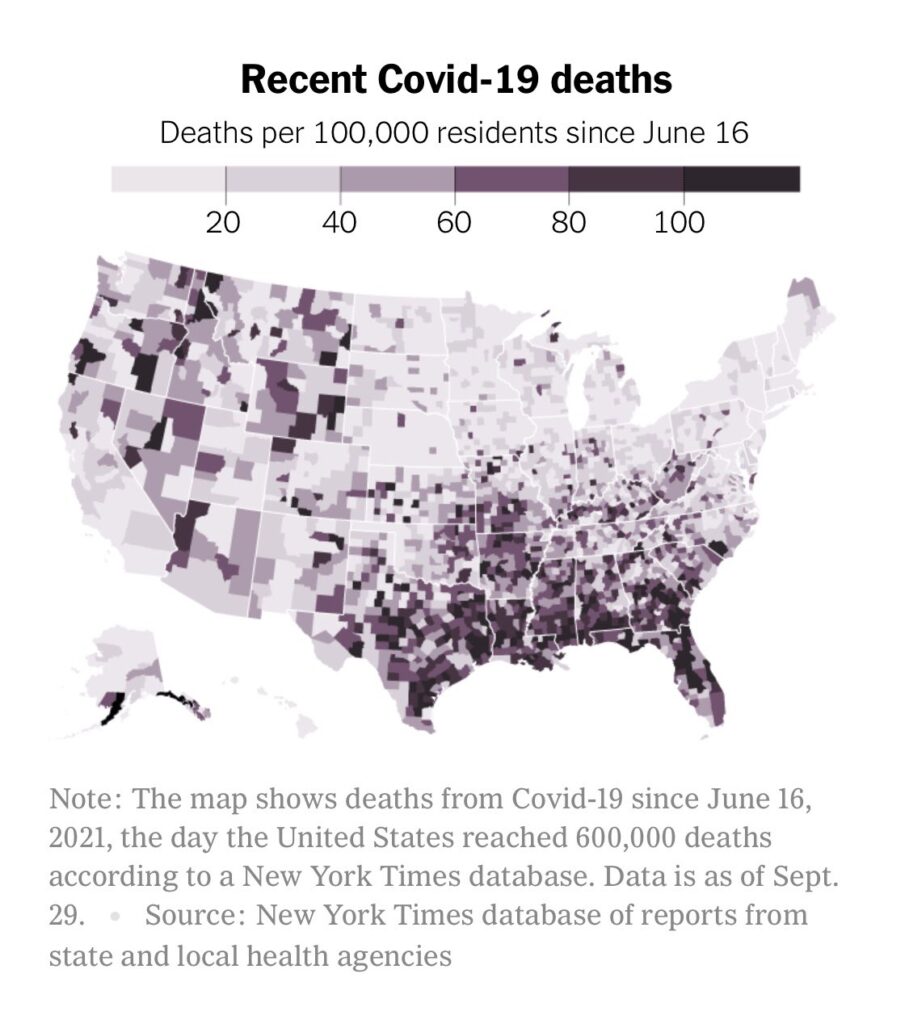
The recent virus deaths are distinct from those in previous chapters of the pandemic, an analysis by The New York Times shows. People who died in the last three and a half months were concentrated in the South, a region that has lagged in vaccinations; many of the deaths were reported in Florida, Mississippi, Louisiana and Arkansas. And those who died were younger: In August, every age group under 55 had its highest death toll of the pandemic.
The article points out that of the 100,000 who died of COVID-19 since mid-June, only 2,900 were vaccinated. Or in other words, more than 97% of the people who died of COVID-19 since June were unvaccinated.
Sadopopulism
You may have heard of the term sadomasochism: It’s getting sexual jollies from inflicting pain or humiliation on someone else (sadism, derived from French noble the Marquis de Sade) or yourself (masochism, derived from Austrian novelist Leopold von Sacher-Masoch).
The word sadopopulism is a play on sadomasochism, and it’s used to describe a government body that operates without policy and causes pain in its citizenry.
It was coined by Timothy Snyder, professor of history at Yale, a permanent fellow at the Institute for Human Sciences in Vienna, and a specialist in the history of Central and Eastern Europe and the Holocaust. Simply put, he’s a student of self-inflicted human misery.
In a December 2017 video (it’s the one above), Snyder uses sadopopulism to describe the way Trump and Putin operate. He puts forth the idea that they only pretend to be populists and in reality create policies that hurt their bases, all the while convincing their bases that they’re hurting those bases’ perceived enemies.
Synder has this to say about the Republicans in the Trump era:
These are policies that are deliberately designed to administer pain, to add to the total amount of pain in American society.
If you hurt people you create a resource of pain, of anxiety and fear which you then direct against others.
If, in the long run, the way that you govern is by hurting people who don’t mind being hurt because they think other people are hurting worse, what you will tend to do is take the vote away from people who expect more from government, what you will tend to do is try to suppress the vote and keep the vote down to the people who accept that government can do nothing except for administer pain. And then that moves you away slowly from democracy.
Part of the reason that COVID-19 still progresses despite the fact that masks and vaccines are cheap and plentiful is that the sadopopulists have taken these common-sense health measures and reframed them as a signifier of “belonging to the wrong tribe”. As a result, they’re killing their very own supporters, and convincing them that it’s a good thing.
I like looking in our neighborhood’s “little free libraries” — those little boxes that community-minded people set up where the rule is “take a book, leave a book”.
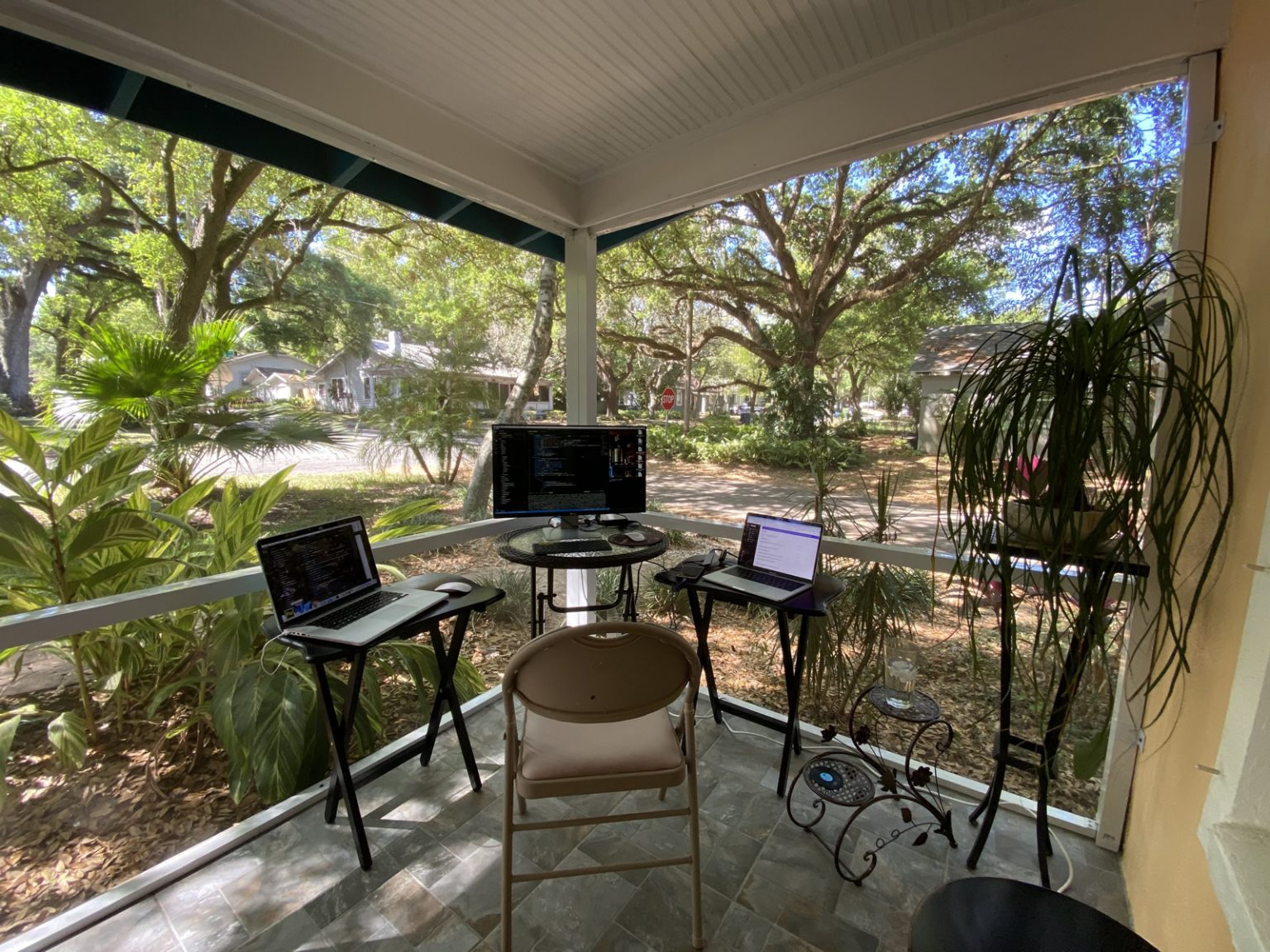
It’s 20° C (68° F) in Tampa this morning. Some locals will consider this chilly, but having grown up in Toronto, I find this delightfully cool. I’m going to take the work laptop to the “front porch office” today.
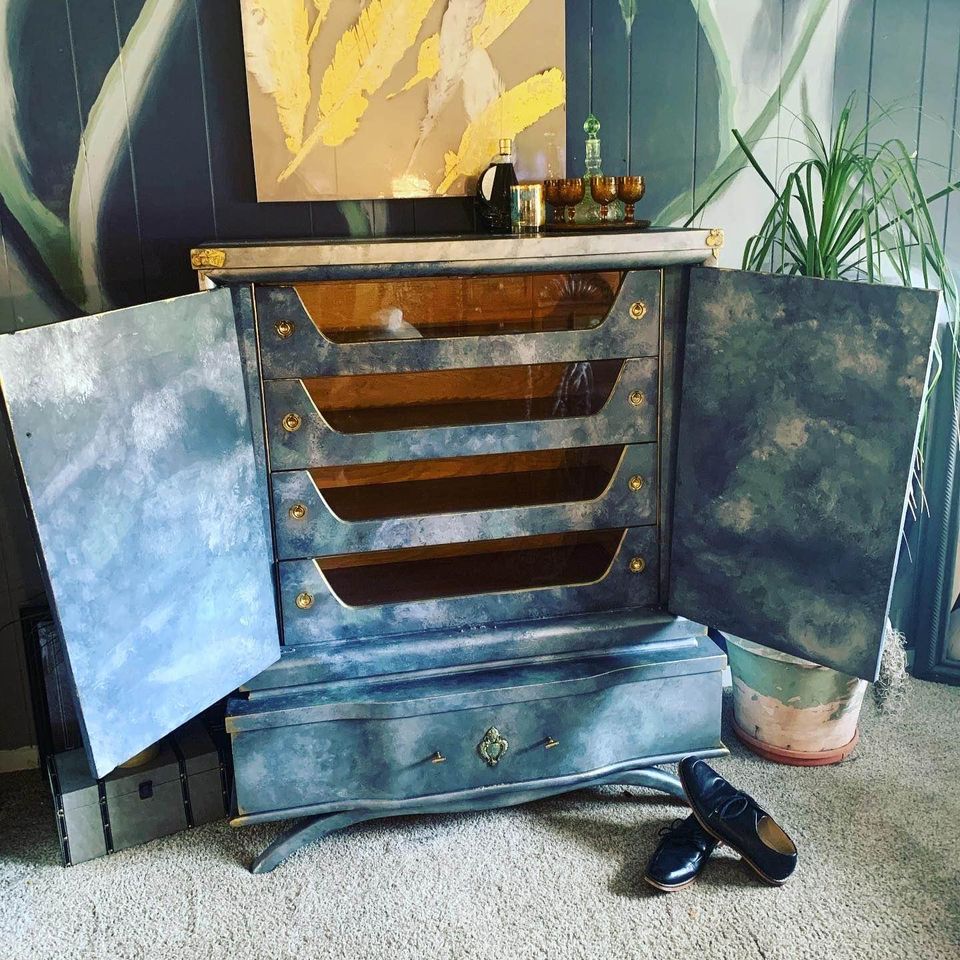
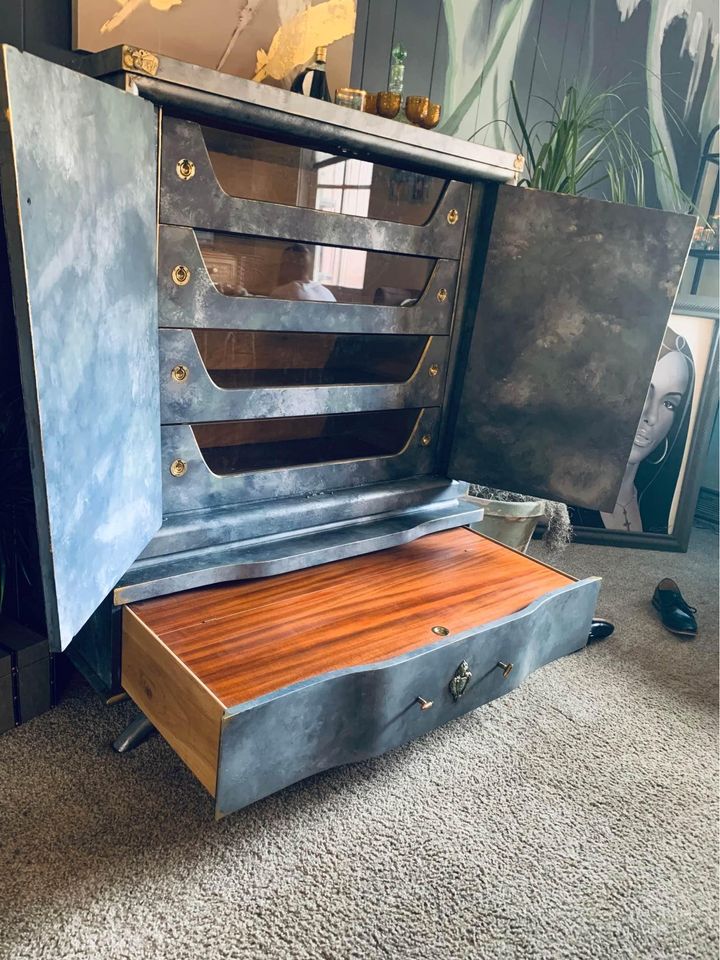
Why just get a dresser when you can get a chiffonier?And why just get a chiffonier when you can get one with the hand-painted image of Commander James Bond — original recipe Sean Connery Bond, no less — lovingly painted on the front drawers?I have no idea how it looks up close, but it does look pretty nice in the photos. If our place wasn’t already brimming with furniture, and if it matched our color scheme, I might have bought it.