Categories
Uncategorized

A Box o’ Bears

Saw this in ByWard Market the other day – it’s just too adorable not to post:

box-o-bears

Categories
Uncategorized

Notes from Hacks/Hackers Ottawa, May 12, 2011

01

The term “hack” used to denote an unprincipled, untalented news reporter, but journalists have since reclaimed the word use it it proudly now. It’s still used in the publishing business to refer to a journeyman take-on-any-topic type of writer, as opposed to one who specializes in a given area.

The term “hacker”– at least within tech circles – describes a computer programming enthusiast who loves having a clear and complete understanding of the systems s/he works on and enjoys creating clever programs. The layperson’s use of the word “hacker” is more often than not used to denote people who break into computer systems – the preferred term for this sort of person is “cracker”.

While both fields appear to be quite different, there’s much that binds them together these days. Both now work online and both deal with the interpretation, processing and dissemination of information, each in its own way. We even have people who live in both worlds at the same time:


  • Adrian Holovaty: Journalist and programmer, he created Django while working at the Lawrence Journal-World and one of the first Google Maps mashups, ChicagoCrime.org (which became EveryBlock), which plotted Chicago Police data of crime locations on a map.
  • Jacqueline Cox: Programmer/journalist at the New York Times, she develops data-driven apps for the Times, such as the database of family members for the Haiti disaster.
  • Brian Boyer: Self-describe “hacker journalist”, he’s the editor of news applications at the Chicago Tribune

02

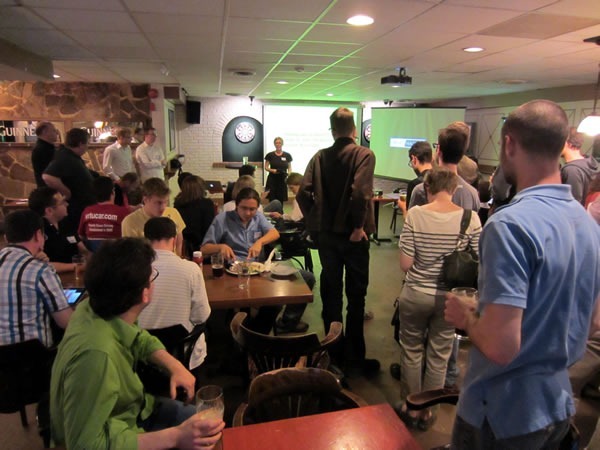
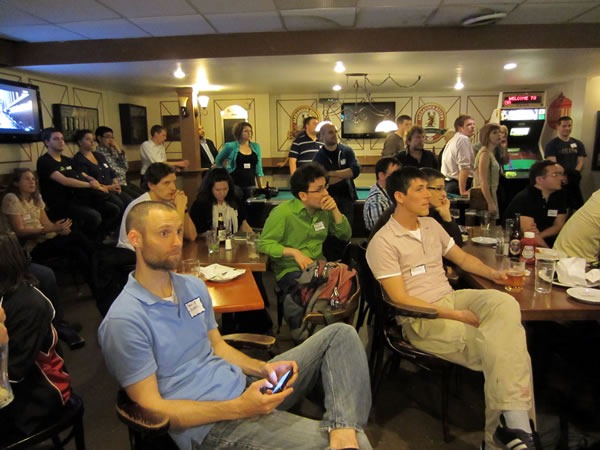
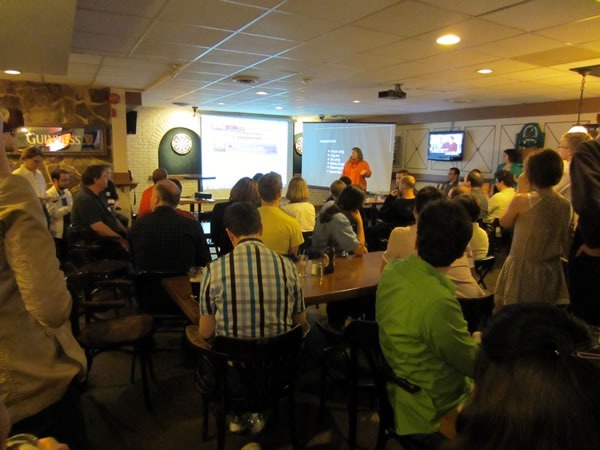
hacks hackers ottawaWith such an overlap, it was high time that hacks and hackers got together to talk about their respective fields, share ideas and start collaborations. That’s how the Hacks/Hackers meetups got started and spread far and wide. Hacks/Hackers Ottawa had its first meetup at the James Street Pub last night, and I was fortunate enough to catch it, thanks to a timely invite from my fellow Shopifolk Edward Ocampo-Gooding, Ottawa’s open data champion.

I took notes during both presentations and present them below. As always, any inaccuracies should be pointed out to me, either via email or in the comments. Feel free to copy the notes and accompanying photos and use them as you see fit!
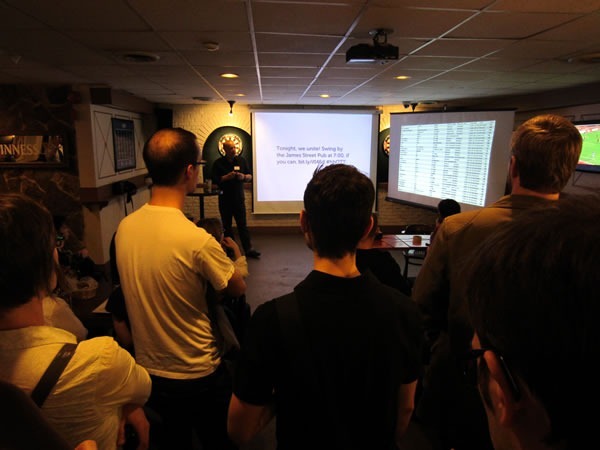
Glen McGregor, Ottawa Citizen

03

  • We hacks call it “computer-assisted journalism”, which is a bit of a misnomer
  • It’s more accurate to call it “data-assisted journalism”
  • For us, the really useful old-school sources of data are:
    • Databases
    • Spreadsheets
    • Email
    • Maps
  • The new-school sources of data, which we’re still getting used to, are:
    • Tweets
    • Geotagged images
    • Foursquare
    • Facebook
    • and really, anything online

04

  • After the Dawson College shooting, I asked the RCMP how many of the type of guns used in that incident were registered in Canada.
  • They couldn’t – or wouldn’t – provide me with that information, so I did made a $5 access to information request for that info in the gun registry (we did spend a billion dollars on it, after all)
  • One of the interesting things I noticed was that after Dawson College, there was a spike in registrations of one of the guns used in the shooting: the Beretta Cx4 Storm
  • My original conclusion was that it was being purchased by “copycats” – people who wanted to repeat the incident elsewhere, or at least found some inspiration in the shooting
  • However, after talking to gun owners and enthusiasts, I found that those Berettas were being bought up for fear that they would be taken off the shelves after the shooting
  • The lesson here is that even though you’ve got the data, you still can’t jump to conclusions
  • Why use data?
  • You no longer have to solely rely on statements made by others, attribute a statement to them and take it as fact
  • When you assemble the data and analyze it, you become the authority and you don’t have to attribute statements to anyone else
  • In getting the data and analyzing it, you’ll find that it uncovers stories that even the stories’ subjects don’t know!
  • An example: we were wondering which Ottawa parking patrol officer issued the most tickets?
    • When we asked the city, they didn’t know – they never bothered to look at the data in that way
    • More on this later
  • Another interesting question that arose from looking at Ottawa parking data: where is the most-ticketed parking meter in the city?
    • It’s on Lisgar Street, one block west of Elgin
    • Why? It’s near City Hall, the Courthouse, a lot of nearby doctor’s and lawyer’s offices, and…oh yes, a “rub ‘n’ tug”

05

  • Looking at the data:
    • Confirms the obvious
      • For example, most parking tickets in Ottawa are issued in the Market and downtown. That’s what you would expect
    • But it also reveals the unexpected
      • For example, the third most-ticketed street is Linda Lane. Never heard of it? Neither had I
      • It’s across the street from the hospital
      • Finding this out led to a larger story about hospital visitors being targeted for parking tickets
      • Interviewed a woman who got a parking ticket because she went to the hospital for some reaction to food and had parked outside. She fell into a coma for a few days, but recovered. She had little money and was going to celebrate her recovery with a dinner but couldn’t because the money had to go to a parking ticket she’d received while in the hospital.
  • You get interesting results with mash-ups (the combination of two different data sources to get new revelations – in the old days, this would’ve been called “cross-referencing”)
    • One mash-up combined locations of lottery ticket vendors with geographical income data to reveal that poorer neighbourhoods have more people who sell lottery tickets
    • An analysis of school suspension data in Florida’s Emerald Coast area showed that black students were suspended twice as often as whites
      • Often, this sort of discovery is a jumping-off point for a story
  • Although data is very useful, most people can’t connect to it if you simply present it to them
  • People, and thus reporters, want a “face” to the story
    • Example: when researching New York City elevator inspection data, a journalist wanted to find the elevator that failed the most inspections
    • Found that elevator, but used a “face”: told the story of a person who lived in the building where that failing elevator was located; this person was handicapped and effectively trapped at home whenever the elevator was out of order

06

  • People take more interest if the story has some kind of connection to them
    • In the story Hosed at the Pump, we looked at gasoline station pump inspection data
    • Found that 75% of the inaccuracies were in favour of the retailer
    • This sort of thing is a “water cooler story” – the kind we people people will talk about at the ofice, around the water cooler (or wherever people in offices gather on break)
  • Another water cooler story based on data: “Flushed with Olympic Pride” water usage during the final hockey game at the Olympics
    • Showed spikes between periods and after overtime
    • “I’ve written stories on topics like abortion and gun control, but no story I’ve done has received more negative comments than this one.”
  • Another interesting data-driven story: frequency of tweets on May 1, 2011, the day before the Canadian election
  • One thing I like about data is that it shows that underneath it all, we’re all alike
  • A great example of data-driven journalism: Joshua Benton’s and Holly Hacker’s (yes, that’s her real name) Faking the Grade
    • It was analysis of the scores from a standardized school test called TAKS, the Texas Assessment of Knowledge and Skills
    • She got the test returns for every student in Texas and subjected them to statistical analysis
    • Found cases where the patterns in which students gave answers to this multiple-choice exam were such that they could only be the result of cheating (statistically unlikely results)
    • A Canadian angle: the analysis was done with the help of George Wesolowsky, a math professor from McMaster
  • Yet another example: A Politician Looking for Funds? Here are Two Useful Addresses
    • Article in the New York Times that revealed, with the help of campaign contribution data, which addresses were associated with the most donations to presidential campaigns
    • These addresses are:
  • Crime data is also a good source of stories
    • “We like local stories…and [crime] scares people.”
    • Showed a mash-up of Google Maps and car theft data in and around Ottawa: most car thefts took place around a private golf and country club
      • That’s where the expensive cars are
    • The bike theft hot zones in the Ottawa area are:
      • Carleton
      • Downtown
      • Lincoln Field
      • Fisher / Meadowlands
  • Now about that story of the Ottawa cop who handed out the most parking tickets
  • He’s John Raine (he’s retired now), and in 7 years, he handed out 72,000 parking tickets
  • That’s 50% more than anyone else on the force
  • He didn’t want to be interviewed, but by looking at the data, we could find out when and where he typically worked, so I followed him every lunch hour for a while
  • Every ticket he issued was legit
    • He was just very efficient: he had a system by which he’d walk down a block, identify the violators and then hand out tickets
    • He issued them so quickly – “He’s a parking savant!”
  • To get a picture of him, we had to send out one of our surveillance photographers
  • The City had no idea he was their top guy
  • Looking at a table of data, you’ll find that each column is a story, or at least a potential story
  • Hackers know that there are lots of ways to present data; hacks don’t know that
  • For an example of how to present data well and in a way that’s easy to get, see Politifact and their “Truth-o-Meter”
  • Data sometimes comes in forms that don’t look like data tables
    • Example: The Slate article Not Sarah Palin’s Friends
      • They scraped her Facebook page every five minutes
      • Took note of changes, particularly negative comments that got deleted
    • This could be done for Canadian politicians as well: half the MPs have Twitter accounts
  • Looking for an idea? Try getting your hands on city overpass records
  • When it comes to city data, you’ll find it’s mostly maps
    • Why? Because they’re non-controversial
    • There’s no performance data on a map – most other types data can reveal that someone’s not doing their job, or doing it poorly or doing it wrong
  • Lots of municipal activity ends up creating some kind of electronic record of that activity having happened
    • Any kind of official inspection creates an electronic record
    • Any 311 call creates an electronic record
    • Any official disciplinary report creates an electronic record
    • Any application for a licence or any other kind of official registration creates an electronic record
  • You have to get past the notion that open data is the data that governments give us to use
    • Much of this “open data” is there, but they’re not happy to share it
    • Often, they’ll cite the mosaic effect as an excuse for not making data available: where anonymized data, when combined with other data, can be used to de-anonymize it
  • Keep an eye on the terms of use for open data databases – they seem to change quite often
  • The Canadian federal government maintains a licence on its data – “That is crap”
  • In Canada, privacy is practically a religion
    • In the US, there’s lots of data on sex offenders – who they are, where they live, and so on
    • In Canada, little of that data is available
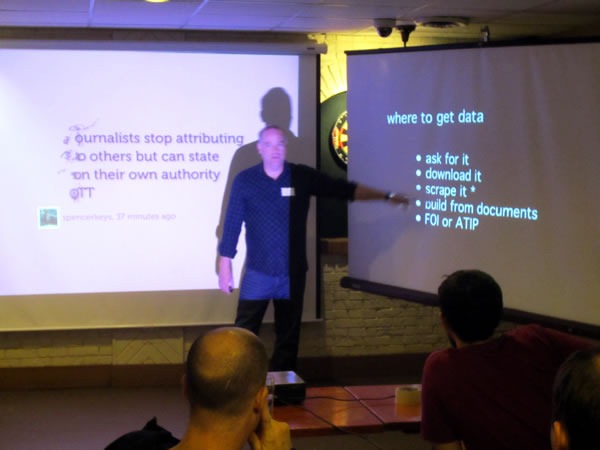
  • Where to get data:
    • Ask for it
    • Download it
    • Scrape it
    • Build from documents
    • FOI or ATIP
  • Hacks are good at:
    • Discerning news from info
    • Interviewing subjects
    • Providing context
    • Writing
    • Offering a big platform
  • Hackers are good at:
    • Obtaining data
    • Processing it
    • Analyzing it
    • Building better platforms to present it
  • Resources:

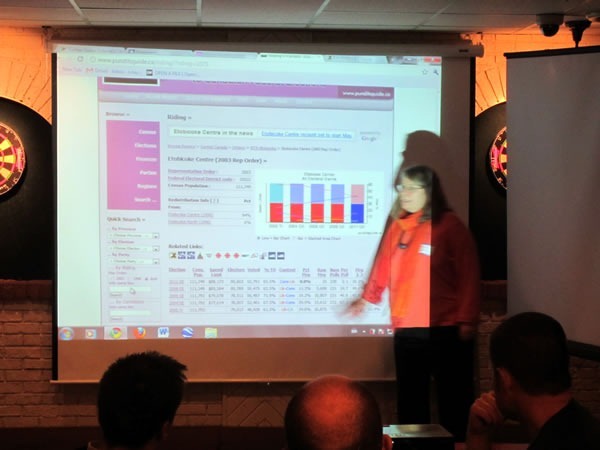
Alice Funke, PunditsGuide.ca

07

  • I used to work on Parliament Hill, but then I took my database programming hobby up a notch and retrained
  • A lot of data exists in flat files, and that’s not the way big data is stored
  • A lot of data is used for decision support:
    • Collect the data
    • Ask questions
    • In our case, the decision support is for political strategy
  • Election data is used for all sorts of things that people don’t think about, including:
    • reapportioning seats
    • redrawing ridings
  • There’s a lot of data downloadable from Elections Canada
    • The problem is that it’s not formatted properly
    • No unique ID code for each riding appears in the data tables they make available
    • There exists a five-character fedcode that’s supposed to uniquely identify any given riding
    • Without this fedcode, it’s much harder to make a consistent database, and a lot of additional manual work is required to massage the data
      • Without things like unique IDs – so basic to databases – you’d interpret “Peter Mackay” and “Peter G. Mackay” as two different candidates
    • So the process of working with Elections Canada’s data is to get the data, then massage it, then put it into a proper relational database
  • The data also exists at different levels. For the election, there’s
    • The “Who won the seat?” level
    • The “How many votes did each candidate get?” level
    • The “How many votes did each candidate get for each riding?” level

08

  • “There’s a special kind of hell for Elections Canada because they use .NET for their site, which gives you this giant ViewState hidden variable”
  • PunditsGuide.ca was never made for the media, at least not originally
    • It was for maybe 15 geeky people like me, and it grew from there
  • Interesting fact: Which riding walks or bikes to work the most? It’s not who you’d think:

This article also appears in Global Nerdy.

Categories
Uncategorized

Meanwhile, in Toronto…

My friend Maria snapped this photo of a guy in a squid suit on Bathurst Street by the Amsterdam Brewery:

Squid on bathurst

I’m reminded of this fella:

Zoidberg

Categories
Uncategorized

aloft Wedding Party

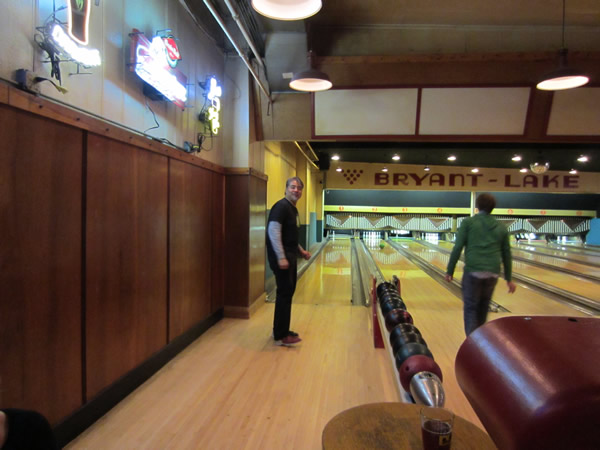
Last Saturday in Minneapolis, after spending the earlier part of the evening doing this:
Joey deVilla bowling

…and the later part of the evening doing this:

Bottle of Auchentoshan scotch

…I returned back here at around 3:00 a.m.:

Exterior of aloft Minneapolis

The lobby was still packed with people, many of whom were still dressed up pretty nicely. A quick look confirmed that it was a wedding party that didn’t want to stop, even though last call for alcohol in Minneapolis is 1:00 a.m. (it used to be that way in Ontario until the mid-’90s). They’d turned the lobby into their own private party, and the aloft management, as hip as they are, let them be. The tables were covered in boxes from Pizza Luce and bottles of beer.

I made my way to the elevator, but was stopped by a big grey-haired gentleman who said “Oh, no you don’t!”

“Pardon me?” I asked

“You just can’t wander through a lobby at three in the morning, with an accordion, without at least explaining what it is you’re doing!”

“I take it out a lot. Good things happen when I do,” I replied.

Aloft wedding 1

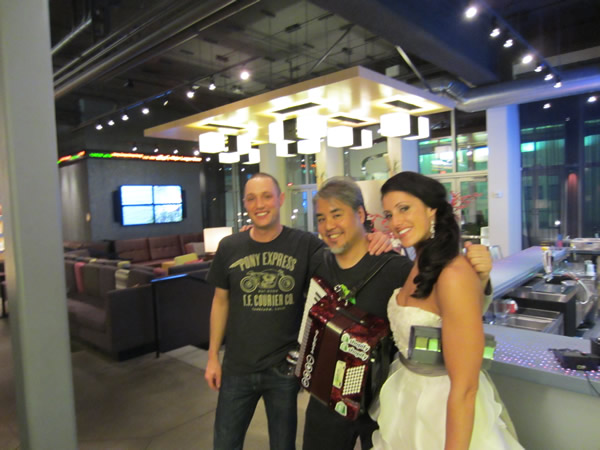
“That’s my son,” the guy said as he pointed to a young, shaven-headed guy in a dark grey T-shirt. “He just got married!”

“Congrats,” I said. “Would you like a song?”

“That is exactly what I want. Play whatever you like!”

And so I stayed for another hour, chatting with the bride, various wedding guests and relatives, and singing with the groom, who knew the lyrics to a lot of songs. We did The Clash, Black Eyed Peas, Britney, Cee-Lo, Stone Temple Pilots, AC/DC, Violent Femmes and Steppenwolf. People sang aloug — boisterously — and all the while, I could see the night manager at the front desk, smiling. aloft run an extremely cool hotel.

I made it to my room at 4:00 a.m.. A nice night all ’round.
Aloft wedding 2

Categories
Uncategorized

Notes from Last Night’s Ottawa Girl Geek Dinner (May 11, 2011)

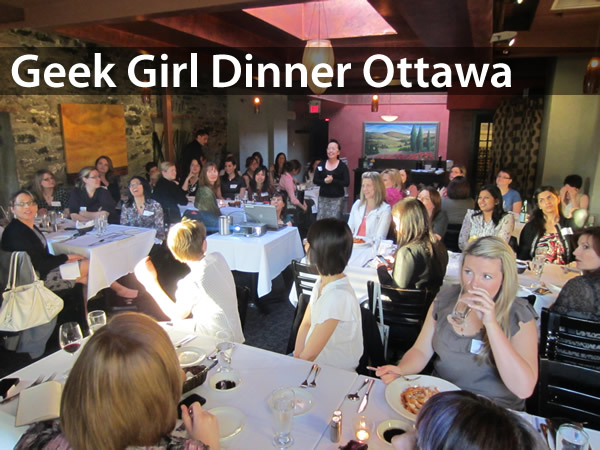
Geek girl dinner ottawa

The Ottawa chapter of Geek Girl Dinners took place last night at Vittoria Trattoria in ByWard Market. Although I am not a geek girl, I was present as the representative of Shopify, who sponsored the event with some prizes (the winners of the raffle took home a much-coveted Shopify T-shirt and six months’ worth of free online store) and to get in touch with Ottawa’s women techies and designers. There were about 50 people present, filling the Vittoria Trattoria’s upstairs room.

The Geek Girl Dinners are get-togethers of women in business, tech and design over dinner, where they can get to meet their peers, share ideas and hear presentations delivered by women with some particular expertise on a given topic. They usually have a theme, and last night’s was entrepreneurship. Here’s their description of the theme:

Have you ever thought, “Why work for somebody else when I can work for myself?”

Easier said than done, but anything’s possible! From flowers to clothing, to writing and painting, entrepreneurship opens the doors to anyone with a dream and a passion.

On Wednesday May 11th, please join us for an interactive discussion about the entrepreneurial journey of three Ottawa women who have turned their business dreams into realities.

If you’re a woman in the Ottawa area with geeky tendencies and you’re looking to meet others like you, have a nice meal and see some interesting presentations, you should keep an eye on the Geek Girl Dinners Ottawa site, watch for their hashtag on Twitter (#ggdottawa) and come out to one of their events!

My thanks to the organizers, Kelly Rusk, Veronica Giggey, Melany Gallant and Samantha Hartley for putting on a great event!

My Notes

I took notes and photos during last night’s presentations and present them below. If there are any inaccuracies, they’re mine; I was furiously scribbling them into a Moleskine as they were delivered. Free free to copy them and use them however you wish!
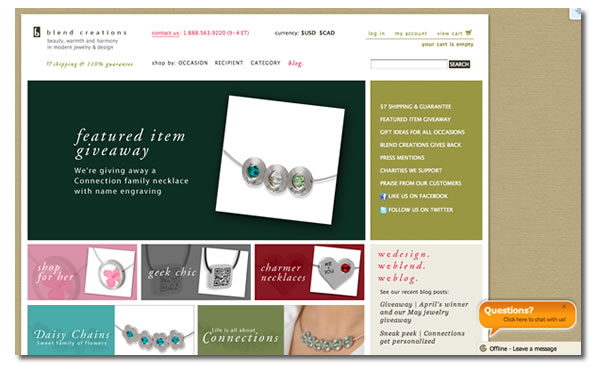
Vivian Cheng, Blend Creations

Screenshot of the Blend Creations site

Vivian’s Bio

Vivian Cheng is an industrial designer and one-half of the creative force behind Blend Creations. She and her husband, Eric Jean-Louis (a graphic designer) combine their divergent design approaches to create a contemporary jewelry line that is clean and modern in aesthetic, yet also blends their respective cultures in East meeting West.
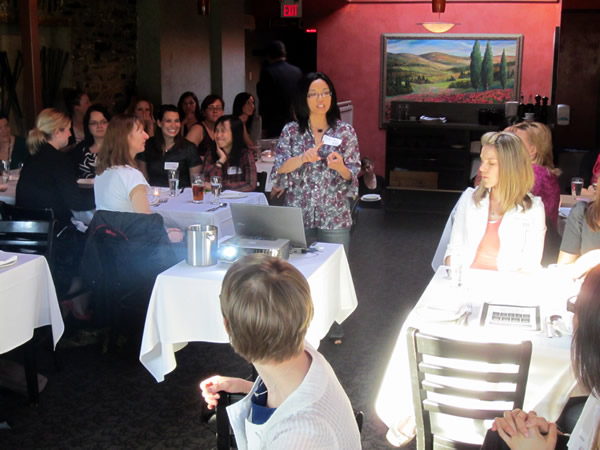
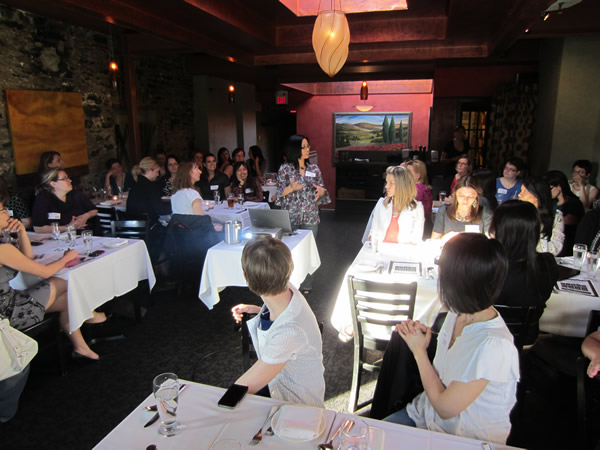
Vivian Cheng makes her presentation

Presentation Notes

  • Trained as an industrial designer
  • "Didn’t want a ‘real’ job" after graduation
  • Started company in September 2005 with her husband, Eric
  • It was a bare-bones site, especially by today’s standards, hand-coded with PayPal buttons and a very basic shopping cart
  • She sells her jewellery almost exclusively online
  • Online store tips:
    • Look at other online stores and learn from them
    • Find out who your competition is
    • Take a look at Etsy and find out whether it’s for you, and why (or why not)
    • Etsy started after Blend Creations, and they decided not to go with it because they didn’t want to be a "stall" in a sea of thousands of stores; they wanted to be their own store
  • Their jewellery is a blend of modern and traditional, industrial and organic — steel with mahjong tiles, bamboo or coral
  • The jewellery is handmade, by them
  • They bootstrapped the business with less that $5000
  • The mandate:
    • Eric, then a full-time graphic designer, would continue at his job and pitch in
    • If the business went well, they’d continue on this path
    • If it didn’t, she’s have to get that ‘real’ job
  • If 2006, they were contacted by Real Simple magazine to have their jewellery featured on a full page
  • Had they tried to take out a full page ad in Real Simple, it would’ve cost about $60K
  • Real Simple found out about them via a design blog
  • To be featured on the page, they had to offer a special deal on a necklace to Real Simple readers
  • Real Simple asked "Can you handle 1,000 orders?"; the only answer was "Yes!"
    • (She was 7 months pregnant at the time)
  • The money resulting from the Real Simple deal allowed them to buy better equipment: a CNC router [here’s a link one that routs wood] and a laser cutter
    • "We could cut circles now!"
  • They continued with magazine ads
    • Good, but during a recession, they’re not as effective
    • Magazine ads have a 4-month lead time
    • Problematic in 2008, during the econopocalypse
    • Generated only a handful of sales, what with the belt-tightening
  • During the economic crisis of ’08, the US was hit hard, and 98% of their customers were American
  • They had to refocus and hit more local markets
  • They couldn’t just do print ads
  • Their first foray into social media was Facebook
    • Their first activity on Facebook: a giveaway
    • She tries to say something on Facebook every day
  • They have a monthly give-away on their blog
    • Facebook’s rules make it difficult to do a monthly giveaway on their site
  • She initially didn’t "get" Twitter (they’re @blendcreations)
    • Discovered that Twitter is all about the interactions
    • She even designed jewellery specifically for their Twitter followers (such as one shaped like an @ sign; jewellery with your Twitter handle on it)
    • Her husband, Eric, doesn’t get the appeal of "The Twitters"
  • The thing about any design is that people either love it or hate it
    • The important thing is to get people talking about it, love or hate
    • If you offer a service, make it a service so good that people talk about it
    • If you offer a product, keep innovating with it
  • "With social media, you have to do something, even if it’s small"
    • "Blogs are the new magazines"
    • They’re the source of many customers
  • Their customer breakdown by region:
    • 60% US
    • 40% Canada and the rest of the world (mostly Canada)
  • Why did I go into jewellery?
    • "I’m an industrial designer, we’re trained to make things"
    • Went with jewellery because of higher perceived value
    • That can be a problem in hard times
  • She and her husband’s design backgrounds let them "do it all":
    • Product design
    • Product photos
    • Ads
    • Site design

Vivian Cheng makes her presentation

Hana Abaza, Wedding Republic

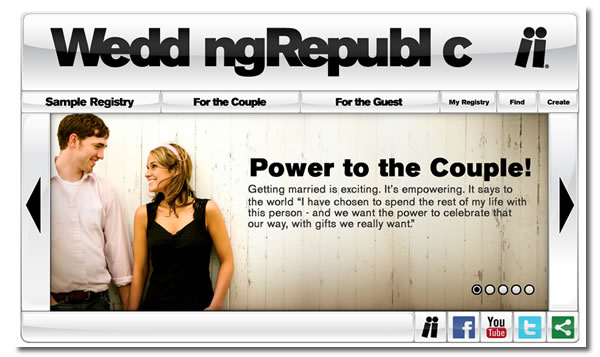
Screenshot of Wedding Republic site

Hana’s Bio

Hana Abaza is the co-founder and CEO of Wedding Republic, an Ottawa based start up allowing couples to set up an online, cash, wedding registry in a way that works for them and their guests. With an incredibly diverse background, Hana has pulled together her broad skill set in order to navigate the start up world. When she’s not in front of her laptop with armed with a large cup of coffee, she can usually be found teaching a kickboxing class. Self described as slightly ‘type a’ with a dose of ADD, although some say it’s just an unrelenting curiosity.
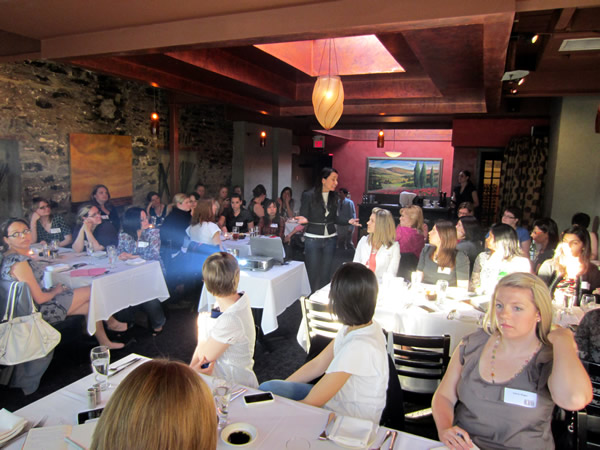
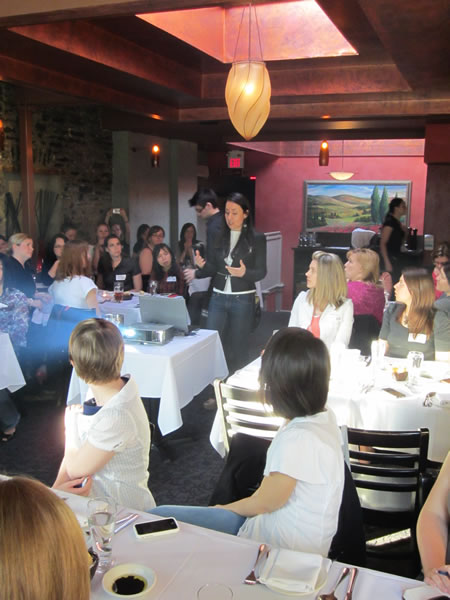
Hanna Abaza makes her presentation

Presentation Notes

  • Wedding Republic is a cash gift registry for people getting married
  • A couple getting married may want stuff, but sometimes, they’d much rather have the cash
  • The idea came to her and her business partner in 2008 while they were watching the Superbowl
    • James (her business partner) has a sister who was getting married
    • Always a stressful situation
    • Online registries for gifts were still few and far between
    • There was no way to register online to give a cash gift
    • The original idea was for a big general wedding registry; it got refined over time
  • Questions you need to ask when starting an entrepreneurial project:
    • Who is your target market? Who will use your product?
    • Does your product fulfill a need? Or a want?
    • What are the current alternatives to your product exist? What are the options?
      • What are the pain points for these alternatives and options
  • They talked to all sorts of people: couples, couples getting married, wedding guests to get more info
  • They hired a developer and were able to take advantage of government programs to help fund the project
  • Advice:
    • Surround yourself with the right people; people who are smarter than you are
    • You can’t do it on your own; make sure you have a support system
  • Wedding Republic went beta in February 2010
  • It was a stressful time
    • Once you’ve opened to the public, you get feedback, opinions, suggestions, complaints about issues
    • But opening to the public gives you a customer validation process
  • You have to listen to your customers, but:
    • You have to know what to ignore
    • You have to know what to take to heart
    • Focus on what you’re good at, and don’t get derailed by customer feedback
  • They were contacted by Saatchi and Saatchi
    • Someone at Saatchi and Saatchi saw their site
    • They were intrigued by the idea of Wedding Republic and invited them for a meeting in their Toronto office
    • They offered to do a rebrand
    • On big companies working with small companies:
      • They may be bigger than you, but once you’re working together, you’re on par
      • Meet as equals. Don’t bed over backwards just to please them
  • There’s a lot of back-and-forth between Saatchi and Saatchi and the developers; she "translates" between the two
  • Relaunched in January 2011
  • More advice:
    • Keep yourself in check (having a business partner will help)
    • Execute! Many people don’t think they can do something, so they don’t try.
  • One challenge with this business: few (if any) repeat customers
    • Considering expanding the concept to baby registries
  • How they make money:
    • The couple getting married doesn’t pay anything
    • The guests pay a transaction fee
    • That’s not bad, considering the 7% markup for registries at The Bay
    • People pay for services that save effort: "I’d gladly pay $5 to not leave my couch"
  • Possibility of expanding outside North America:
    • Looking at it, but wedding customs vary all over the world
    • For example, in China, cash gifts come in red envelopes. Can’t do that with a cash registry.

Hanna Abaza makes her presentation

Amy Yee, Eventbots

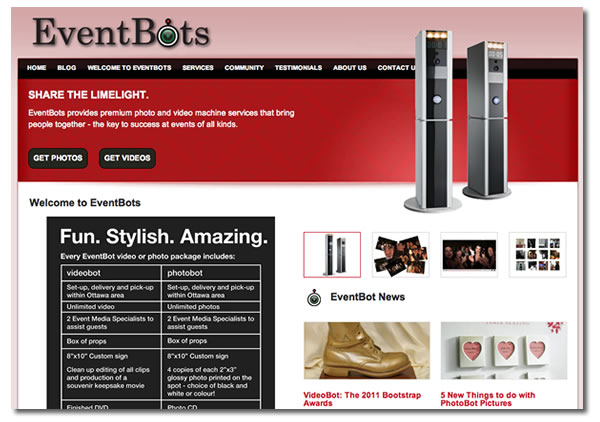
Screenshot of the Eventbots site

Amy’s Bio

Amy Yee is an entrepreneur and strategy consultant specializing in technology, engagement and collaboration at start-up and high growth companies. Among a wide variety of projects, Amy is currently the CEO at the second company she has co-founded: EventBots – an award-winning technology solution for public engagement. Amy has a Bachelor’s of Electrical Engineering from Carleton University.
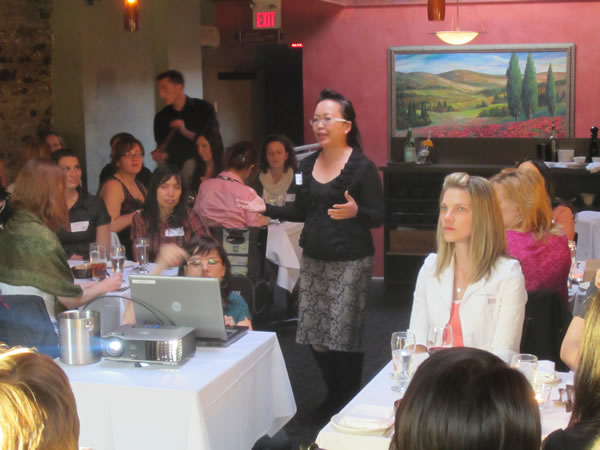
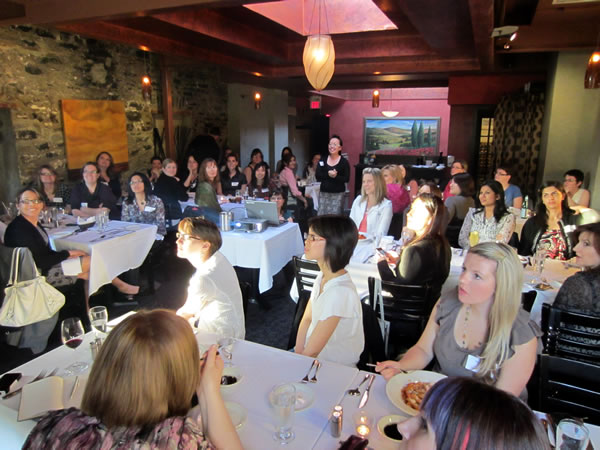
Amy Yee makes her presentation

  • Eventbots are devices that can record video or photo messages at events
  • [Showed video of people who recorded messages at the Mesh conference]
  • Think of it as being similar to the "Speakers Corner" at CityTV in Toronto
  • How they got started:
    • They had friends who were getting married
    • Had heard of some Toronto-based service where they set up devices where people could record messages
    • Her husband was an industrial designer: "I could build that"
    • He built the machine, she turned it into a business
  • The current, sleeker version is version 2
  • The first version was bulkier and made of wood
  • The device has to fit into their car, a Mini Cooper
  • They’ve taken the eventbot to events in Ottawa, Toronto and Montreal
    • They can only serve areas within a reasonable drive of Ottawa
  • The sales process is online
  • Even if an eventbot gets only 5 video recordings at an event, there’s still always one that stands out as head and shoulders abover the others
  • Their current eventbot was so slick that a Japanese ambassador insisted that the device was from Japan
  • People call them "iPodzillas"
  • Advice:
    • Don’t fear change; change is a competitive advantage
    • Don’t worry if you have to modify your idea
    • Bet on the team, not the idea
    • Community support is important!

Amy Yee making her presentation

This article also appears in Global Nerdy.

Categories
Uncategorized

aloft Minneapolis: A Nice Hipster Hotel

Front entrance of aloft Minneapolis

I don’t know Minneapolis at all, so I had no idea where to stay when I was planning my trip for MinneBar. I posted a question on Twitter asking for hotel recommendations and got two for aloft Minneapolis; one from Ben Edwards (one of the MinneBar organizers) and from @aloftMlps, the person or persons behind the aloft Minneapolis Twitter account. I’d never stayed at an aloft before, but I knew they were the hipper, more casual, less pricey cousins of W Hotels and was curious about them, so I went along with the suggestions.

@aloftMlps asked me when I would be checking in and out via Twitter, telling me they’d take care of the reservation for me. Better still, they got me the “Friends and Family” rate of USD$89 a night! Score one for aloft, and I hadn’t even set foot in the place yet.

Many alofts are near the airport, but the Minneapolis one is in the Downtown East area. As the cab drove into the neighbourhood, my hipster senses started tingling. This area is a former industrial zone, full of old factories and warehouses converted into offices, shops and places to live, new condos, and many other signs that spell the early stages of gentrification. Given that Minneapolis is on the verge of out-hipstering Brooklyn (just visit Uptown to see), it’ll be interesting to see what this area will look like in five years.

My room was on the third floor and split into two sections. The main section was the bedroom area, shown below:
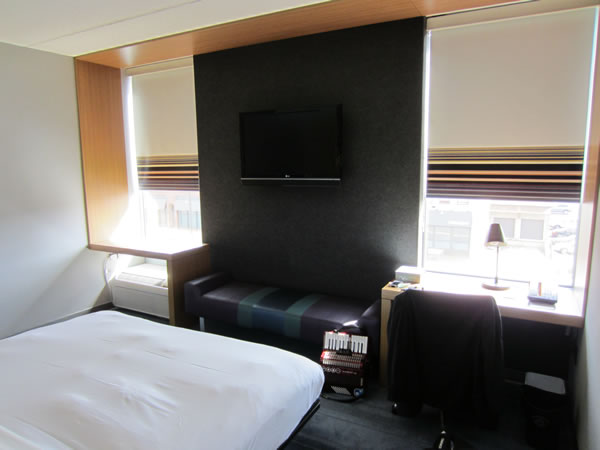
The main part of my hotel room, as seen from the head of the bed

That’s a mini-couch or mini-chaise lounge below the TV set. The box on the left side of the desk is a “jack pack” bristling with power outlets, usb chargers and audio and video inputs of all sorts (composite, VGA, HDMI) so that you can plug your computer, video and audio players and have them play on the TV and in-room sound system.

Here’s the main section as seen from the other side of the room.

The main room, as seen from the foot of the bed

The bed and sheets were comfy. We’re talking almost-Hyatt comfy, and at a Four Points rate, that’s not bad.

You can’t see it very well in the photo above, but there’s a storage niche to the right side of the bed. That’s where the iron and ironing board are tucked away.

The smaller section of the room is the bathroom and closet area. It’s just to the left as you enter the room, with the passageway leading to the main section on the right. The closet doesn’t have a door; instead, it has a curtain:
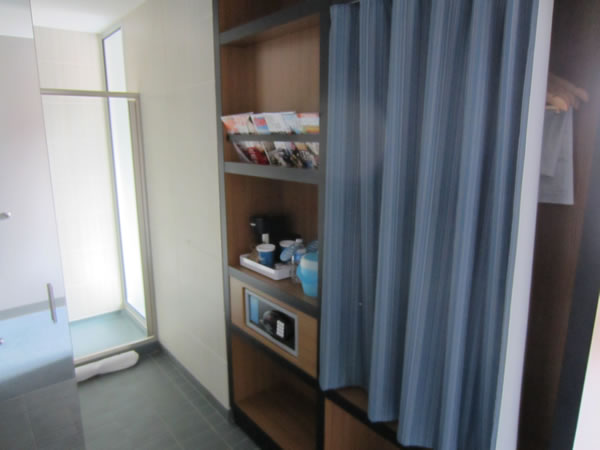
Closet area of the room, featuring curtained-off closet, magazine rack, coffee maker, ice bucket and safe

Here’s the other side of the small area. It’s your standard hotel bathroom except for the designer sink (the sort that’s always in the bathroom of restaurants where they stack food vertically and do “sauce painting”) and the “spa style” shower with built-in dispensers for shampoo and soap.

That glow you see in the shower is actually coming from the main room. The shower has a translucent window facing the bedroom. It’s clouded enough so the show you get from the bedroom is PG-13 rather than R. It’s the kind of feature that makes this place a good one to spend the night with a “special friend”. I suppose I should go find one.
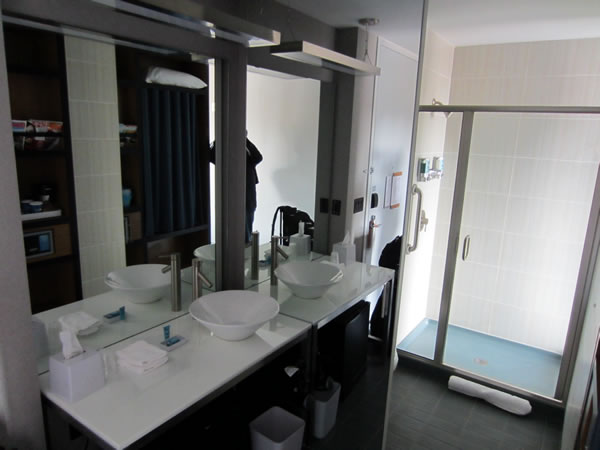
Sink and shower

Here’s another look at the closet, this time with the curtain drawn aside. No, the jacket doesn’t come with the room.
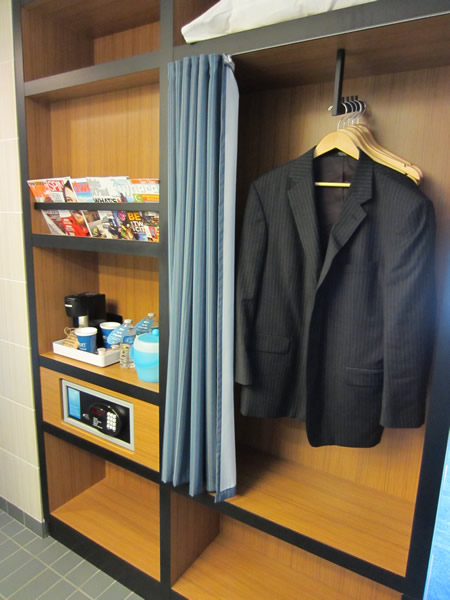
Another look at the closet, with the curtain drawn aside to show my stuff hanging in it

Here’s a closeup of the magazines, safe and other goodies. The “what’s going on locally” magazines are typical for a hotel; SPIN and dwell are not.

Closeup of the magazine rack, beverage shelf and safe in the closet

The 1950s-style alarm clock beside the bed was my favourite hipster detail in the room.

Closeup of 1950s-style alarm clock

Here’s what the lobby looked like on Friday night from the bar. It was happening:
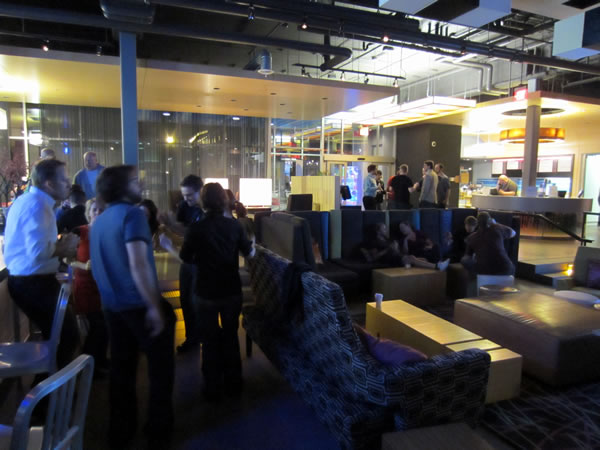
The lobby and front desk, as seen from the bar

…and there was a DJ spinning some pretty good mashups. I give her bonus points for the Polaroid leggings:
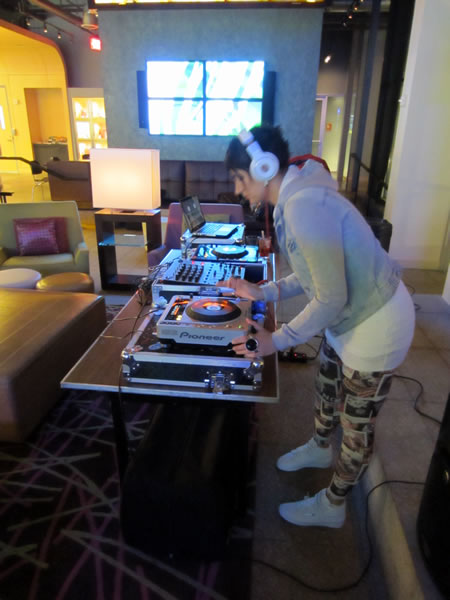
The Friday night DJ, spinning tunes in the lobby bar

Here’s the bar as seen from the far side of the lobby. It seems as though the designers wanted to make the lobby a place where people — well, aloft’s intended audience, anyway — would want to hang out. I like it — during the day, it’s got a sort of “cafe” feel to it, and at night, the feel become more lounge-y:
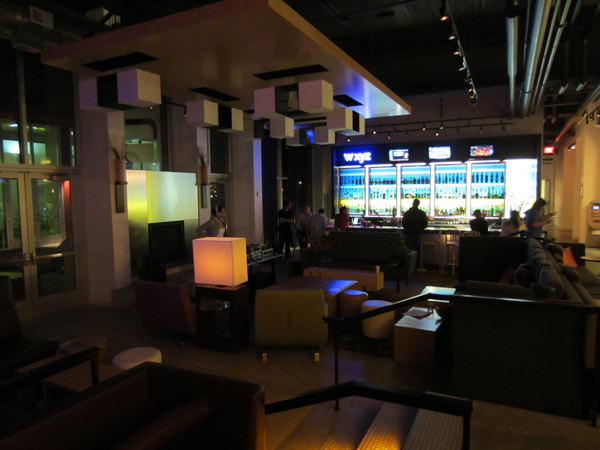
The lobby bar, as seen from the far end of the lobby

Here’s a closer look at the bar:

The lobby bar, closer up

I didn’t get a photo of the re:fuel cafeteria on the other side of the lobby. It’s a self-serve deal that’s open 24 hours and features sandwiches, salad, soups, drinks and snacks. It’s decent and convenient. To the side of re:fuel is a hotel shop that has stuff you may have forgotten at home (toiletries and all that) as well as stuff you might not have even though of (mini-board games, for example).

The staff were friendly and helpful, and as you’ll see in a later post, tolerant of late-night accordion-driven carousing in the lobby.

All in all, I enjoyed my stay at aloft Minneapolis. I’d gladly stay there again!

Categories
Uncategorized

Erika Moen’s Comics and Shopify

We Shopifolks like to travel far and wide. While I was off in Minneapolis for MinneBar, my developer advocate teammate David Underwood was in Toronto attending TCAF, the Toronto Comic Arts Festival. While there, he met Erika Moen, the comic artist behind the autobiographical DAR ("A Super Girly Top Secret Comic Diary")…

alt

and her current comic, Bucko, a delightfully twisted murder mystery:

alt

When David told her that he worked at Shopify (in fact, he and I started on the same day), she told us that she loved us. And not just by saying so, but also with an autographed comic book, which is now sitting in the Shopifort:
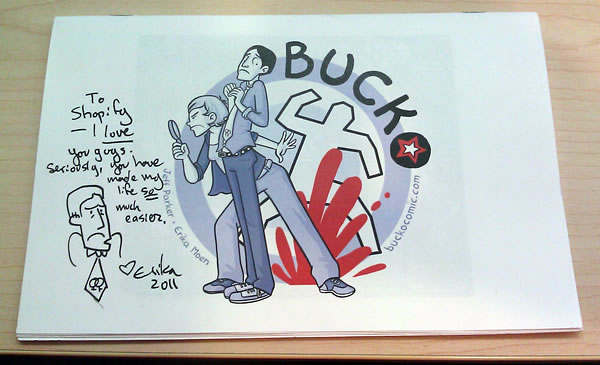
Autographed copy of Erika Moen's

Why does Erika love Shopify? Because she has a Shopify store! She sells her comic books, prints, posters and other art on a store she built with Shopify:
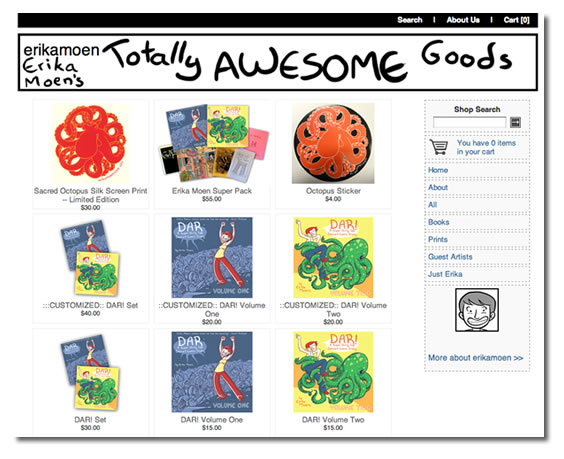
Screenshot of Erika Moen's Shopify store

Go check out Erika’s site, read her comics and buy her stuff! And if you’ve got your own comics (or anything else) that you want to sell online, sell them with Shopify!

This article also appears in Global Nerdy.