[via The Colbinator] Here’s an interesting way to liven up those stuffy chess matches.
Categories
[via The Colbinator] Here’s an interesting way to liven up those stuffy chess matches.
Update: The papers have been taken down; the links now lead to this notice:
taken down the files pending an appointment I have with them next week.
Ah, the joys of non-academic discipline.
I love this panel from Achewood:
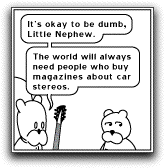
It would seem that a number of future car stereo magazine subscribers
were taking an astronomy course at the University of Texas in Austin,
tracks. There is the “this is going to hurt a lot but you will learn
from it” engineering physics. There is the “you learn the concepts but
you are useless in any practical sense” biomed physics (which I’m
taking). And then there is the “I’m taking this because for some reason
my liberal arts degree mandates it.” physics.
I was
walking through Painter Hall when I saw a pile of graded papers waiting
to be picked up. It was a short writing assignment on how the practical
applications of lasers has affected your life.
From a quick look
at the grammar and incomplete sentences, I knew it was a freshman
course. So I took the papers, added my own… comments… and placed
them back in the pile. The grades on them were put there by the
original grader.
Both the papers and the comments he added are hilarious. The latter, intentionally so:
Read the full entry here.
You’ve probably heard this already, but let me state for the record: Wanita Renea Young is the worst neighbour on Earth.
Update: The original site to which I linked has a random image that isn’t always work-safe. Here’s its link.
In case you can’t go there, here’s the most important part of the entry:
(Tzedaka is the Jewish legal requirement to do right by your fellow
man… a moral imperitive to charity if you like.) The levels of giving
(from least admirable, to most) are:
Yesterday, I read an article at Reuters
about two teenage girls baking cookies for the neighbours in some hick
town in Colorado. They stayed home from some party or other and made
sweet things for people, decorated them with little hearts, wrapped
them in ribbon and left a note saying ‘have a great night.’ Then they
ran around, full of neighbourly love, and dropped the boxes off on
porches, knocking on the door and hiding before the recipient of the
gift got to the door. To me, that sounds like the 6th level of giving: giving when you know the recipient’s identity, but the recipient does not know your identity.
…
I hope the bitch neighbour (Wanita Renea Young) that filed the lawsuit
against the two teenagers for this random act of kindness, lies awake
in bed at night wondering whatever happened to the ‘youth of today.’ I
hope it plagues her.
Hear, hear.
It’s always a blast to step out for food and drinks with our friends from the Tucows office in Starkville, Mississippi,
and last night was no exception. My coworker Darryl and I hung out with
Bill, who was visiting from Starkville and had a blast. We talked about
work, poker, booze, alcoholic Van Halen bass players and even a bit of
politics. Anyone who says that “Red Staters” and “Blue Staters” (or
well, Darryl and I would be, if we were American) can’t get along needs
to get out of their echo chamber for a stretch.
We all agreed that the Bush plan to privatize social security sounds
like a perfect opportunity for financial institutions to gouge people,
which in turn sounds like a perfect opportunity to post this comic:

We talked for a little bit about tech enclaves and what painful social
scenes places with nine-to-one male/female ratios have. Naturally, the
movie Office Space came up. Bill and I love that movie.
Strangely enough, my fellows in Tucows’ Reasearch and Innovation
department haven’t seen it yet (when I started working at Tucows, Boss Ross
didn’t know what the “Is it good for the company?” sign I posted at my
des referred to). What the hell kind of research group are we? I must
correct this oversight soon.
We ended up at my favourite watering hole, Smokeless Joe, where they
know me well enough that as soon as I sat down at the bar, the barkeep
said “Sorry Joey, there’s no Black Katt
on tap this evening.” That’s why I love that bar so dearly; they know
me there, and they’ll often turn down the stereo to let me play
accordion for the crowd.
Rick Mercer happened to
be sitting at the bar beside us and we got into a conversation with
him. Mercer, for those of you who don’t know him, used to be on a CBC
news satire show called This Hour Has 22 Minutes and does an occasional special called Talking to Americans,
in which Mercer does “man on the street” interviews in the US that show
how little our friends to the south know about their largest trading
partner with whom they share the world’s largest undefended
border.Americanophile that I am (hey, I’m marrying one, and I’m the
direct descendant of one), it pains me to note that a number of their
politicans have used “I’ve never travelled outside the country!” as part of their campaigns.
Bill asked Mercer if he was the one who fooled then-Governor
George Bush (he got Bush to comment on his endorsement by Canadian
Prime Minister “Jean Poutine”), to which Mercer replied “yes”. “I’m
glad you didn’t interview me; I might’ve made the same mistake,” Bill
said.
To be fair: can any of my fellow Canadians name the G8 member countries
— we’ll exclude the European Union for the purposes of this question
— and their leaders? (I can, but I’m the smartest accordion player in
the city. I have a level of excellence to maintain.)
What happens to people who can’t cut the mutant mustard at the school where the X-Men train? McSweeney’s tells all in their article, Rejection Letters from Xavier’s School of Exceptional Youth.
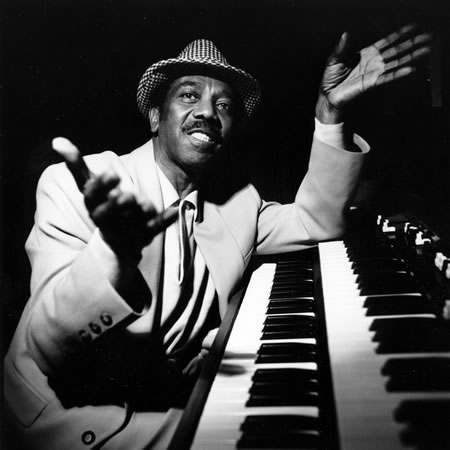
Jimmy Smith, master of the “Full Eights” sound on the mighty Hammond B-3!
Around 1985, the Yamaha Organ School was doing its damndest to expunge
my love for music and my sense of rhythm. While Yamaha’s musical
instrument division were practically redefining instruments — consider
the Yamaha grand piano’s bright sound, favoured by Glenn Gould and many
rock pianists, as well as the DX-7 synthesizer and the WX-7, which let
sax and clarinet players play synth — the ghouls behind the home organ
division crafted a course bereft of soul and full of schmaltz. I had a
teacher who had a bit of a legato fetish; she was an advocate of a
playing style in which the notes blurred together into a bland aural
mush. To make matters worse, I was only two out of fourteen songs
through the required Barry Manilow songbook.
After making sure that I got kicked out of organ school at the annual
recital (long story, which I’ll recount later), I became a synth player
full-time. I even went to far as to erase any of the organ sounds from
my Akai AX-60 synth. I’d had enough of that infernal instrument.
What changed my mind was a music course I took at Crazy Go Nuts
University: “Science and Technology for Musicians”. It qualified as an
“arts” course for engineering students and as a “science” course for
the music students. I often gave them a hand with the science parts
(“Uh, Joey, how do I draw a graph of a 5Hz sine wave with an amplitude
of 2?”) and they gave me a hand with non-keyboard instruments (“Uh,
Dave, how do I play a scale on a clarinet?”).
During the course, I wound up writing a paper on the Hammond B-3 organ.
This instrument was clearly the invention of a former watchmaker: a
classic Hammond is essentially a big electric motor driving a gear
system which in turn drives a series of wheels that made sound. While
writing the paper, I decided to hit the music library and listen to
artists who were considered B-3 virtuosos; that’s when I discovered
My bad experiences at the Yamaha Organ School, coupled with a teacher
who was more devoid of funk than the entire Michigan Militia, led me to
forget that one could play the organ with rhythm and even staccato
attacks. On the organ, Jimmy Smith’s hands and feet could be weapons;
his playing style defined what we now considered to be the de facto
organ soloing and pedalling style.
Musicians who redefine the way their
instrument is played tend to draw inspiration from other instruments. For example, Carlos Santana says that in order to perfect his signature guitar playing style, he played Dionne Warwick albums over and over and listened to her voice.
In Smith’s case, he drew inspiration from trumpet players, mimicking
their lines. He even emulated their sound in solos by killing the Leslie
(an organ spaker mounted on a rotating stand that gives organs their
“whirling” sound) and slamming every drawbar save the lowest and
highest to the “zero” setting.
After buying Jimmy’s live album, Root Down (whose name you should recognize — the Beastie Boys covered the title track on Ill Communication),
I reprogrammed the organ sounds back into my synth, and made sure than
any subsequent synth I bought could do a decent B-3 impression. Later,
when the organ made its comeback in rock in the early 1990’s (thanks
largely to the “Madchester” sound of bands like the Charlatans,
Inspiral Carpets, Milltown Brothers, et. al.), I copped more than my
fair share of Jimmy Smith licks at gigs. In 1994, I got to completely “Smith
out” when the band we opened for let me use their B-3 and Leslie. It
was heaven.
My last
synth — a Korg WaveStation A/D,
which I still have — has a patch I programmed: a monster B-3 sound
with a touch of distortion and a decent Leslie effect paired with
spring reverb. When you dial it up, its name appears in capital letters
on the display: JIMMY SMITH.
Jimmy Smith died on Tuesday at the age of 79. He’d been playing the organ for 50 years and would’ve embarked on a tour with Joey “The other keyboardist named Joey” deFrancesco next month.
Thanks, Jimmy, for all the music, and for helping me fall in love with the organ again.

Best. Sign placement. Ever.
I just read this in Deenster’s blog:
Oh, crap. I knew I forgot to do something today.
(Note 1: Hey, Wendy! I didn’t have to look up “schmutz”!)
(Note 2: I wonder if Adina spent half her time in India going up to people and
saying: “Excuse me, I thought you should know that you have a bit of
pimento on your forehead.”)
I’ll bet this guy remembered:

Get this man a waxing and some low-carb communion, stat!


