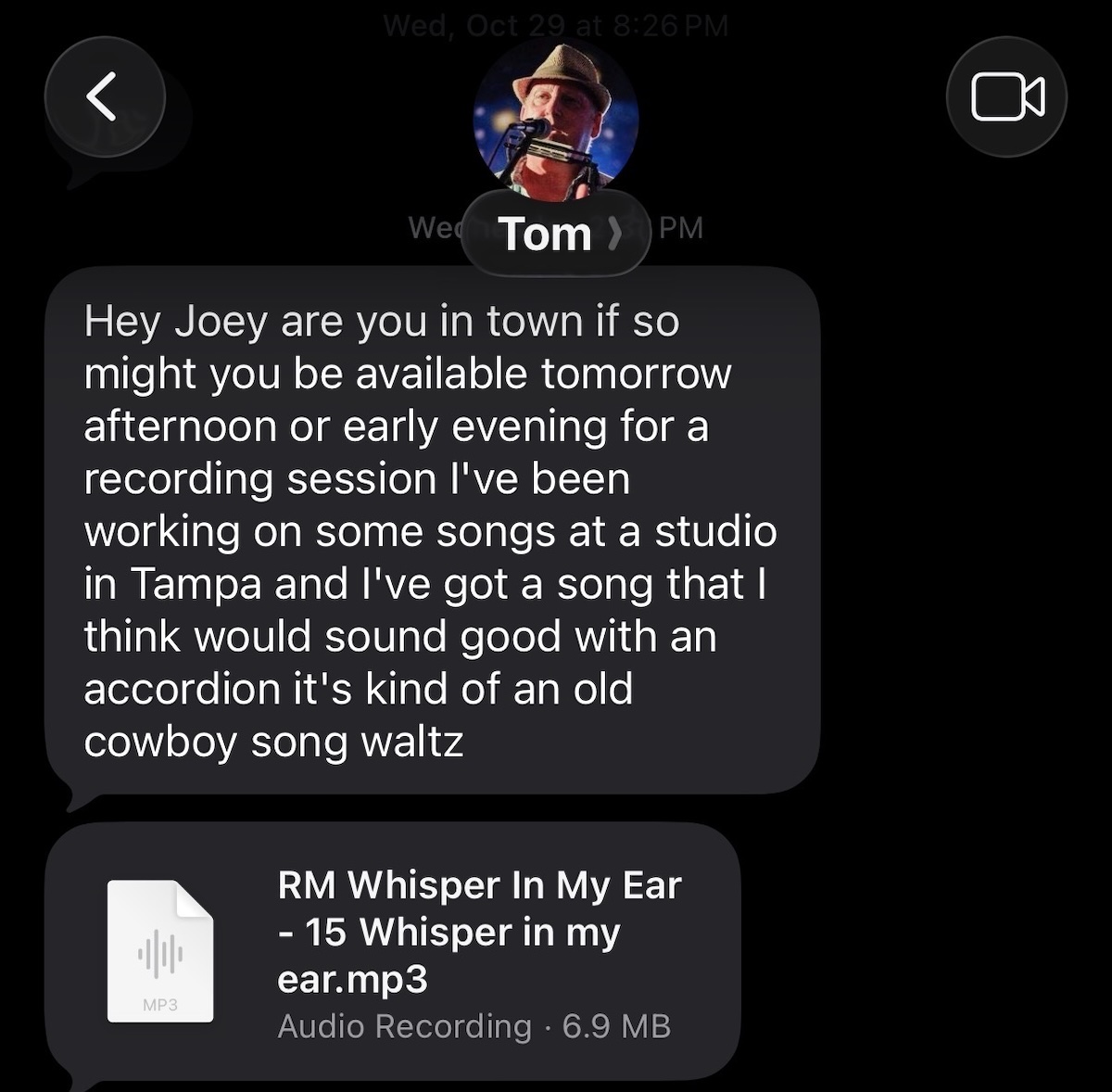
On Wednesday afternoon, I got this text from Tom Hood, ukulele player extraordinaire and leader of the bandIsometimesplaywith:
I hadn’t seen Tom since November, I’m always happy to collaborate with hime, and it’s been a while since I’ve recorded in a studio that wasn’t my home office, so it was easy to say “Yes!”.
If you’re wondering how I could possibly sign on to record an accordion part for a song I’d never heard before on the following day:
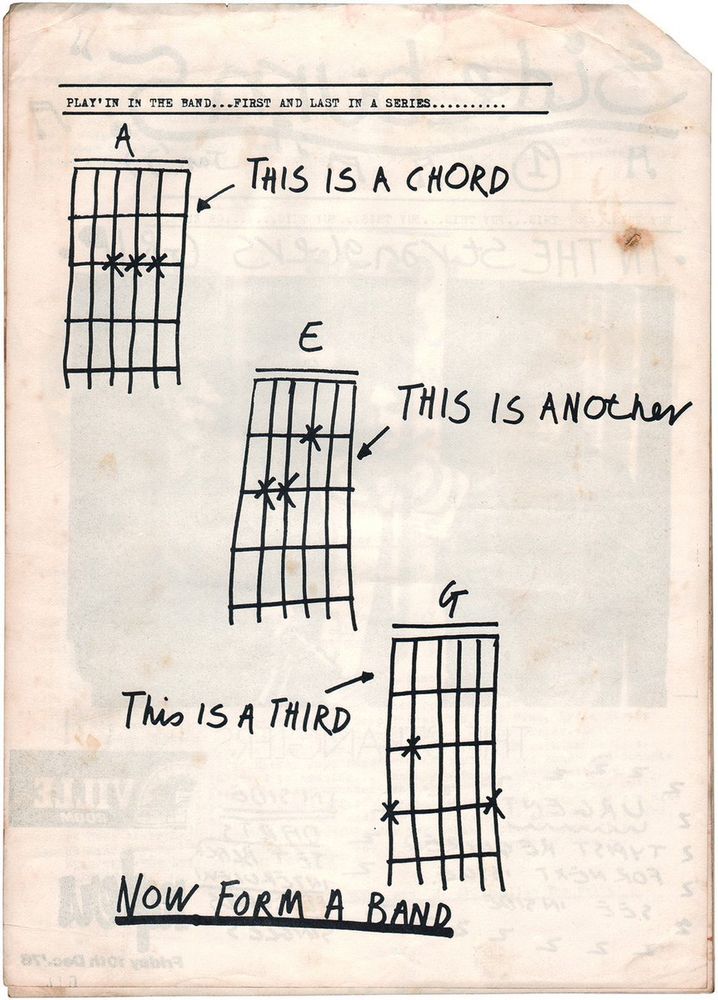
The song, Whisper in My Ear, is pretty straightforward (but catchy!) country waltz. It’s just three chords and heartbreak.
Twenty-five years of lugging an accordion to all sorts of places, from bars to conference stages to airplanes stuck on the tarmac, will make you a great improviser.
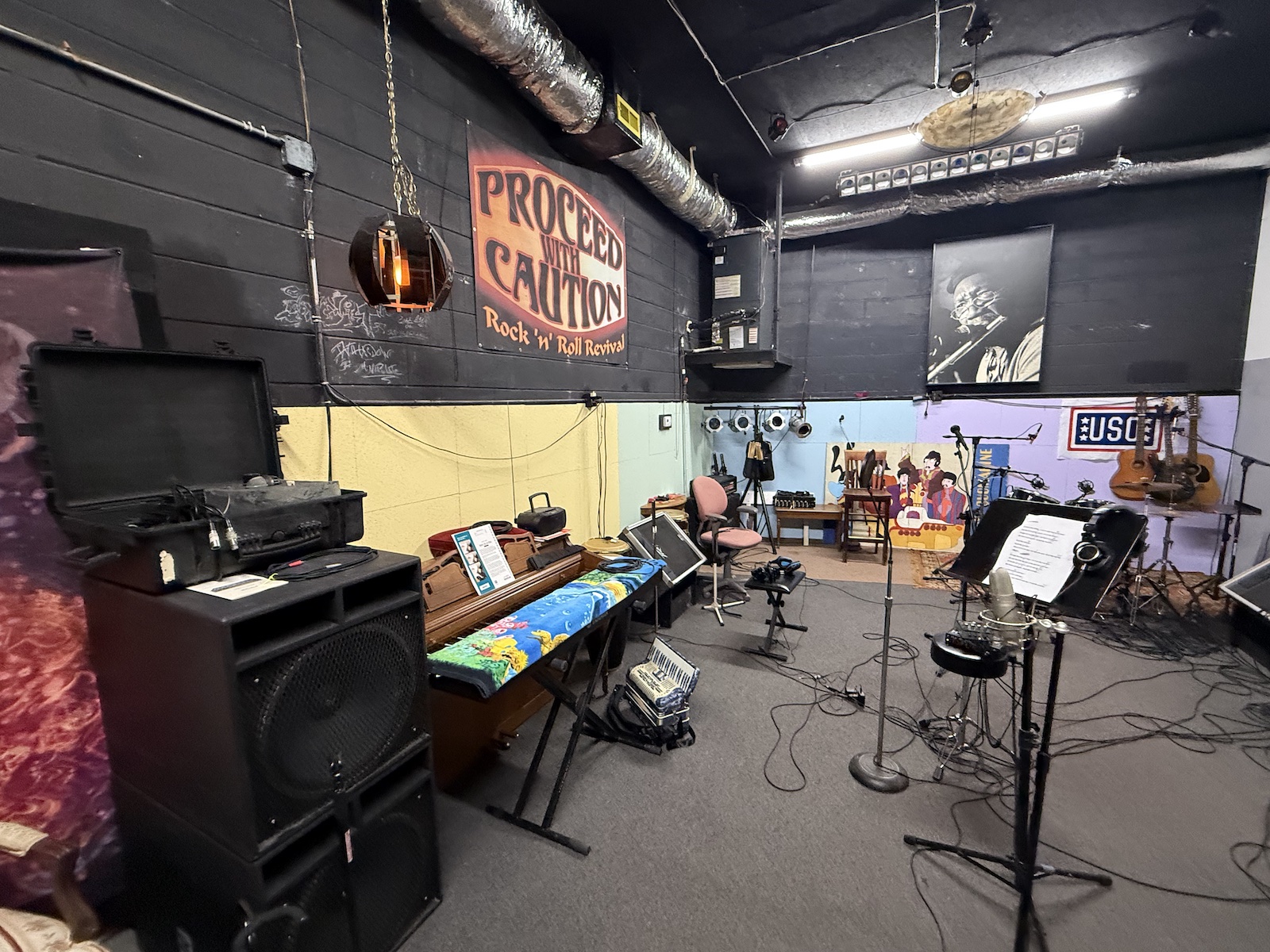
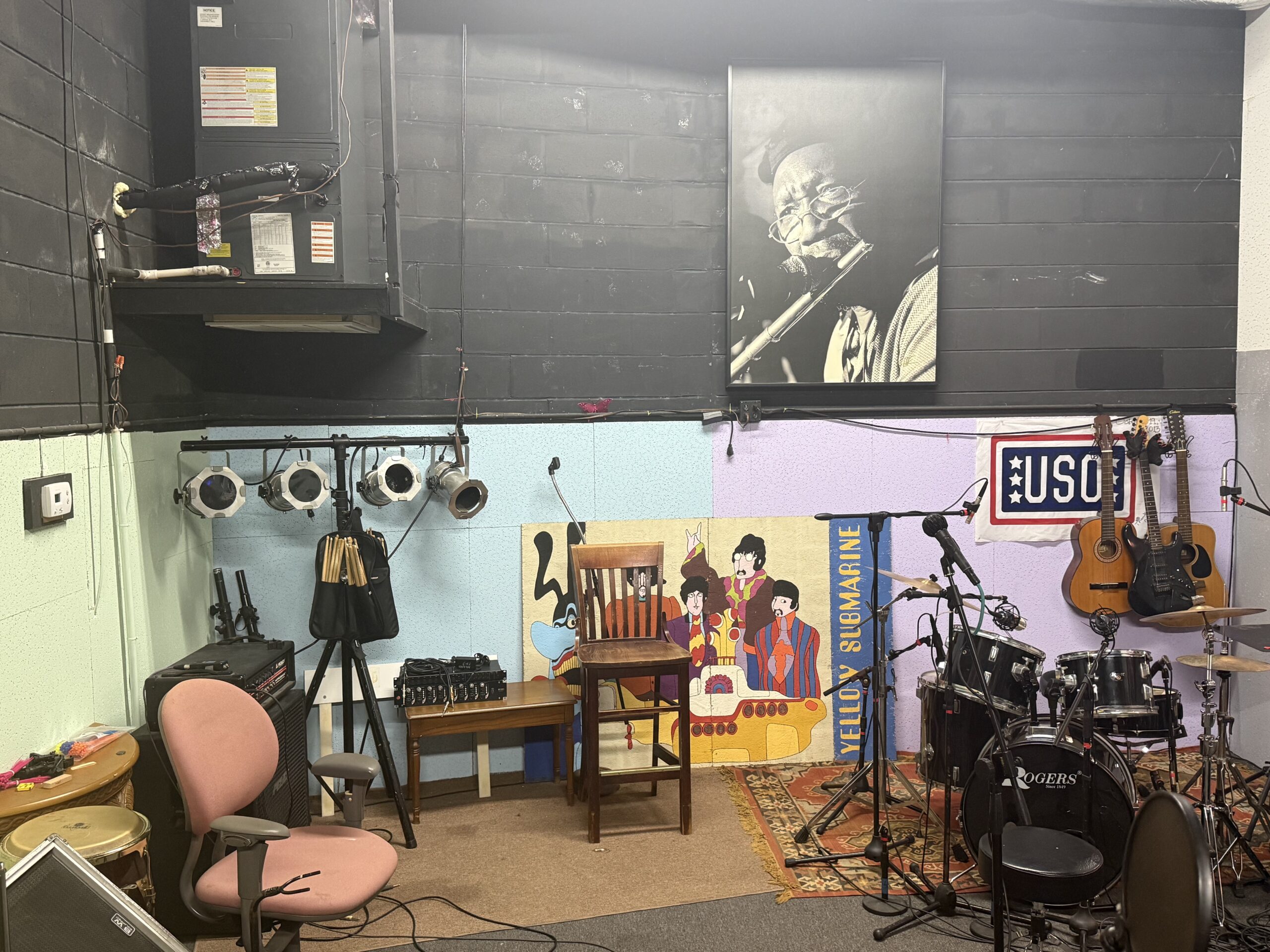
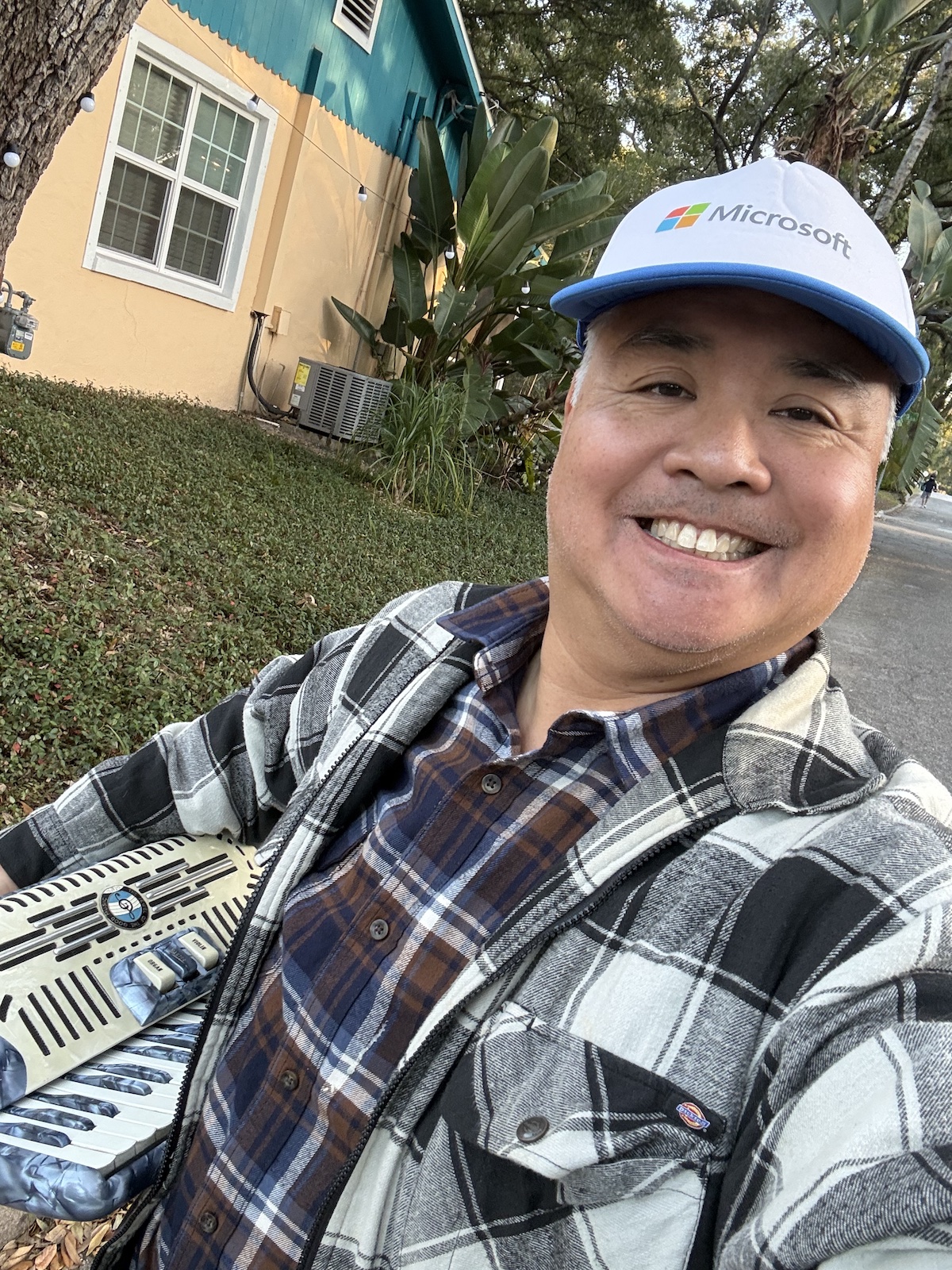
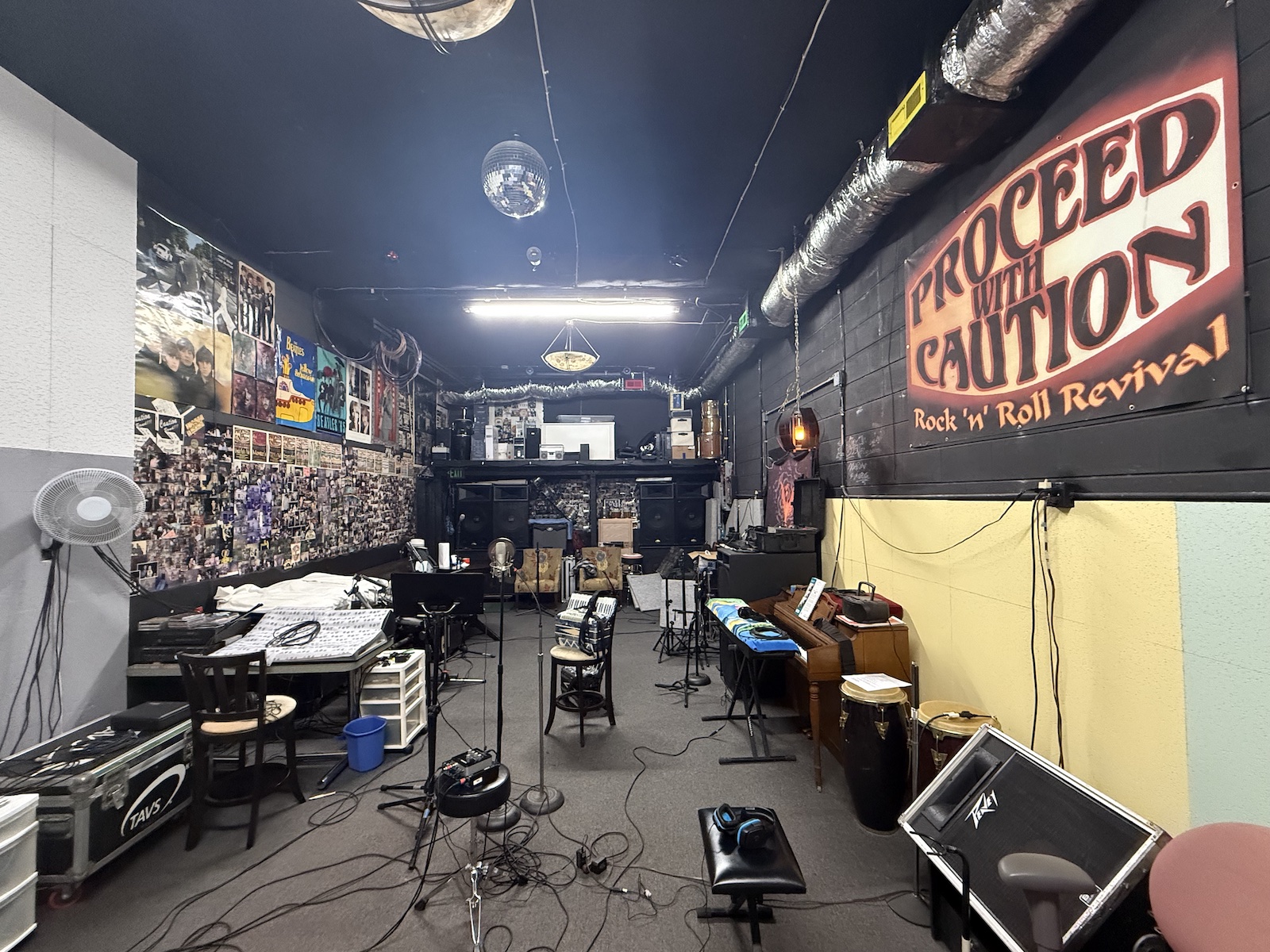
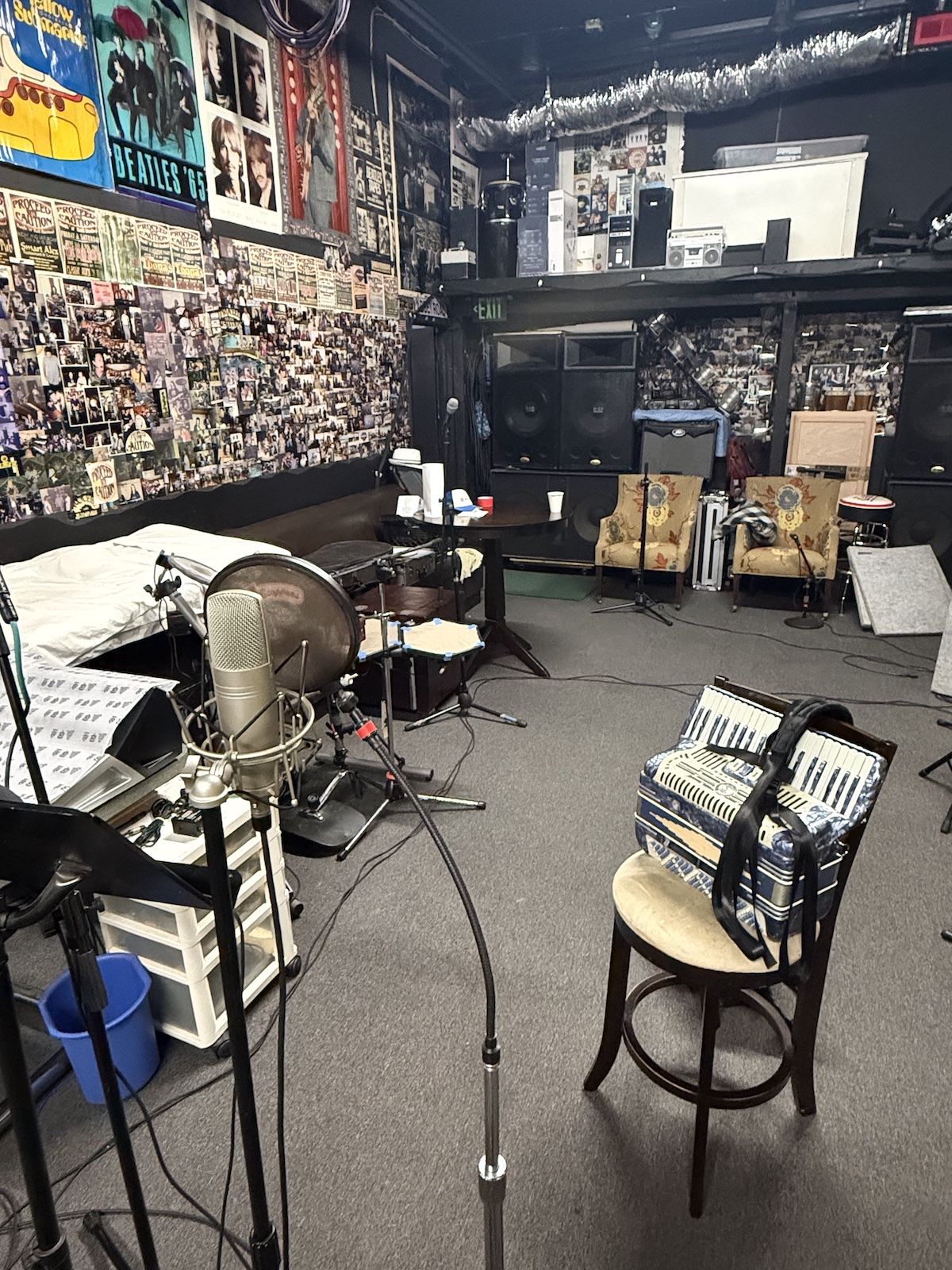
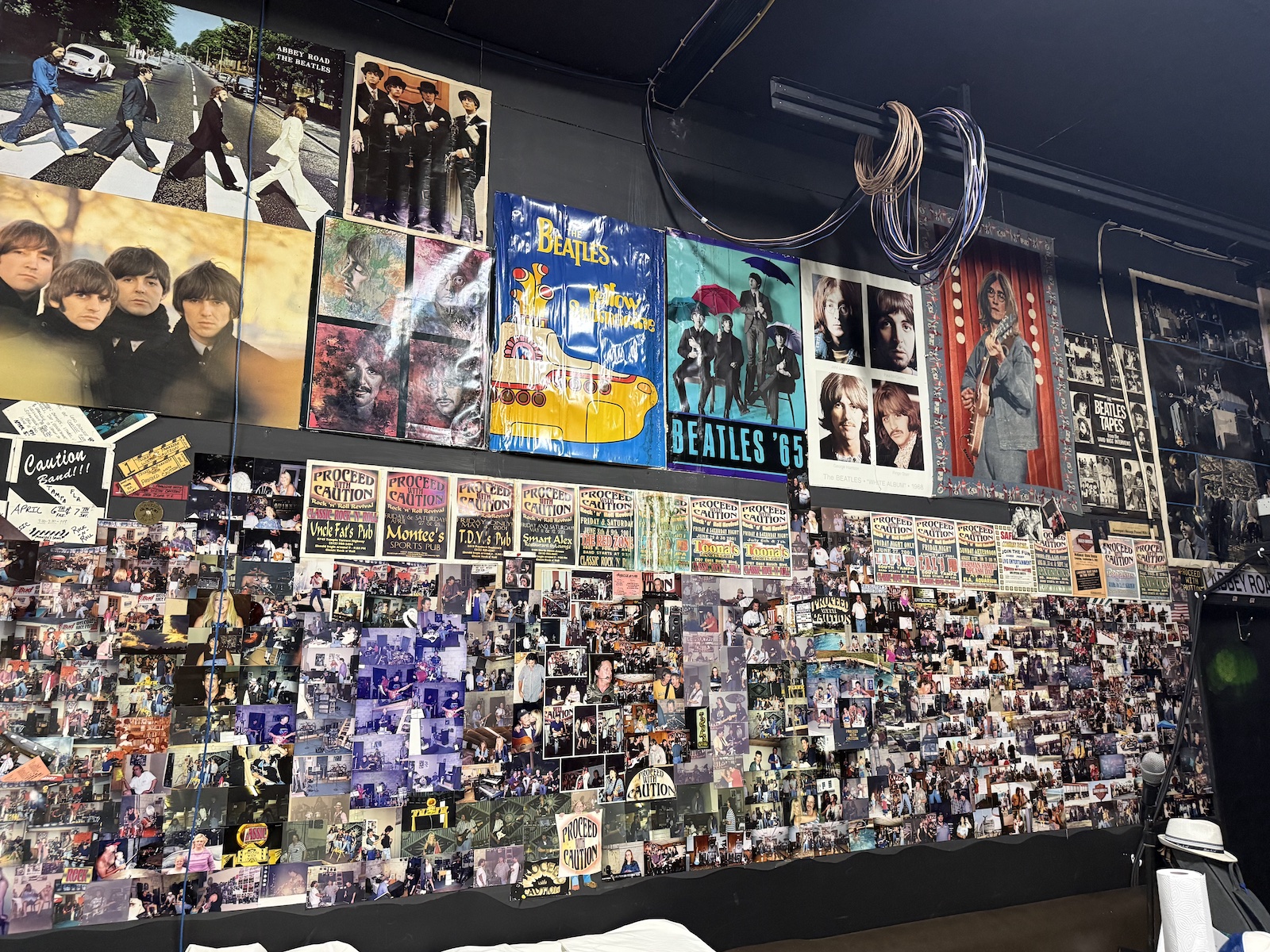
So I made my way to South Tampa on Thursday evening and brought two accordions into the studio and rehearsal space, situated in a building behind a house of friendly guy who introduced himself to me as Wayne.
The place had a homey feel that reminded me of my friend Chris Walmsley’s basement, where Volume, the band I played with at Crazy Go Nuts University rehearsed.
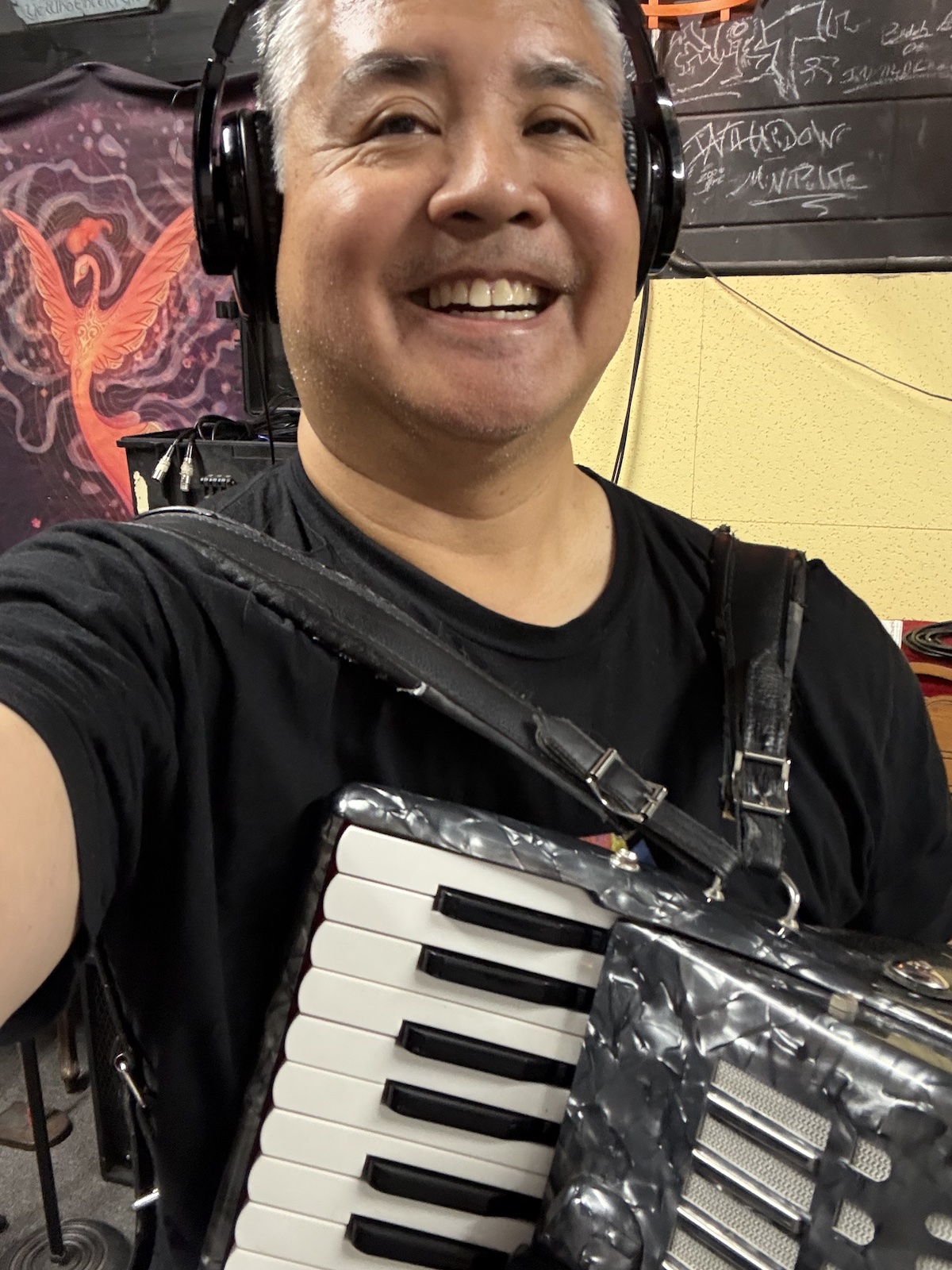
After a couple of rehearsal runs, it was time to record! Dennis McCarthy, whom I’d met as the drummer with the band that played at Tom’s birthday party, was the sound engineer.
“Ready?” asked Dennis, whose voice I heard through the monitor headphones.
“Let’s do this,” I replied.
“D’you wanna record another one?” I heard Tom say over my monitor headphones.
I couldn’t resist and was soon presented with a chord chart and a listen to the song in its current state.
Once again, I did two takes, which included a little noodling to go into the solo, and we were done!
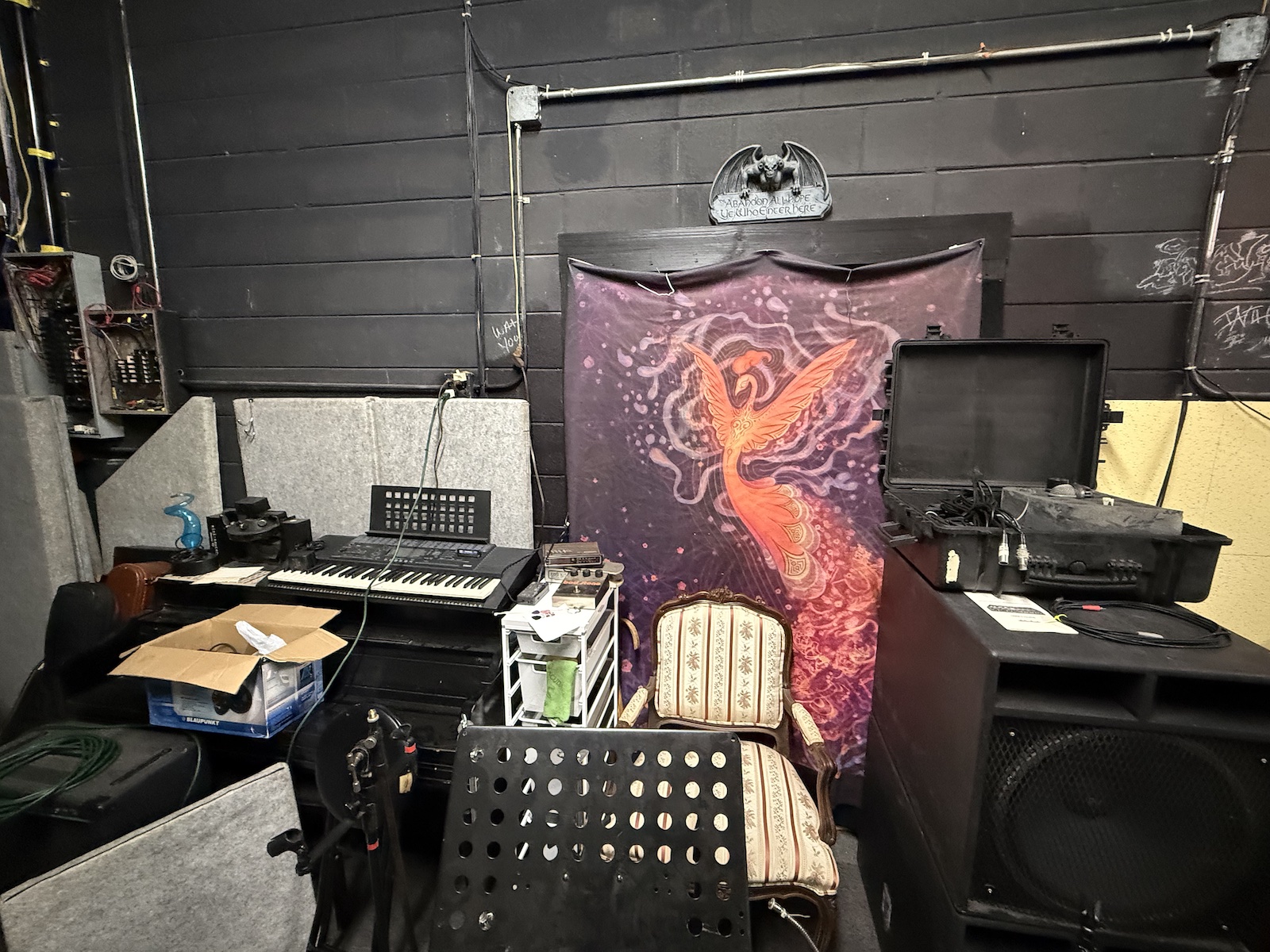
I was invited into the booth to hear some of the other songs that Tom had recorded.
After listening to a couple of songs, it was time to go home. I bade good night to Tom, Dennis, and Wayne, hoping that I might have another opportunity to record there.
Damn, do I feel old now. On September 15th, 1989, Nine Inch Nails released their first single, Down In It, which serious fans also know as “HALO 1.” Today is its 36th anniversary.
(Trent Reznor assigns HALO numbers, to Nine Inch Nails releases in chronological order. It makes one’s Nine Inch Nails collection simpler to organize. He took the idea from Depeche Mode, who use a similar system called BONG numbers.)
Down In It would become the third track on Nine Inch Nails’ debut album, Pretty Hate Machine, which came out in October 1989. This album is one of my all time favorites, and those of you who were at my DJ sessions at Crazy Go Nuts University’s pub run by the engineering students, Clark Hall Pub, know that I often played tracks from this album, including Down In It.
There are a few versions of Down In It, but my particular favorite wasn’t the heavyily-produced album version, but the more raw-sounding demo version, which was released on the Head Like a Hole maxi-single, also known as HALO 3, featured in the video below:
Here’s the official music video, which features some very oh-so-1990 alt-rock visuals and the album version of the song:
I’ve always loved the synth riff in this song — the “dee doo doo doo dee doo deedley-doo” bit — and here’s how you play it:
Down In It came out at a time when I was, well, “down in it,” and while it may be a cliché to say that it (along with the rest of the Pretty Hate Machine album) got me through some hard times, it actually did. And to this day, this track, along with the rest of the album, still holds a special place in my heart.
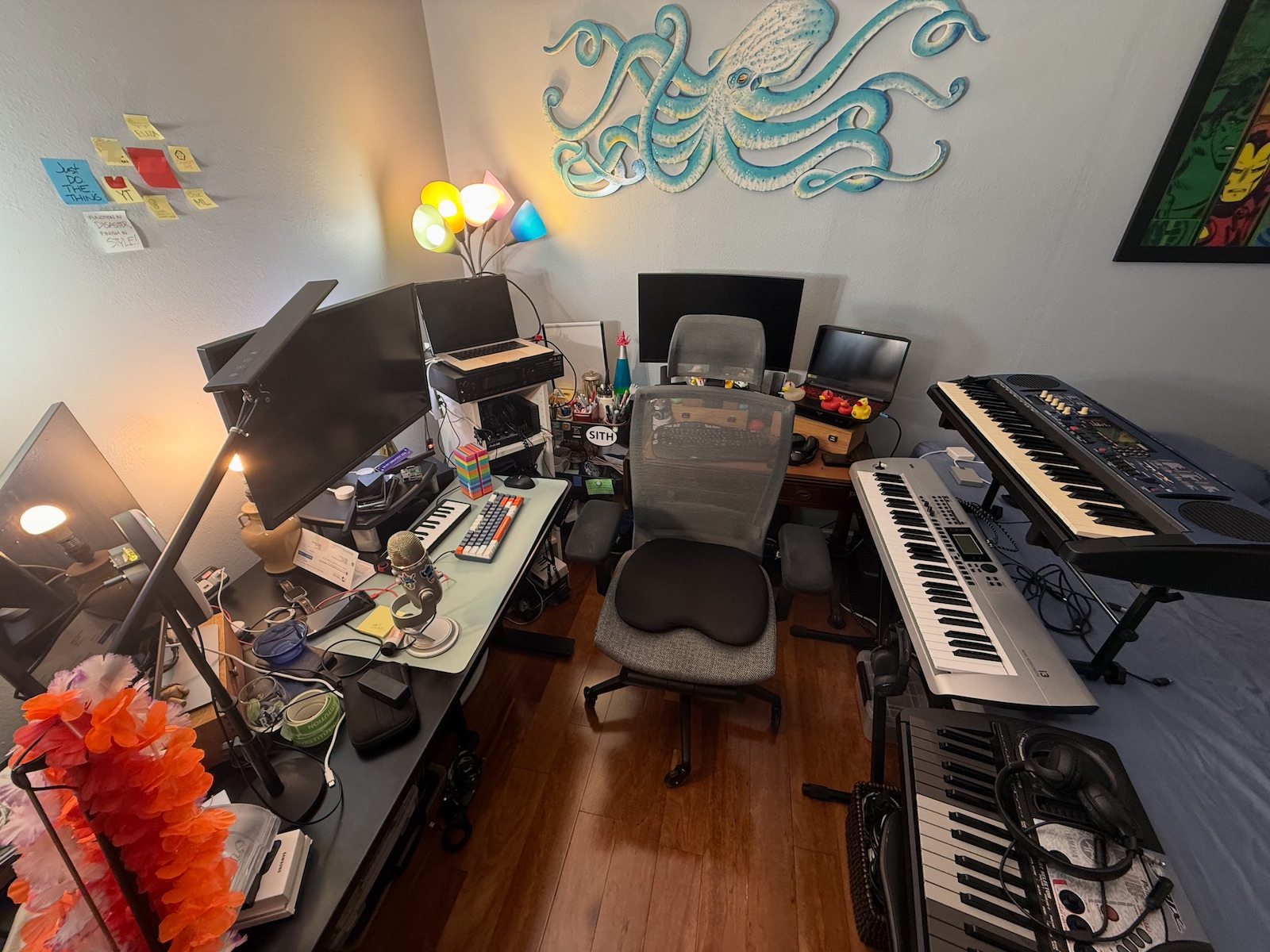
My Yamaha DJX II (top rack) and DJX (bottom rack). Keyboards don’t get any more “nineties” than this!
Over the past few weeks, I’ve tripled the number of keyboards in my office (the electronic music kind of keyboards, not the typing kind). As a result, I’ve probably more than tripled the amount of music I’ve played as well.
Before I took up the accordion, I played the synth. I’ll continue to play the squeezebox, but it’s also nice to get back to my roots.
A day after I bought it, I did a little “DAWless jam” (that’s the term the kids use these days for “playing a physical instrument without the aid of computer software”) on the DJX. I started recording, picked a beat, and jammed for a couple of minutes.
Afterward, I gave the recording a listen and thought, “this needs to be on a 1990s cyberpunk-style video.” So I took the track, grabbed some cyberpunk clips from Canva and Pixabay, and assembled this video in Camtasia:
All told, I recorded the jam in under ten minutes, and put the video together over a couple of hours on Saturday afternoon.
The DJX II jam
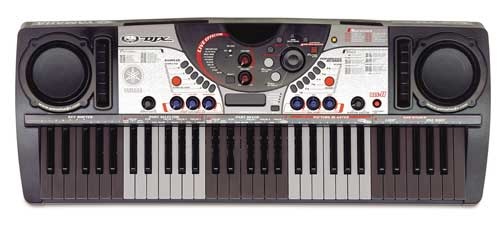
The other keyboard I regret not buying back then was the Yamaha DJX II, the follow-up dance music keyboard to the DJX, released in 2000. In more than a few ways, the DJX is a better keyboard than its successor, but damn, the DJX II is a better rhythm machine than the original.
Rare as the DJX is, the DJX II is even more so. I found the DJX through good ol’ manual Googling. I found the DJX II only because I’d cobbled together a little Python script to comb through Craigslist’s “musical instruments” pages in cities all over the U.S. for a DJX II. As I wrote in an article I wrote earlier, it worked.
On Saturday, I recorded another DAWless jam, this time on the DJX II, and here’s the result. No video this time — just the audio of me pretending to be the backup band for Morcheeba or Lamb or Tricky:
What do I plan to do with all these jams?
Among other things, I make technology videos, which I post on the Global Nerdy YouTube channel. While I think I have a pretty good narrating voice (I’ve been told time and again that I should be on the radio), a video still benefits from having a good soundtrack. I already do the writing, presenting, and graphics — why not also do the music?
My videos already incorporate my music, and there’ll be more — both videos and music — soon!
It’s similar to the electronic “band in a box” keyboards you can buy at Costco or your preferred “big box” store, but with one very important difference: it was made specifically for hip-hop and electronic dance music. Even though it was released in 1998, it still sounds fresh and fun.
I wrote about the DJX in this article, which I ended with:
Aside from making music with the DJX, I’m also keeping an eye out for its even more rare little brother, the DJX 2…
I enjoyed the DJX so much that I decided to try to find its successor, the DJX II, which was released in 2000. Rare and precious as the DJX is, the DJX II is even more so. If you enter the term DJX into a Google Shopping search, you’ll see a couple of DJX keyboards, and a few more DJX IIB devices, which were DJX IIs with the keyboard replaced by a CD scratch wheel…
…but you’re not likely to see any results for the DJX II keyboard with its distinctive alternating dark grey/light grey “white keys.”
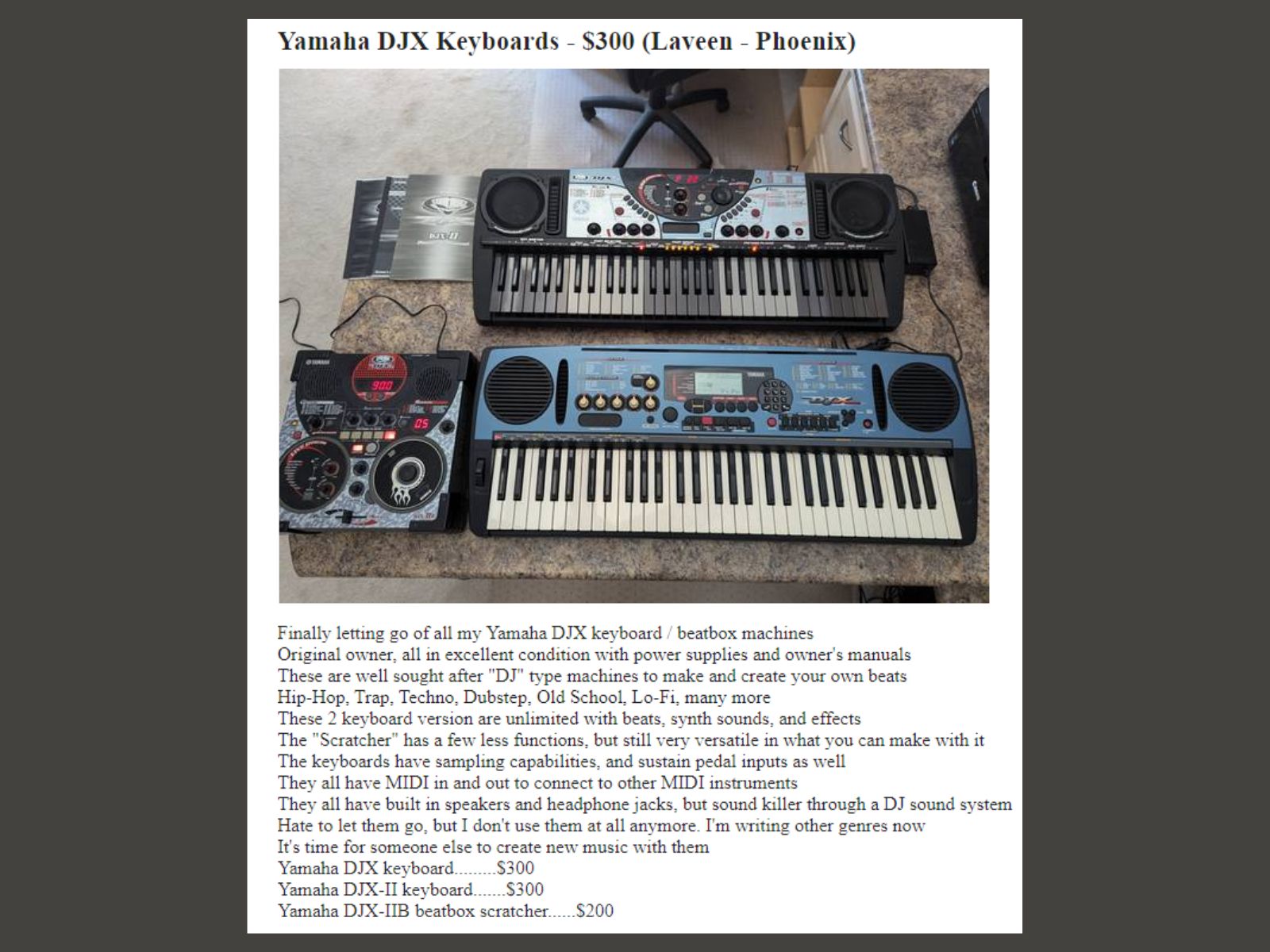
After a couple of days’ of typing in search terms on Google, I did what I always end up doing: I wrote a Python script to automate the process for me. In addition to checking Google, it also scoured a number of Craigslist sites, and that’s how I found this listing:
I contacted the seller, who’s a really nice guy, but didn’t want to deal with shipping and electronic payments. He wanted to sell to someone who could pick it up in person and confirm for themselves that it was in perfect working order, and pay in cash. Personally, I can’t blame him.
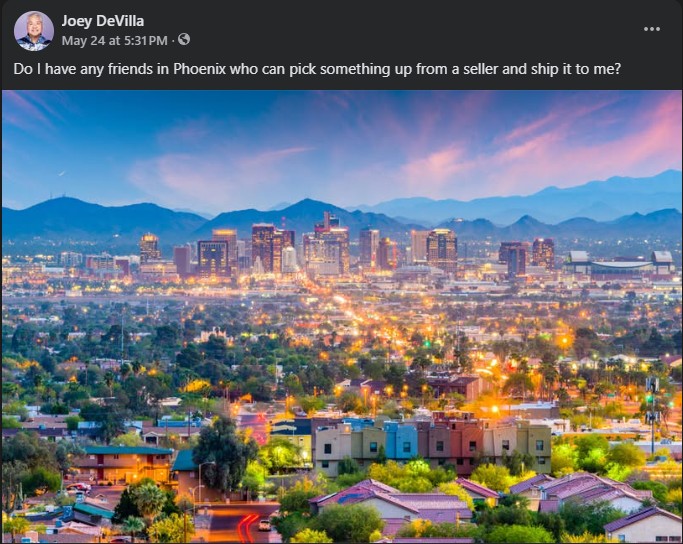
I thought about hiring someone from Taskrabbit to pick it up and ship it to me, but I decided to go on my social media accounts and ask…
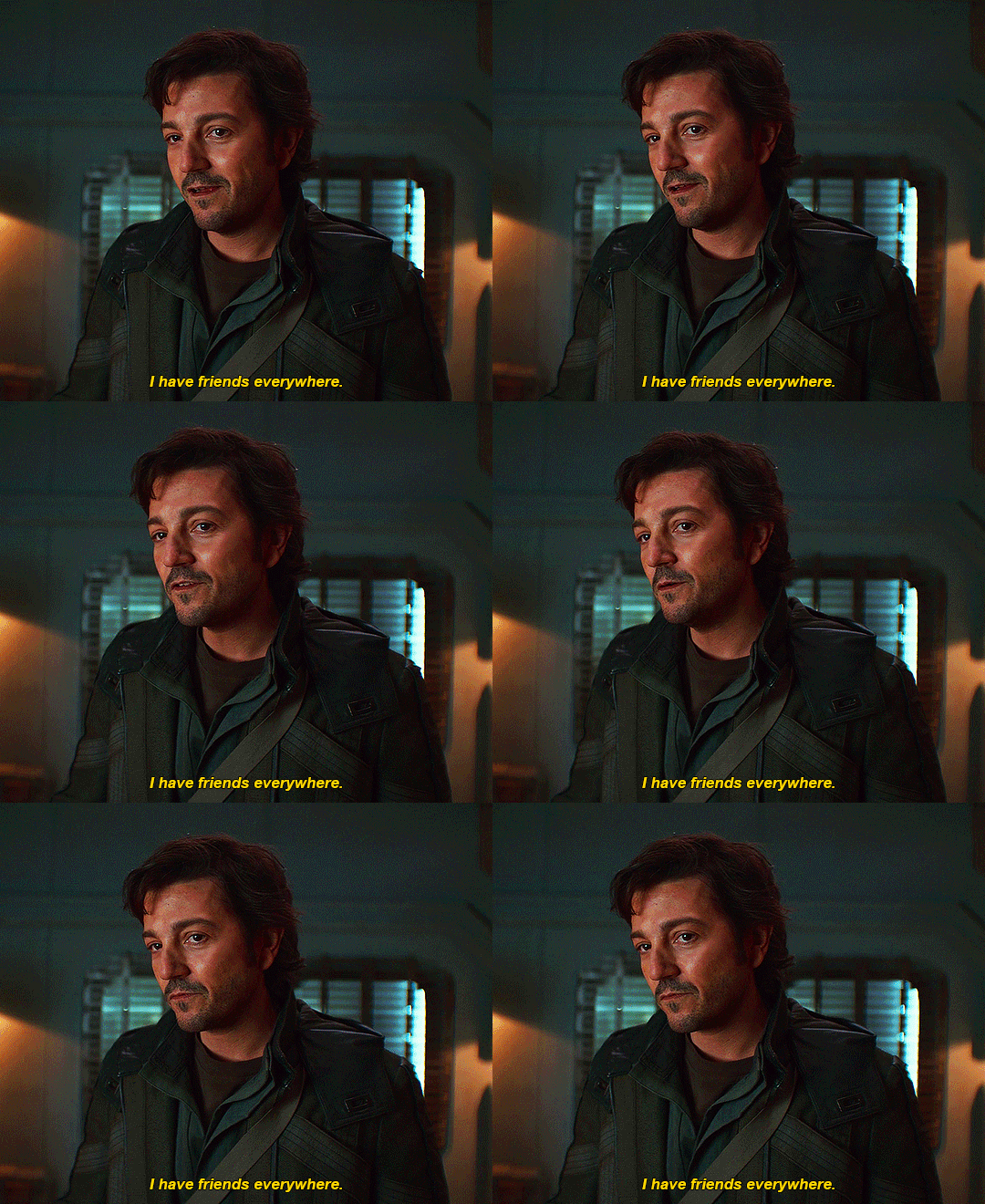
Fortunately, like Cassian Andor…
My friend Meghan, who moved to Phoenix not too long ago, stepped up. I sent money for the keyboard, shipping, and her time, and on Friday, it arrived in a very big, very well-padded box.
I’m now the proud owner of a Yamaha DJX and DJX II:
…and my office is looking increasingly like Fatboy Slim’s supervillain lair:
For the curious
If you’re wondering why I’m so excited to own a 25-year-old keyboard, here’s a couple of looks at its features. This one’s from four years ago…
…while this one was posted just last month:
When the DJX II was released, Yamaha made the then-unusual move of creating a promotional video:
On Monday, I took time out of my day to drive a little out of my way to Valrico during rush hour to meet a stranger at a Steak ’n Shake to purchase a long-discontinued, hard-to-find keyboard: the Yamaha DJX.
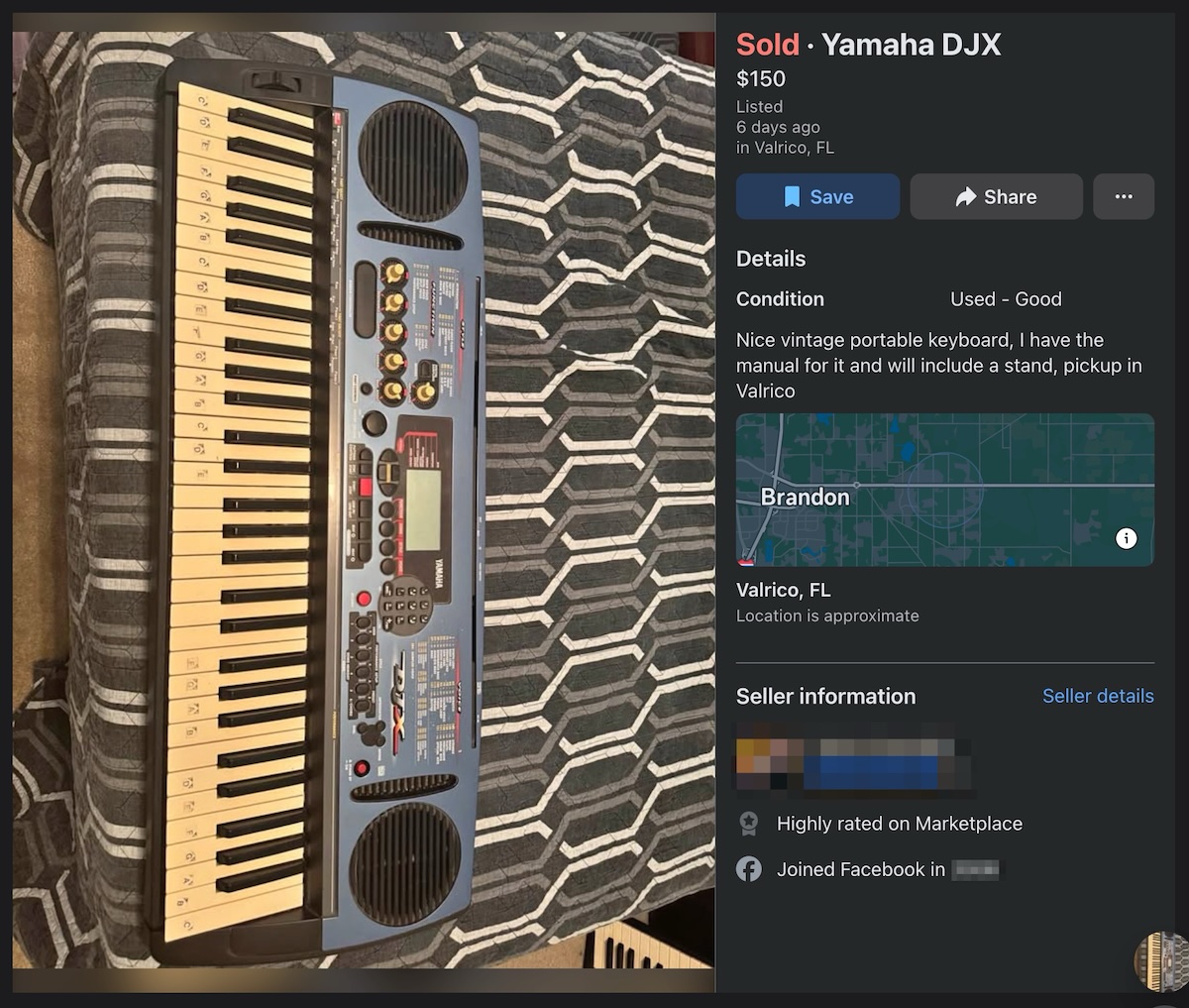
I like to peruse the Tampa Bay Facebook Marketplace for deals, and I’ve always wanted a DJX, so when I saw this ad…
The Facebook ad for the DJX.
…I had to contact the seller right away. They’re rare, and they generally sell for at least $100 more than the seller was asking.
Fortunately, this seller lived within a reasonable driving distance, and was more than happy to let me test the keyboard first. We met at a public location — the Steak ’n Shake in Valrico — which had a convenient outlet at one of its booths.
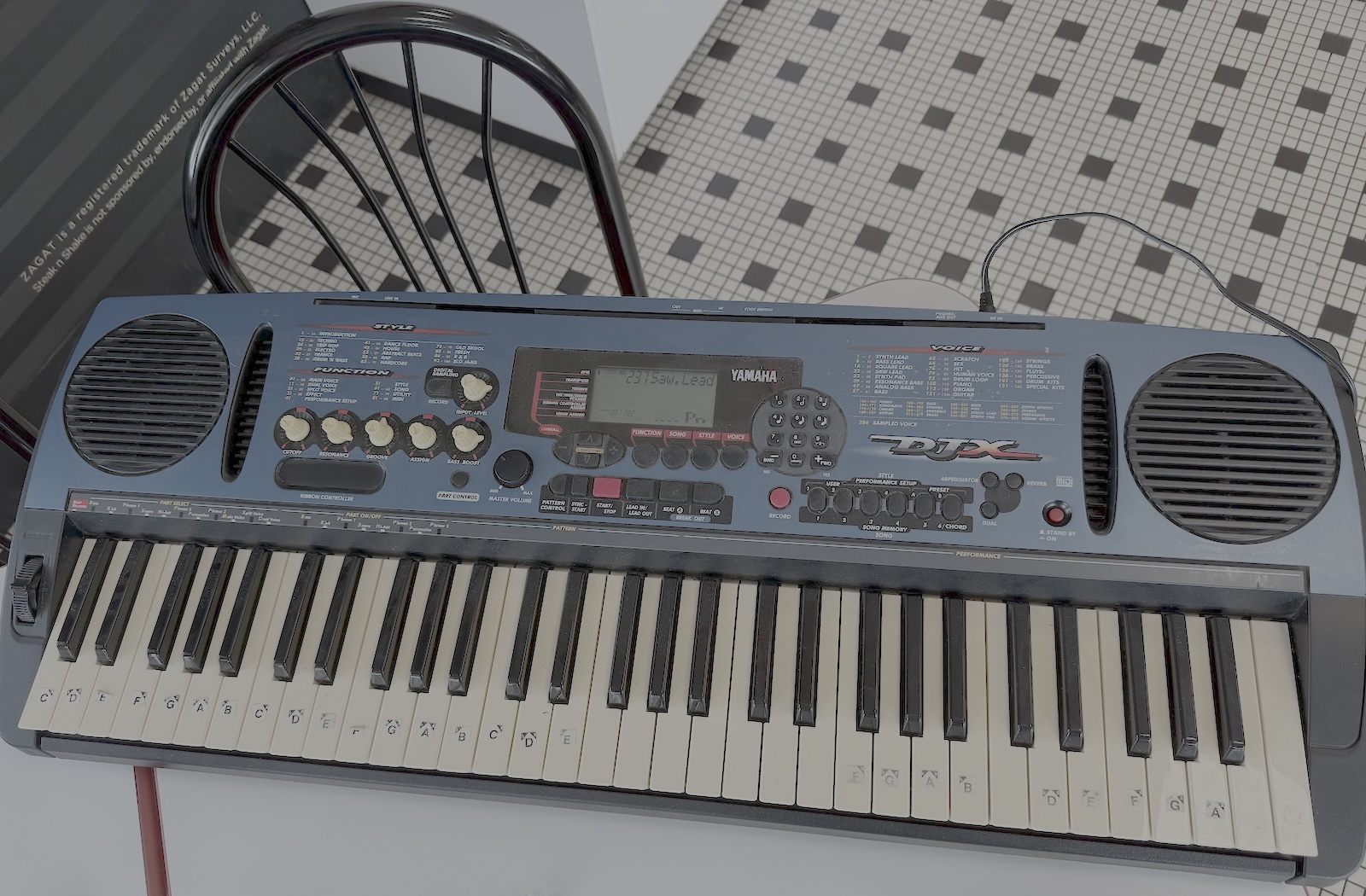
After “paying the rent” by buying a chocolate shake, we set the DJX on the table:
Aside from a few minor blemishes and scratches and a lot of dust buildup, it looked pretty good. Remember, this is a machine that’s been out of production for a quarter-century.
I fired it up, and I started playing. I pressed every key and fiddled with every button and knob and the pitch-bend and ribbon controllers. The volume control was a little noisy, but that’s something that can be fixed relatively easily. I auditioned a good number of its “patches” (synth slang for “instrument sounds”) and beats, and it sounded great.
Satisfied, I gave the seller $150 in cash and they left. I stayed at the Steak ’n Shake a little longer, to finish my shake and play with the DJX a little longer. There were pop tunes playing on the restaurant’s sound system, and I found myself playing along. There were only a couple of other people there, and they were looking in my direction trying to figure out what was going on.
I’ve since peeled the beginner stickers off the keyboard and given the DJX an initial cleaning — and I’ve also had a blast playing it! I expect to use it to create background music for my videos on the Global Nerdy YouTube channel, and hopefully for some live performances.
…a self-contained electronic or digital musical instrument for the production of live, loop-based electronic music with a high degree of user control facilitating improvisation.
Grooveboxes are generally used for creating electronic dance music, which rely heavily on a drumbeat. They’re also aimed at DJs, producers, and people who generally arrange music rather than play it. Because of this, most grooveboxes follow the design of drum machines.
Here’s a tutorial video that shows the basics of making a tune on a groovebox:
The device that defined the groovebox category was the Roland MC-303 Groovebox, which was released in 1996, right in the middle of the decade where all forms of dance music exploded:
Modern grooveboxes look like this:
As I mentioned earlier, grooveboxes are designed for people who are more arrangers who make music in the studio rather than actual players who make music live.
The DJX series of keyboards is a rarity in that they come with an actual piano-style keyboard that you can play on top of the beat. I regret not getting the DJX when it first came out, and had recently started keeping an eye out for a reasonably-priced used unit.
I’m going to record some videos showing what mine sounds like, but in the meantime, you can check out these videos, which show the styles that come built into the DJX. It’s an EDM/hip-hop machine!
What’s next?
I’ve given it a preliminary cleaning — including removing the beginner stickers from the keyboard and removing the glue residue with the ever-reliable Goo Gone — and it looks so much better. I need to give it a deeper cleaning (opening it up and vacuuming the dust bunnies from its internals) this weekend.
After the preliminary cleaning.
Aside from making music with the DJX, I’m also keeping an eye out for its even more rare little brother, the DJX 2…
 If you’re wondering how I could possibly sign on to record an accordion part for a song I’d never heard before on the following day:
 So I made my way to South Tampa on Thursday evening and brought two accordions into the studio and rehearsal space, situated in a building behind a house of friendly guy who introduced himself to me as Wayne.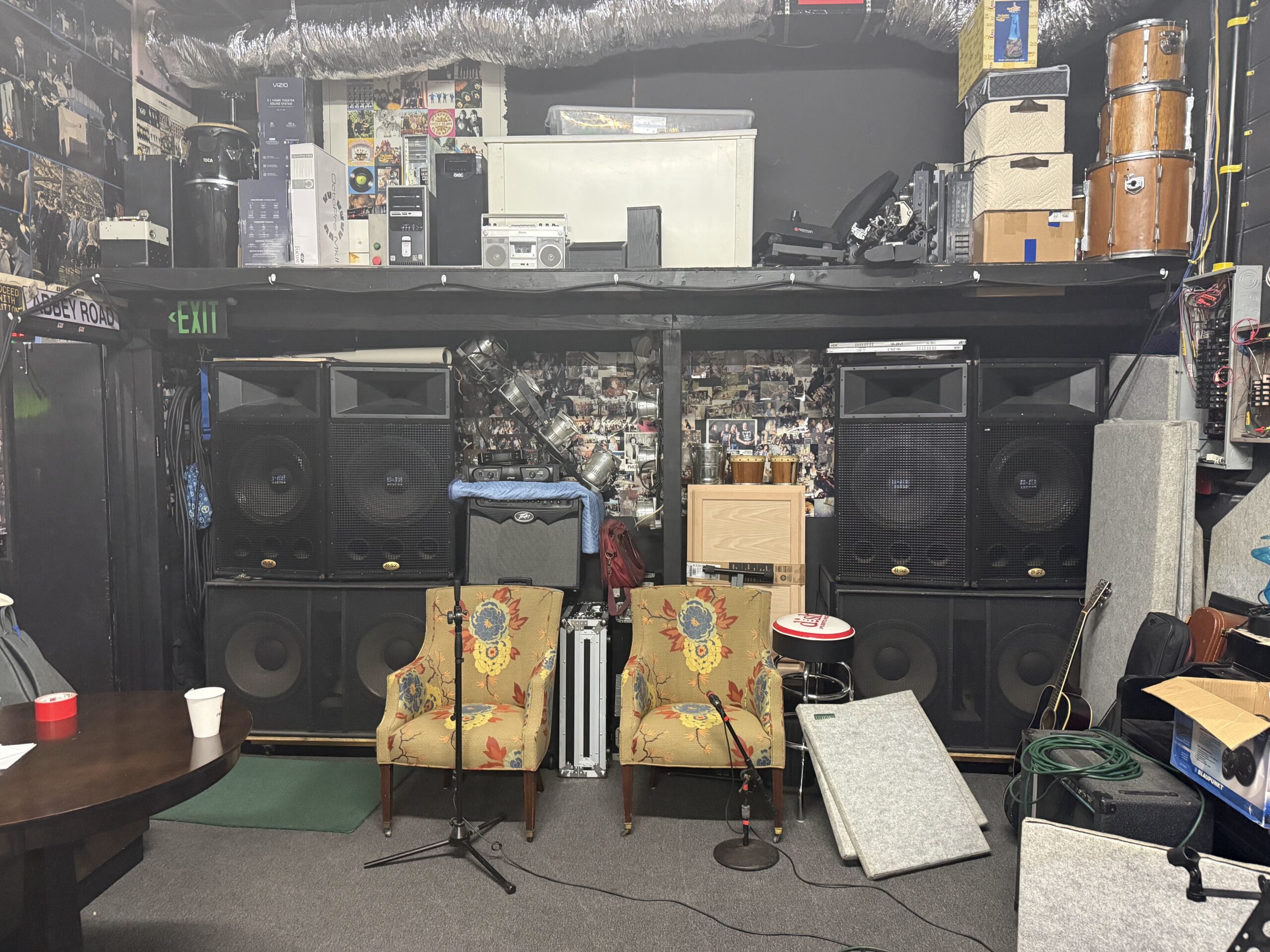
 After a couple of rehearsal runs, it was time to record! Dennis McCarthy, whom I’d met as the drummer with the band that played at Tom’s birthday party, was the sound engineer.
 “D’you wanna record another one?” I heard Tom say over my monitor headphones.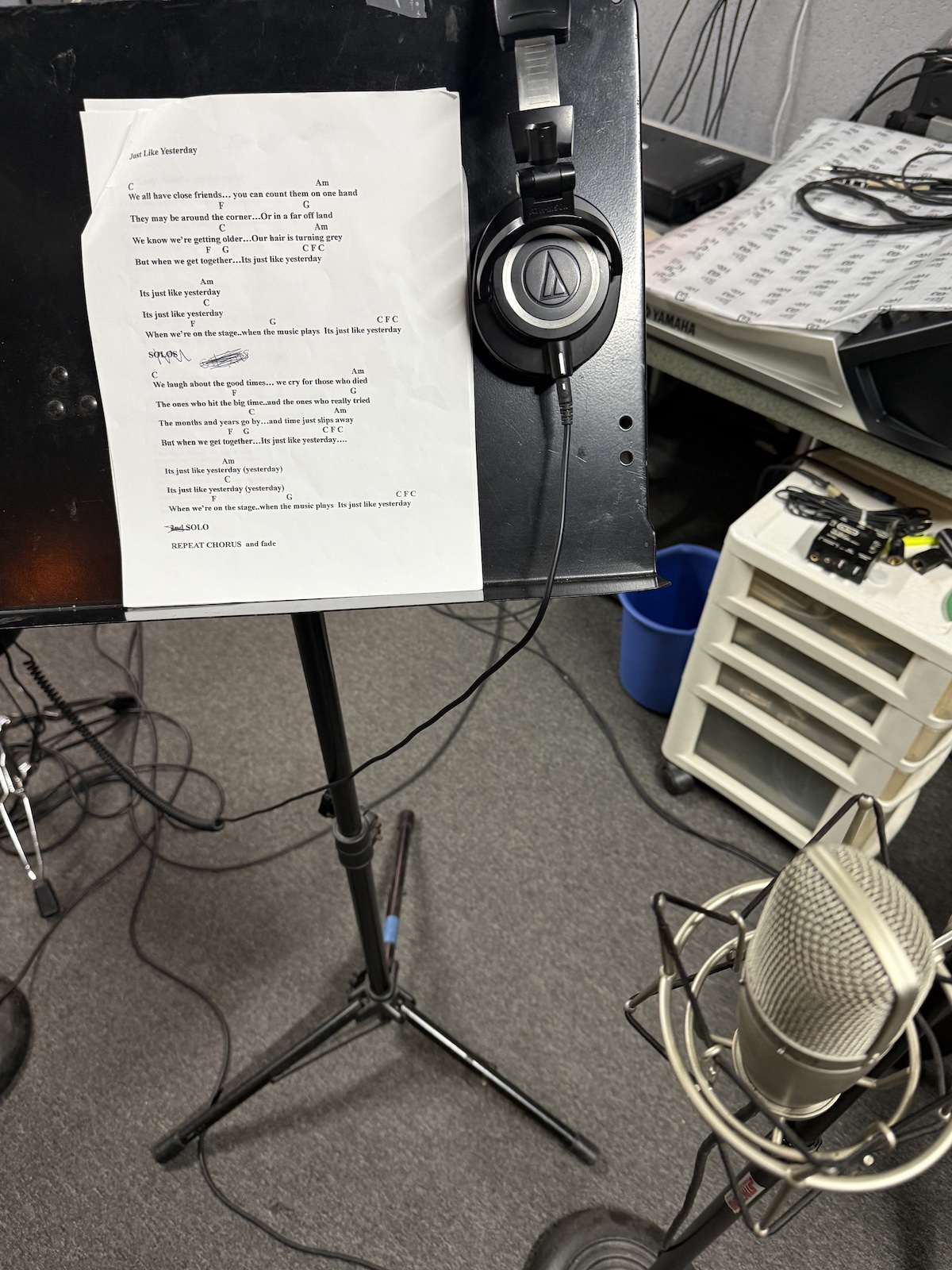
 I was invited into the booth to hear some of the other songs that Tom had recorded.