I’ve been thinking that sooner or later, someone’s going to have to take the blame for the credit crisis. Of the people involved, the easiest target are the poor: the people who took out subprime mortgages and then defaulted on them. They’re not organized and don’t have much in the way of media representation, and would thus make the perfect scapegoat. I was wondering why none of the talking heads or representatives of the banks had gone after the poor yet.
I was wrong: Larry Kudlow blamed the poor in a roundabout way, pointing the finger at Congress, who “forced” banks into giving subprime loans to people who’d never be able to pay them back. What’s even more surprising is that MSNBC’s Joe Scarborough called him out on it:
The fact that bankers had an ironically humourous term for high-risk customers — NINJAs (short for No INcome, Jobs or Assets) should be a tip-off to you that they were a necessary part of their get-rich-quick scheme. Their debts were terrible investments that weren’t worth the paper they were printed on, but when used as “filler” for packages that contained much better investments, they could create investment vehicles with triple-A ratings, which would then sell at a huge markup. Think of it as being like an unscrupulous butcher in the old days: he can make a more money by making sausages out of sawdust with just enough meat to hide the taste rather than making sausages entirely out of meat.
(I posted an explanation of how subprime sausages were made in this entry.)
Here’s what presenter Paul Doerwald has to say about his topic tonight:
“Programmers generally hate writing documentation. That’s because most documentation is kept separate from the code and becomes hard to keep up-to-date. Besides violating the DRY principle… it can lead to misleading documentation, which is generally worse than none at all.” [Subramaniam/Hunt ’06]. Why do developers hate writing documentation, and why do stakeholders and managers keep requiring it? Is there agile documentation beyond inline API documentation (JavaDoc, RDoc, etc.) and comments in the code? What parts of a project deserve separate-from-code documentation? How do we identify them, capture them, and keep them relevant?
Tonight’s Toronto Ruby on Rails Project Night presentation discusses the problem of documentation, explores some key aspects to consider when writing effective documentation, and dreams of a future of testable, executable documentation, where non-code knowledge could be integrated into your code.”
And here’s what presenter James “Smalltalk Tidbits, Industry Rants” Robertson has to say about his presentation:
WebVelocity is a new Smalltalk Development Environment that is oriented around Seaside for Web Development and Glorp for Object/Relatonal Mapping. Come and see how WebVelocity re-targets the Smalltalk development experience into the Web Browser and simplifies the challenge of learning a new environment for newcomers. We’ll even build an entire application using Active Record and Scaffolding during the presentation, with minimal programming. If you’re a fan of Ruby on Rails, you need to come out and see this presentation!
“I’m a PC, and I’ve been turned into a stereotype,” says the John Hodgman lookalike at the start of Microsoft’s new Seinfeld-free commercials. Then they jump to all sorts of people saying “I’m a PC”.
The message is simple: PC users aren’t all nerdy puffy white guys in tweed suits — many different people use PCs and they leading interesting lives and do cool things with them. If the goal of Microsoft’s new ad campaign is to counter Apple’s “I’m a Mac/I’m a PC” ads and rehabilitate Microsoft’s and Windows’ sagging image, these ads are doing a much better job than the Seinfeld/Gates” ads (here’s the first ad, here’s the longer follow-up) about nothing.
Last weekend, at my nephew’s bowling birthday party, I decided to put a quarter in the sticker vending machine. You never know what sticker you’re going to get — here’s a photo of the one I got:
For those of you who are too young to have sat through My Fair Lady (or lucky enough to have escaped it; it is to George Bernard Shaw’s excellent Pygmalion as Hannah Montana and the Jonas Brothers are to rock and roll), here’s what the title of this post alludes to:
The title of this post also refers to McCain’s recent gaffe. In an interview (click here to hear it) by a Spanish reporter for a Spanish newspaper conducted in English, the reporter asked:
“Senator, finally, let’s talk about Spain. If you’re elected president, would you invite President Zapatero to meet with you in the White House?”
“Honestly, I have to analyze our relationships, situations, and priorities, but I can assure you that I will establish closer relationships with our friends, and I will stand up to those who want to harm the United States.”
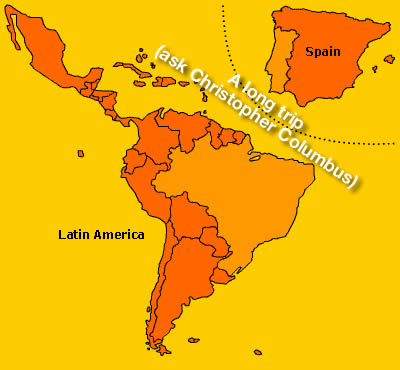
…and then makes some references to Latin America. As a quick reminder…
The interviewer asks again if he’d be willing to meet with Zapatero, and he replies that he’ll have to review the current situation; he’ll only meet with leaders who pay heed to human rights and democracy.
(Once again, if you want to hear the interview, click here.)
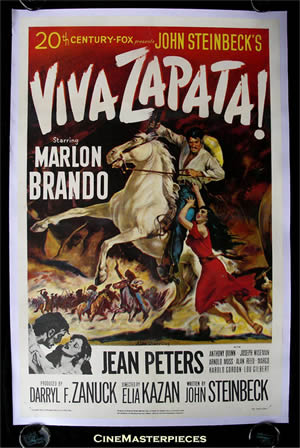
Perhaps he was confused and mistook “Zapatero” for “Zapatista” (either the historic army or the modern one). Or maybe he was wondering why the reporter was asking him about shoes. But she clearly framed the question by opening with “Let’s talk about Spain,” so this wasn’t an attempt to trick him with a world leaders trivia question.
The Republican PR team has their work cut out for them today.
World Leaders
I’ll admit it: if you’d asked me to name the Prime Minister of Spain yesterday, I wouldn’t know the answer. I would know by inferring from her line “Let’s talk about Spain,” however. I did know that Juan Carlos I (the “I” is pronounced “primero“) is the king, but everyone remembers royalty. It’s their job to be remembered!
So I thought I’d perform a little public service and list some countries, their leaders’ names and easy ways to remember them. Let McCain’s mistake be your springboard to learning about world affairs!
The current crop of commercials is trying to change his “somewhat dickish guy in a suit and tie” image. Now he’s a “somewhat dickish guy in a sweater”. (Cue retort by a miffed David Janes in 3…2…1…)
Not only is he Italy’s leader, he’s also Italy’s richest man: imagine Warren Buffett or Bill Gates as the president of the U.S.. It has been said that Italian comedians who’ve told jokes about him on TV have never had a TV appearance again.
Tricky, because nobody remembers the hand-picked successor; everybody remembers the predecessor (in this case, “Pooty-Poot”). Think of him as the guy whose last name is hard to spell because you don’t know when to stop.
Tricky, because nobody remembers the hand-picked successor; everybody remembers the predecessor (in this case, Tony Blair). Maybe you should use potty-mouthed British celebrity chef Gordon “Hell’s Kitchen / Kitchen Nightmare” Ramsay as a mnemonic device.
Countries and Leaders of the “Outreach 5”
These are the “+5” countries referred to in the “G8+5” gatherings.
Most Christmas-y leader out there. There’s his last name, “Klaus”, “Vaclav” is often translated into English as “Wenceslas” and he even sort of looks like Santa.
Said there are no gays in Iran. Holds no ill will towards the Jews in the same way Republicans hold no ill will towards minorites. Signature “grey jacket, white shirt, no tie” look.