There: now you have something to email to your friends and co-workers this afternoon:

Photo courtesy of Miss Fipi Lele.
There: now you have something to email to your friends and co-workers this afternoon:
Photo courtesy of Miss Fipi Lele.


[This article also appears in my tech blog, Global Nerdy.]
I’ll be in Calgary from Monday to Friday next week, catching up with my friend and co-worker John Bristowe (he’s Microsoft’s Developer Evangelist for Western Canada) and speaking at the Tech Days conference.
If you use (or are thinking of using) The Empire’s technologies, Tech Days is a pretty good place to get immersed. It’s a conference focused on learning about Microsoft tech on its target platforms – PC, web and phone – both current and upcoming. It’s also a chance for Microsoft developers to get together and network, and you leave the conference with a nice package of free stuff, including a full version of Visual Studio 2008 Professional Edition. (And just between you and me, if your company’s paying for it, Tech Days is also a good excuse to get a couple of paid days out of the office.)
In addition to the conference notes and reportage that you’ve come to expect from my tech blog Global Nerdy and the accordion playing you’ve come to expect from me, I will be contributing in another way: I’m delivering the A Deep Dive into the ASP.NET Ajax Extensions presentation (it’s part of the web development track and taking place on Wednesday, December 10th at 1:00 p.m.. Here’s the abstract for the presentation:
The ASP.NET AJAX Extensions are the server half of ASP.NET AJAX. Aside from adding controls such as ScriptManager and UpdatePanel to the platform, they extend the ASMX model to support client-side callbacks and JSON serialization. In this session, we’ll explore ASP.NET AJAX on the server – both inside and out – in order to provide you with the knowledge you will need to exploit it to its fullest.
(If I had more time, I think I’d write my own abstract.)
I looked at the time slot I was given and went “uh-oh”. It’s one p.m., right after lunch, which is what people used to call the sexta hora in Latin. That means “sixth hour” and refers to the sixth hour of being awake, which is when people start to get a little bit sleepy. That’s where the word siesta comes from – it’s a bastardization of sexta hora. I’m going to have to make sure that I keep things interesting – I welcome that challenge.
See you in Calgary!
My Kiwi co-worker Peter van der Zouwe sent out a guide to help us better understand what he’s saying:
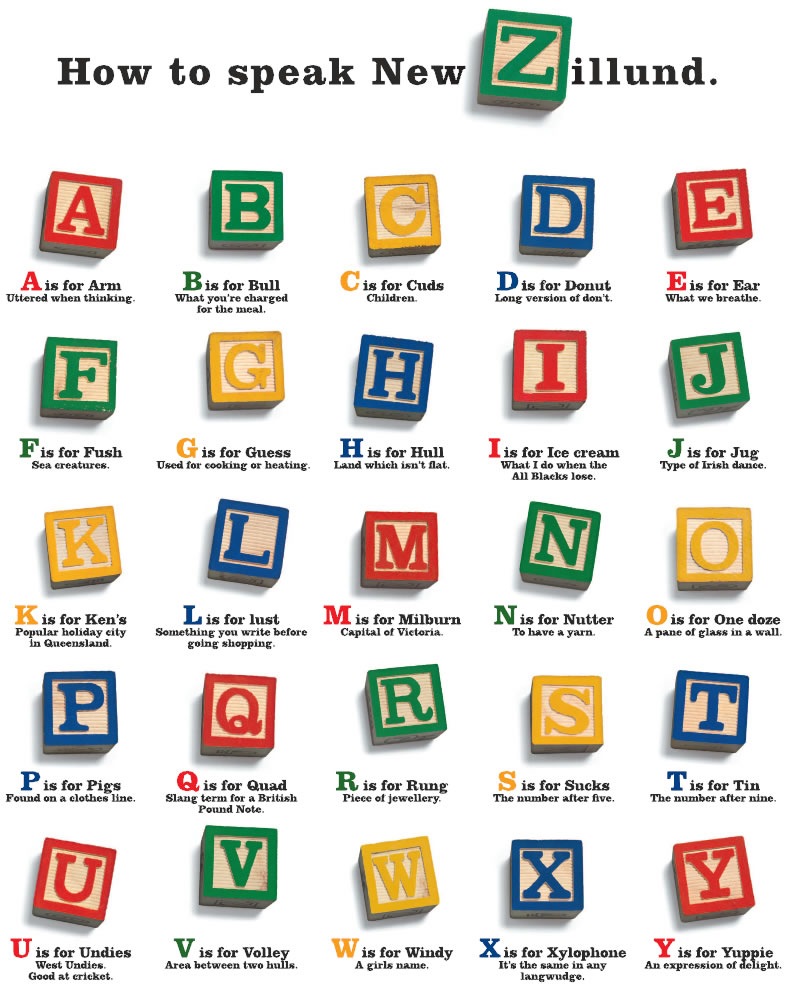
If you’d like this guide for yourself, here it is in PDF format.
If you’re still having trouble understanding what your friends from New Zealand are saying, perhaps you’re not familiar with their vernacular. This Kiwi Slang Guide might help.
Here’s an infographic courtesy of Miss Fipi Lele that explains Iceland’s economic collapse. You can click it to see it at full size:

[This article also appears on my tech blog, Global Nerdy.]
I’m giving the machine to HacklabTO, who were the first to contact me about it. Congrats, guys!
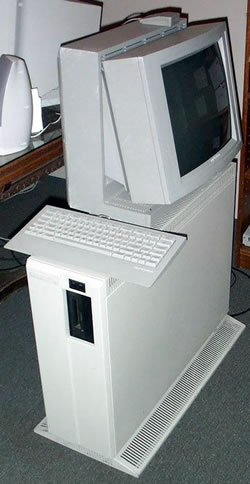 It’s been sitting in my basement long enough, and it’s time that it found a good home. By “it”, I’m referring to my deadbeat ex-housemate’s Symbolics XL1200 Lisp Machine (pictured on the right), a big hulking piece of computer industry history. If you want it and can either pick it up from me (I’m in the High Park area of Accordion City) or can make arrangements to have it shipped to you, it’s yours, FREE. And yes, by free, I mean “free as in beer”. Zero dollars. Gratis.
The full story of how I came to possess this machine is written up in a blog entry of mine from January 2007. As stated in that story, the machine, when last turned on, displayed the message “Hardware Error” and wouldn’t boot any further. As I wrote nearly two years ago:
The fact that it displays a diagnostic message suggests that all is not lost; if someone were willing to go over its numerous circuit boards with a logic probe, he or she may be able to diagnose and fix the problem. Alternately, someone out there who already owns an XL1200 could use it as a source for replacement parts.
It sat safely in a closet in my old house for three years and it’s been sitting in the storage locker of my condo for the past 18 months. It is in good condition, and aside from being put into the storage locker when I moved to the condo, it hasn’t been touched.
If you’re a hardware hacker, computer historian or just really, really, really like the Lisp programming language and want serious Lisp bragging rights, this machine can be yours for free if you can take it off my hands. Interested parties should contact me at joey@joeydevilla.com.

In his blog Quoderat, David Megginson provides an excellent summary of the brouhaha that’s currently taking place in Canadian politics right now. If you’re not familiar with the Canadian parliamentary system of government, worry not: he summarizes it quite nicely and lists American governmental analogues to the various parts of Canadian government.
If you’re really pressed for time and can only spare a moment to read six bullet points, my summary of David Megginson’s summary should get you up to speed:

Image courtesy of Miss Fipi Lele.
I assume that by “shacking”, they actually meant “shacking up”.