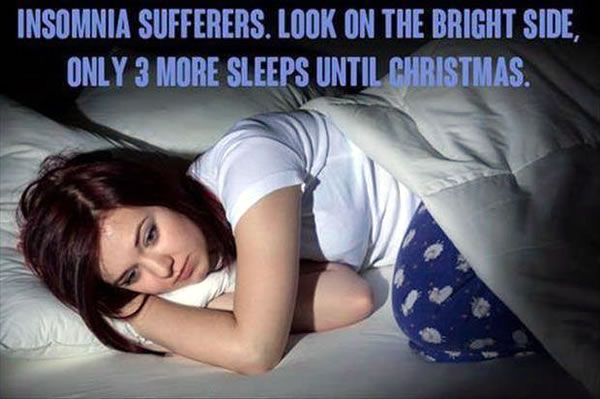
…and one more sleep until Thanksgiving if you’re in Canada; two if you’re in the U.S..
Thanks to Stephen Dean for the find!
…and one more sleep until Thanksgiving if you’re in Canada; two if you’re in the U.S..
Thanks to Stephen Dean for the find!
As with just about any of John Oliver’s pieces on Last Week Tonight, this one’s fifteen minutes well spent.
The Miss America Pageant, in a fit of defensiveness, loves to remind you that they’re the largest provider of scholarships exclusively for women. The sad thing is, even once you factor away their fudged numbers, they’re right. That means the biggest source of women-specific scholarship money in America requires you to look good in a swimsuit and evening gown.
Want to change that? Donate to the following real scholarships:
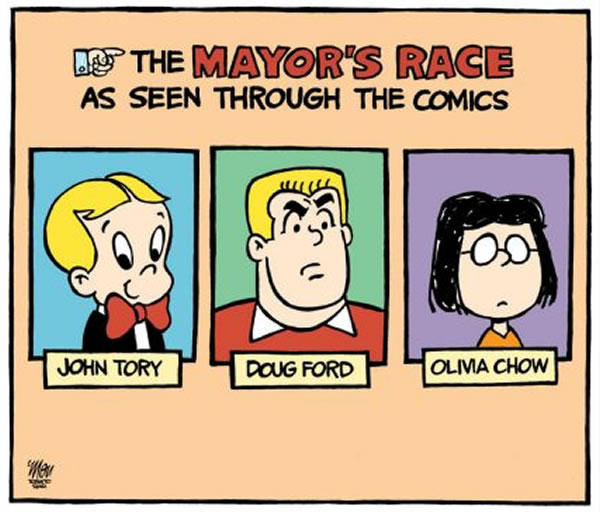
Cartoon by Theo Moudakis.
In case you don’t remember them: that’s Richie Rich on the left, “Moose” from Archie in the middle, and Marcie from Peanuts on the right.
It’s not all that far from my article about the last mayoral election, which likened the candidates to characters from Family Guy, with Rob Ford as Peter Griffin…
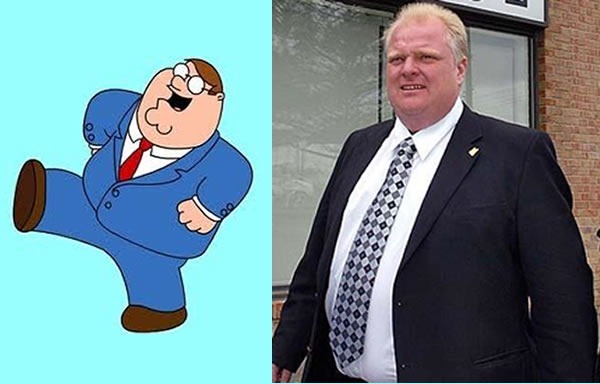
…“Furious” George Smitherman as Stewie Griffin…

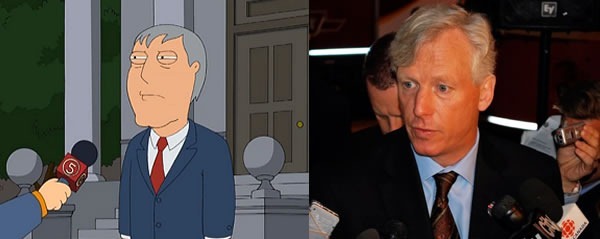
…and while not a candidate, outgoing mayor David Miller as Mayor Adam West:

Sometimes, I like having a little background noise going on while I work: a TV tuned to the news, some music, a little cafe chatter, or the splashing sounds of a pool (as you may have guessed, I work from a home office). The internet is often my source of said background noise, and once again, it has provided — this time, in the form of You Are Listening To, located at the easy-to-remember URL youarelistening.to.
Its formula is simple: take some ambient electronic music…

…and layer some city’s police and emergency services radio on top, and boom! Ambient mash-up!

I’ve been listening to You are Listening to Halifax for the past hour or so, which combines ambient music with the sounds of Central Nova Scotia’s Fire and EMS radio, and as you might expect, it’s been pretty peaceful.

The most popular channel on the site by far is You Are Listening to New York, which punctuates its ambient music with NYPD Special Operations Division and Traffic’s radio. Strangely enough, it’s pretty relaxing and unobtrusive, but there wasn’t a 9/11-scale emergency going on at the time. Your mileage is going to vary.
If you’re worried about being distracted by the chatter on the radio, try one of the channels that uses audio in another language. You Are Listening to St. Petersburg mixes its ambient music with the police radio of the copycat St. Petersburg (the original’s here in Florida, of course). Are you a fan of air control chatter? How about You are Listening to JFK Air Traffic Control? Do you like your chill-out music peppered with rocket engineering talk like “guidance is internal”? Then You are Listening to NASA’s for you!
You Are Listening To has all sorts of ambient-music-plus-radio-feeds for you to listen to, and you can even create your own channel: just pick a SoundCloud playlist for the music, a Broadcastify stream for the radio, a YouTube video for visual wallpaper, and a background image, and you’ve got your own chill-out mashup. I think I’ll be playing around with this site for the next little while.

 This is America, where more is better, and this is also Florida, where no idea is a bad one. Hence Jasmine Tridevil (presumably not her real name) and her third breast.
Why three boobs? Because she doesn’t want to date anymore:
“I got it because I wanted to make myself unattractive to men. Because I don’t want to date anymore. Most guys would think [the extra breast is] weird and gross. But I can still feel pretty because if I wore makeup and cute clothes, I can still, you know… feel pretty.”
While many men might consider the extra one a turn-off, there are likely more than a few who’d consider it a turn-on. I get the feeling that getting a third breast to repel men is liking spaying barbecue sauce all over the picnic grounds to keep bugs away. Besides, there are probably less drastic measures she could’ve taken if she didn’t want to date — such as not dating.

In an interview with Orlando-based radio station Real Radio 104.1, Jasmine, who’s a Tampa-based licensed massage therapist, explains that she had to see “50 or 60 doctors” before she found one who’d perform the necessary cosmetic surgery. The doctor who agreed to do so had her sign a non-disclosure agreement and charged $20,000.
As you might expect, Jasmine is trying to get her own reality show and hired a camera crew to follow her around. On her Facebook page, she says she has upcoming appearances on the Jimmy Kimmel show and the Inside Edition.
Here’s a video of Jasmine showing off “the girls” in a bikini top. Radiohead may want to consider making it the official video for their single, Creep:
While she may not be completely right in the head — she’s a big Criss Angel fan, which should be a big warning sign — you’ve got to give her credit for her determination and financial sense. Rather than go into debt, she simply worked hard, scrimped and saved for her operation.
No, I haven’t run into her in town yet. But I’ll let you know if I do.

From Matthew Remski’s Rob Ford, Emotional Whiplash, and the Suburban Medieval:
So many folks want to do the right thing, and separate Rob Ford’s politics from Rob Ford’s health. To do it, they must bracket off their disdain for the man they know as a racist, abusive, rageoholic addict. Leashed by politeness and perhaps the reminder of their own mortal fears, they are jerked between loathing and pity, sustaining serious emotional whiplash.
But it’s not only the cognitive dissonance between “thug” and “cancer victim” that snaps their heads back and forth. It’s also the confusion between the white ambulance and the black Escalade, between hospital bed and campaign stump.
They hear Rob’s voice trembling with sickness, fear of chemotherapy, faith in family, faith in God. But then it also trembles with faith in the gullibility of Ward 2, faith that family and ideology are interchangeable, and, of course, faith in Doug Ford. Doug: all choked up, as anyone would be at a podium outside a hospital. Doug: who misses more than half his Council votes because he’s so very busy with side-deals, covering for his brother at pressers, and verbally abusing the parents of autistic children.
What are we to feel? Kind people, or people who want to appear kind, will bite their tongues to separate Rob Ford’s health crisis from his character. But the Fords actually want to drive these together. Cancer becomes a campaign opportunity, to show how a pious commitment to neoliberal hooliganism is the noblest way to confront death.
Loathing and pity, loathing and pity. Our poor necks!
The whiplashing doesn’t end there. The Fords, enabled by flip-floppy journos, have also yoinked the city backwards into a feudalism – let’s call it “suburban medieval” – in which the king’s body is the body of the people, and his bloodline spins a divinely-ordained web of power. Merit is irrelevant. Authority is a genetic birthright preserved in the heart, bowel, marrow and fat of the king, who shakes the fortunes of the realm with every wheezy breath.
Thanks to Adina Goldman for the find!

The Red Pill is the name of a school of thought that women generally have it better than men, and that we’ve been manipulated by society to think the opposite is true. The term “Red Pill” is borrowed from — of course — The Matrix. It requires a specific kind of cognitive dissonance in which you want to be with women and also hold them in utter contempt.
But I’m A Nice Guy from Scott Benson on Vimeo.
In a recent post on the Red Pill Subreddit (a Reddit subsection) “IllimitableMan” writes in response to another post titled “What I’ve learned from the women in my family”:
Women are shit. AWALT. Fuckoff snowflakes, nobody cares you think you’re different. Every woman thinks she’s special and different and expects to be treated as such. It’s all bullshit. Women are remarkably similar to each other across the board and HATE being generalised because of their narcissism. They’re so similar psychologically that we can make a fucking subreddit that generalises just over half the human race with an incredible degree of accuracy and use that knowledge as a proficient weapon in helping men get the upperhand in a social system where they’re systemically beaten down. The upperhand is something a man needs if he ever wants to come out unscathed with any kind of social contract with a woman. Hypergamy necessitates it. She requires your superiority to be attracted to you, that’s probably the biggest joke about “equality.”
In case you were wondering, AWALT is a Red Pill Community / internet misogynist shorthand for “All Women Are Like That”.
Not all women are born equal, but all have a capacity for insanity and machiavellianism. Thoroughly believe all women are crazy, the extent just differs. Thoroughly believe all women are manipulative, the scale and intelligence of said manipulations just varies. Never met a bitch who wasn’t crazy or manipulative. Even if it isn’t always immediately observable, you can be assured underneath that exterior of upward inflexion, smilies and a face full of chemicals their lurks something far darker and more destructive. Women have an incredible predilection for mental violence to make up for their lack of physical strength. Their emotions make them impulsive and irrational, so they’re bad long-term investments.
Men need to start living in bachelor pads together, library, gym, pool table. Swimming pool. No bitches living in the house. Fucking escorts and partying. It’s an effective way to avoid this clusterfuck of affairs we call women/marriage/divorce/hypergamy without being lonely/sacrificing a sex life. Jealous bitches will accuse you of being gay as an effort to shame you/your friends into adhering to the traditional narrative and wifing up her or one of her friends, laugh in their faces and shame them right back for being homophobic. Lay into them for hating gays and watch them shut the fuck up as you flip their own bullshit back at them. Live your life on your own terms men don’t feel like you have some fucking duty to society and these ungrateful harpies who’ll never appreciate all the sweat and toil you put into making ends meat. Fuck ’em all. Society never gave a fuck about you so don’t feel some disjointed loyalty to it. If you’re not already lumbered with a woman, a woman’s problems, and a kid, sit back, sip a JD & Coke from a cocktail straw and let it all fucking burn.
We can literally redefine transactional sex from “shit woman does to control you” to “something women are paid to do and then quickly leave because you don’t want the crazy parasite trying to dig her claws into your life”
The screed goes on for a bit, and the more I read, the more I was reminded of this panel from an XKCD comic on pick-up artists that very neatly captures “Red Pill” types’ true enemy:


Lena Tansey, in her essay aimed at people thinking about becoming a Teach For America “teacher”, titled I am, I’m asking you to quit:
I am white. I am female. I was educated at a prestigious university, which included a minor in education. In essence, I am riddled with privilege. Do I belong in a classroom in a community of color to which I have no connection and of which I have no knowledge? Absolutely not. Especially not after minimal training and no commitment to being there long term. And neither should the countless Teach For America (TFA) corps members ‘teaching’ across the country, some of whom are my friends and peers. I have tried broaching this subject with various people in the past, and am almost always met with resistance and anger, and for those who are close with someone who has done TFA, an edge of defensiveness. How could I dare purport that all of these altruistic college graduates who are “giving up” two years of their precious time to teach low-income majority black and brown students need to stop what they’re doing immediately? In response, I challenge you to look more closely.
Can you think of any skilled professions in which it would be safe to employ individuals with only a handful of weeks of training? Would you want a nurse who had been hastily trained to be caring for your health and well being? Would you want a lawyer with such little experience to defend you? Would you want a poorly trained mechanic working on your car? Even if any of these people had been college-educated? So why do so many people think it is okay to entrust the education of our nation’s children to college graduates with so little training and experience? Do we believe fundamentally that teaching requires very little skill and commitment? I do not care where you received your degree, if you don’t have any real training in the realm of teaching, and no commitment to sticking around in order to become a good teacher, you simply do not belong in a classroom. It is not safe.
The Onion summarizes Lena’s essay quite nicely in this point/counterpoint:
 Point: My Year Volunteering As A Teacher Helped Educate A New Generation Of Underprivileged Kids
 Counterpoint: Can We Please, Just Once, Have A Real Teacher?

Pricenomics’ article, The McDonald’s Cocaine Spoon Fiasco, provides a fascinating look into the demise of a clever piece of design: the McDonald’s coffee spoon (pictured above). It was the victim the combination of paranoia and the Model Drug Paraphernalia Act, which set in place an incredibly vague definition of what constituted “paraphernalia”. Here’s an excerpt:
Just prior to the creation of the Model Drug Paraphernalia Act, then-Senators Joe Biden and Charles Mathias held a hearing in Baltimore, where the Paraphernalia Trade Association (who represents headshop vendors) could voice their concerns. The PTA swiftly went about arguing that, under such a broad definition, anything could be deemed “paraphernalia.”
According to minutes from the hearing, one PTA representative attempted to make a mockery of the proposed law. “Look at this,” he facetiously told the panel, thrusting a McDonald’s coffee stirring spoon above his head. “This is the best cocaine spoon in town and it’s free with every cup of coffee at McDonalds.”
With its long, thin handle and tiny stirring head, the McDonald’s spoon had, indeed, amassed a cult following among drug dealers and aficionados. Light, cheap, and inconspicuous, it could be concealed easily — and best of all, as its scoop held exactly 100 milligrams of product, it doubled as a measuring device.
While the representative’s intention was to deride the anti-drug crusaders’ attack, his stunt fell on the wrong ears — those belonging to former President of the National Federation of Parents for Drug-Free Youth, Joyce Nalepka. Though Nalepka left the hearing without a chance to testify, she spent her whole drive home “searching for some way to counteract [the PTA’s] McDonald’s spoon statement.”
Then it hit her: she’d contact McDonald’s, inform the company of its utensil’s bad rap on the street, and demand they discontinue it.

Not a scene from the Buffalo Wedding Brawl, but from this funny Windows Phone ad.
“I’m telling you, there was blood everywhere,” said one of the staff at a wedding reception in Buffalo that ended in a 100-person brawl. “There was holes punched in the walls. Words couldn’t describe it. Just when you thought it was over, another fight started.”
(“There was holes punched in the walls.” Never mind the guests — even subjects and verbs were in disagreement at this wedding!)
Police got a call last Saturday night at 11 p.m. about a fight breaking out at a wedding reception at Orchard Park Country Club. An officer who was among the first to respond says that more than 100 people were fighting both inside and outside the club when they arrived. The bride and groom were apparently not involved in the brawl — she had been hustled out the back, while he tried to get the guests to leave.
There’s still no clear explanation for what started the fight, although there’s a report that earlier that evening, a wedding guest was accused of groping a woman and then punched in the face. That guest was escorted off the premises, and the reception went back to normal until it was time to leave. Apparently there was still some lingering ill will, and that’s when the fights broke out. The fights got larger as people tried to break them up, only to be drawn into the melee. “There were intoxicated individuals who were not helping us at all and had to be sent along with a sober individual,” said a police officer who was at the scene.
Seven police departments showed up in response. This may have been because of the size of the fight, but I’m not going to discount the explanation that upstate New York is a crashing bore on most Saturday nights.
The Wedding-Industrial Complex doesn’t like anything tarnishing its image, and Orchard Park Country Club’s manager was quick to deny that the fight even took place. He showed Buffalo News their main lounge and dining areas, which didn’t look as if they’d been through a bunkhouse brawl. “Look around,” he said. “Does it look like there was any damage?”
It should be noted that the wedding reception was held in a side banquet room that wasn’t shown to Buffalo News. In the meantime, the officer who first arrived at the scene said damage included holes in walls, blood, broken crystal bowls and glasses and damage to property in the main banquet area, hallways and basement. “For them to say nothing happened is 100 percent wrong,” he said.
The best observation about the story comes from Gawker, in response to a witness who said “Things were said that can never be taken back.”: “Hey! It’s like a metaphor for marriage!”