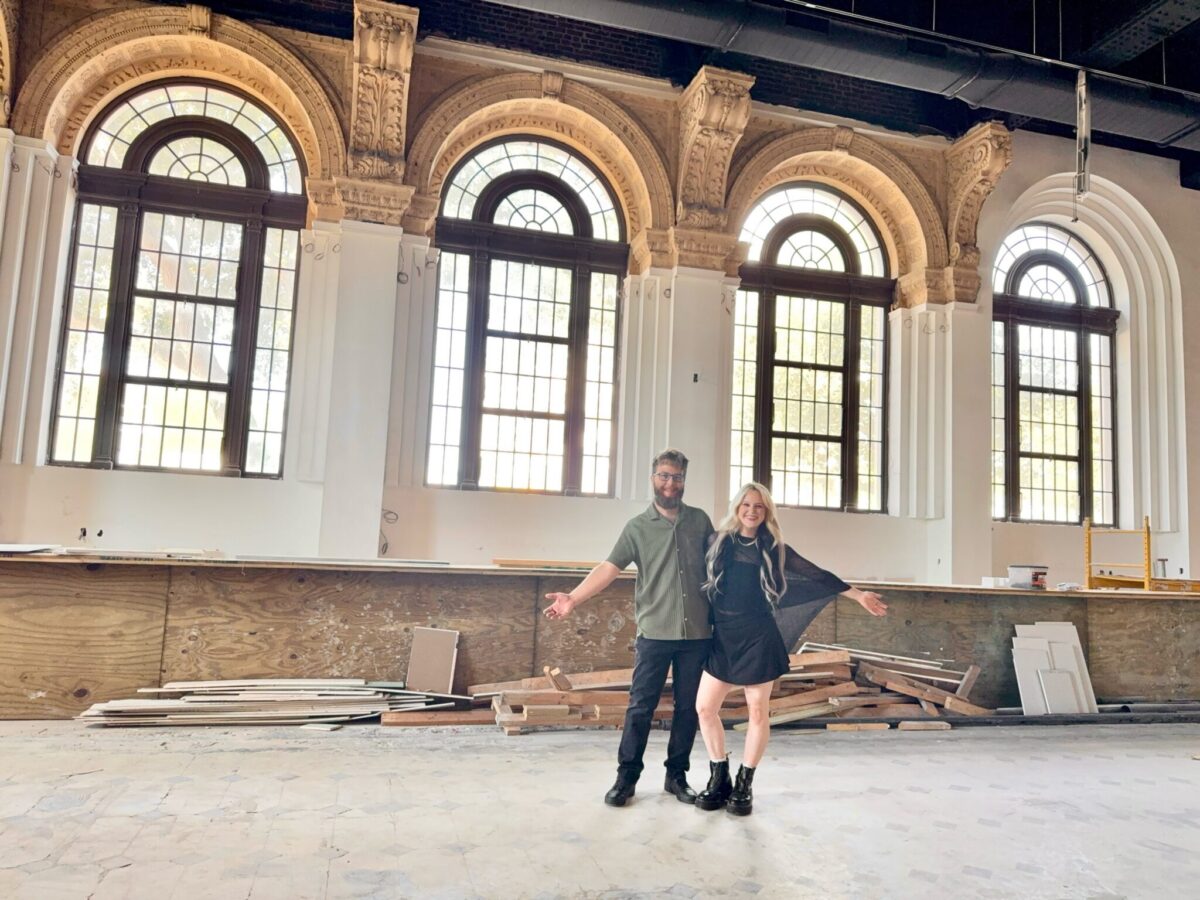
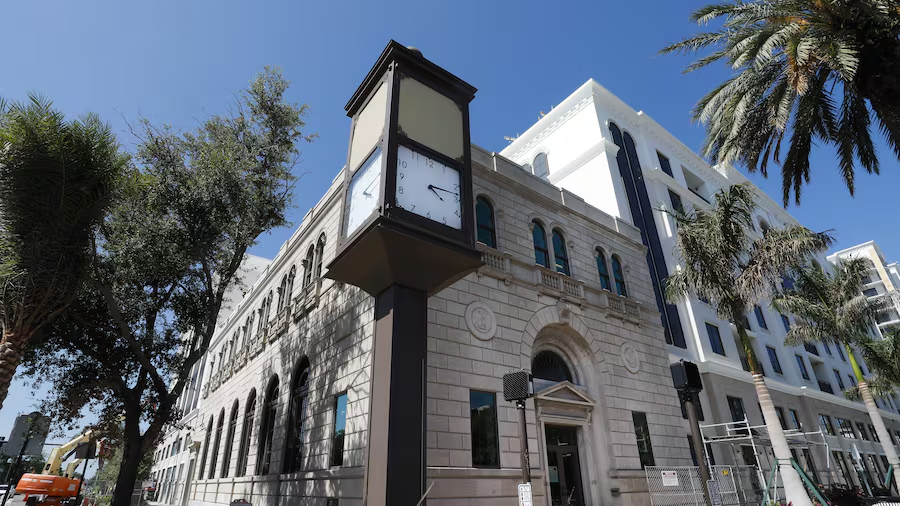
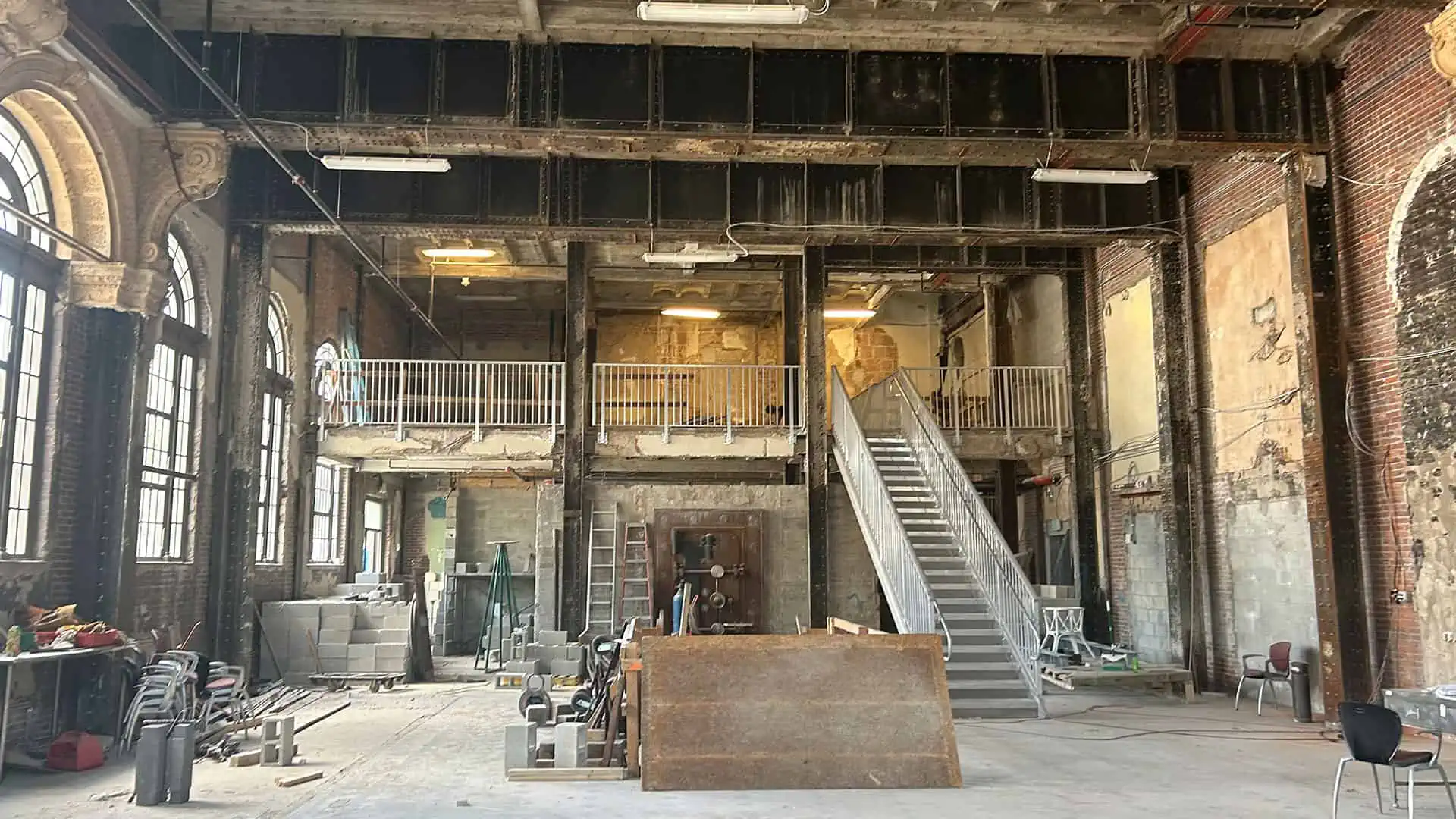
The Sourdough Co. in St. Pete has some pretty nice digs now in St. Pete’s EDGE District, but their upgrade is going to be impressive. They’re moving to the Union Trust Bank building at 895 Central, which will give them an impressive storefront:
This is a big step up: the building has three levels with a mezzanine and basement (basements are rare here) for nearly 11,000 square feet of floor space.
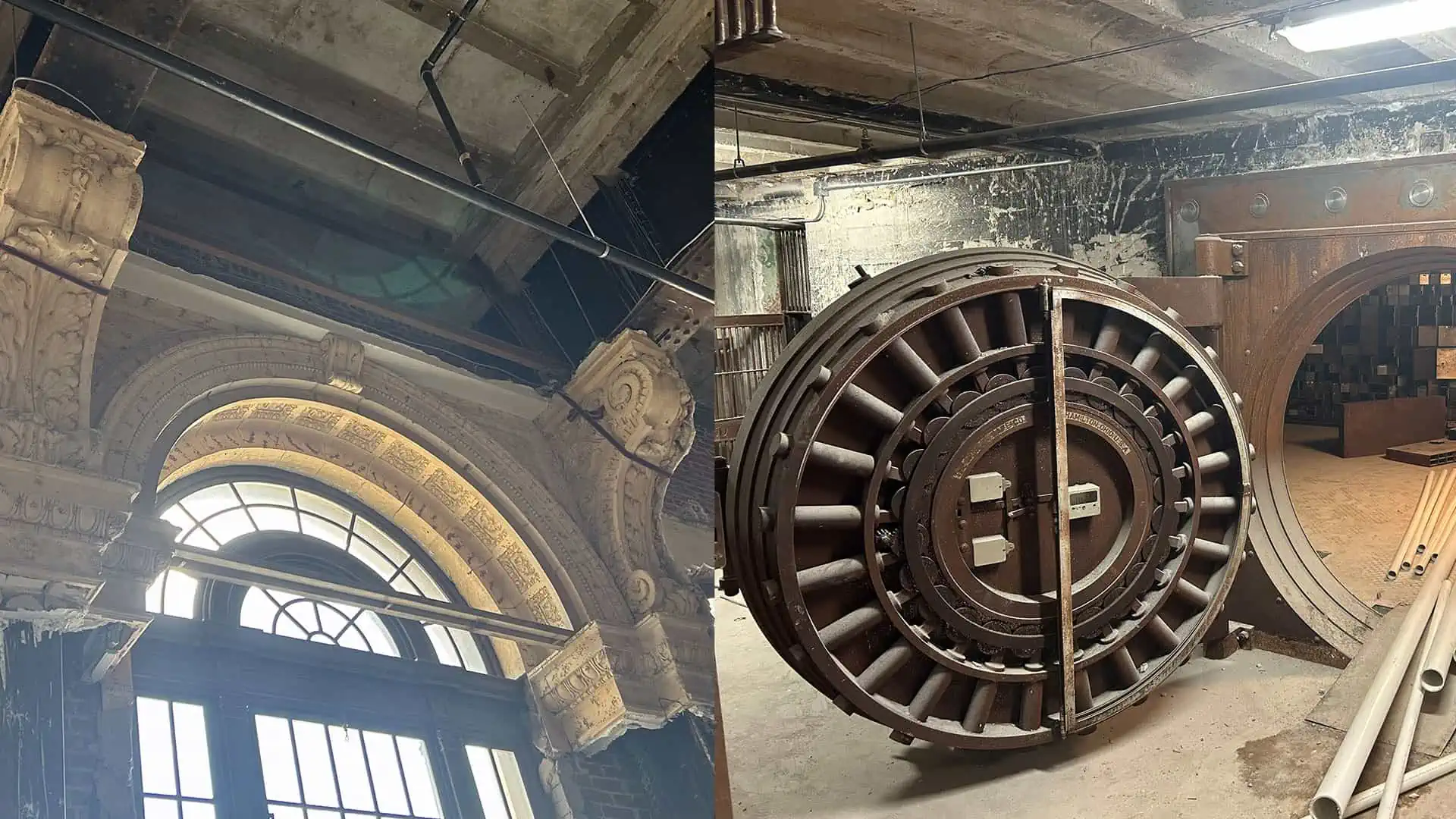
And yes, it has one of those classic bank vaults!
The building’s been empty for three decades, having been saved a number of times from demolition by its place as a historic building and community efforts.
It’ll take a while to get the place set up, and in the meantime, they’ll remain in their current location (1113 Central). I look forward to having one of their Flamin’ Hot chicken sandwiches in the vault room.
If you live in the Tampa Bay area, which has been my home for the past dozen years, you already know we’re a weird, beautiful, heat-soaked paradise of chicken-walking Ybor streets, Cuban sandwiches, unapologetic swagger, and no small amount of Florida weirdness. Also, it’s the long-time home of the reason I’m here: Anitra!
But if you want to understand why this town exists at all, grab yourself the largest cafe con leche you can get your mitts on and watch (or listen to) Paul McAllister’s excellent 40-minute deep-dive video, The Most Impossible Rise of a City Ever: Tampa, Florida.
It is a glorious love letter to the absolute absurdity of Tampa history.
Here’s the TL;DW summary of how a mosquito-infested swamp went from a ghost town to the center of the universe.
1869: The ultimate civic rage-quit
In 1869, after surviving Seminole Wars, yellow fever outbreaks, hurricanes, and the Civil War blockade, the 180-ish residents of Tampa looked around at their bankrupt village and did something almost unheard of in American history: they voted to un-incorporate and dissolve their own government.
By 1880, the U.S. Census counted a whopping 720 people living here. No railroad, no major industry, and yellow fever so bad that ships refused to dock. Tampa was a dying backwater on a bay nobody wanted.
The Great Trifecta (~1883–1886)
Within a two-year window, three completely unrelated forces crashed into our sandy shores and sparked a 670% population boom in a single decade:
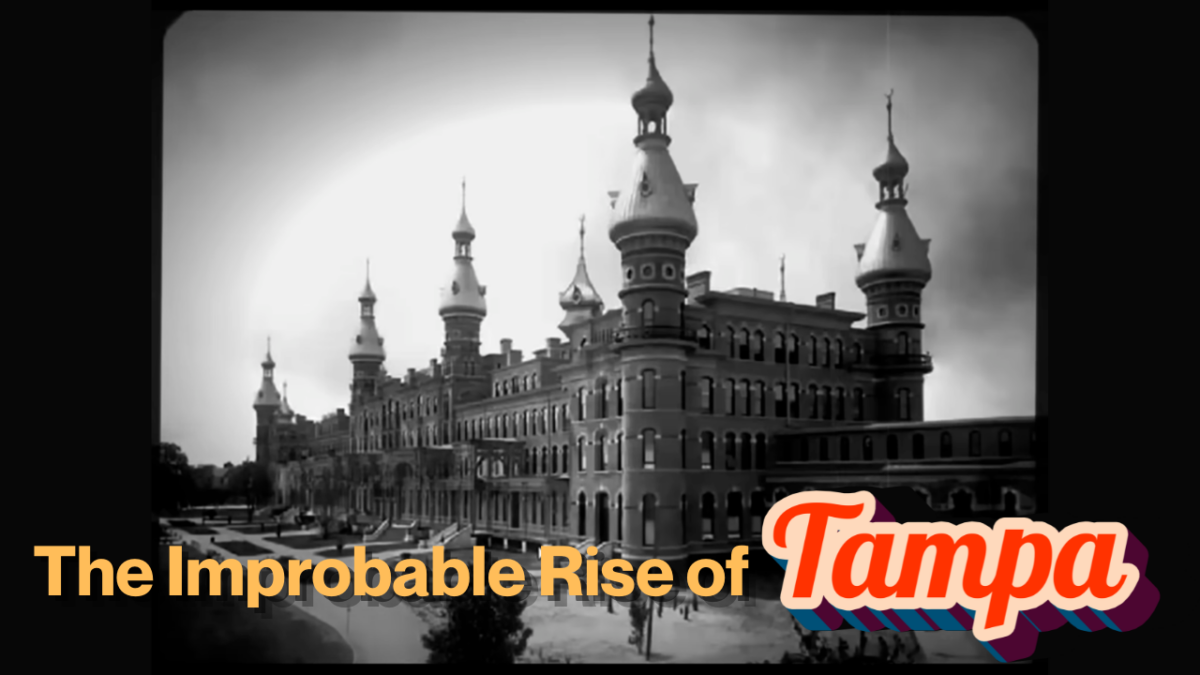
The railroad and the loss leader hotel: Rail tycoon Henry B. Plant brought his train lines to Tampa in 1884. To force wealthy northerners to ride his trains, he dropped $3 million ($75M in today’s money) out of his own pocket to build the Tampa Bay Hotel, a 511-room, 6-acre Moorish Revival palace topped with 13 silver minarets. It lost money every single day, but Plant didn’t care: the hotel was just a loss-leader to sell train tickets! Today, it’s Plant Hall at the University of Tampa.
Phosphate: In 1881, engineers found massive phosphate deposits in the “Bone Valley” just east of us. Suddenly, Port Tampa was shipping prehistoric animal bones-turned-fertilizer all over the globe, giving Tampa the industrial cash flow it desperately needed.
Vicente Martinez Ybor and Cigar City: Fleeing labor disputes in Key West and Spanish arrest warrants in Cuba, Ybor bought 40 acres of scrubland northeast of downtown in 1885 and built Ybor City. At its peak, 200 factories were pumping out 500 million hand-rolled cigars a year. They were producing more Cuban cigars than Havana itself.
The lectors: Factory floor intellectuals / proto-podcasters?
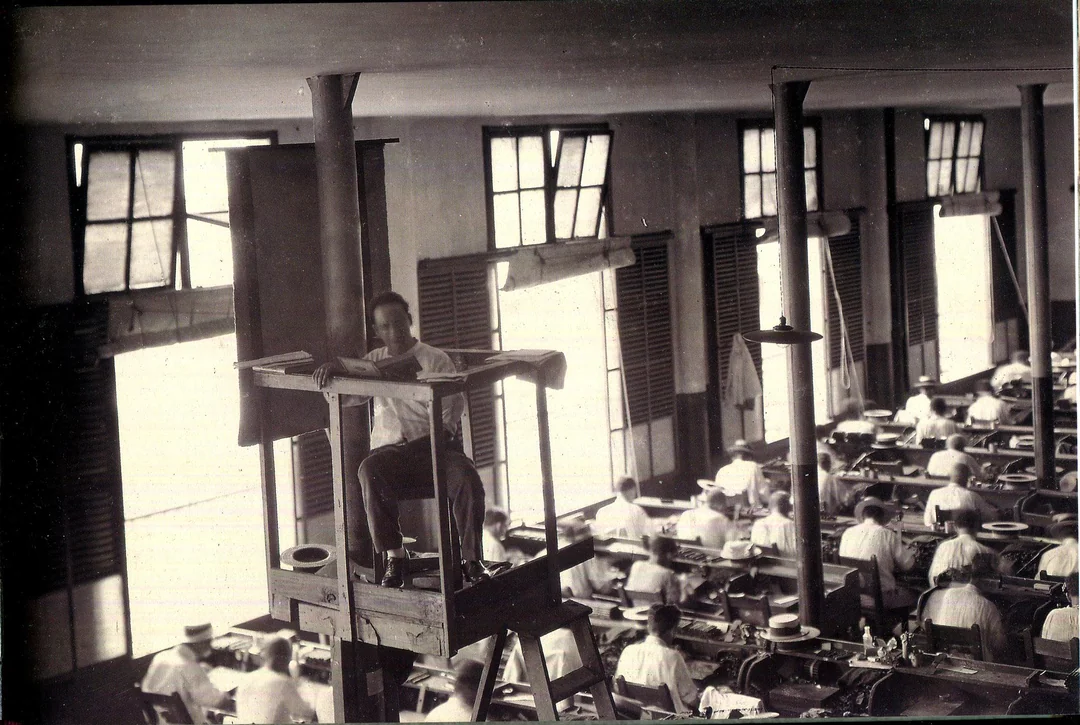
My favorite detail in the video is the story of the lectors. Ybor’s cigar rollers each chipped in 25 cents a week to hire a reader to stand on a raised platform in the middle of the factory floor.
While 400 workers rolled cigars in silence, the lector read aloud: newspaper headlines in the morning, and Victor Hugo (Les Misérables was a massive hit), Alexandre Dumas, and political philosophy in the afternoon. Because of this, Tampa’s immigrant cigar workers were among the most educated, politically engaged laborers in the entire country.
Think about it: If you listen to podcasts while working, you’re continuing a great Tampa tradition!
The video says that you needed stage presence and a great voice to be a lector. It sounds like the sort of job I would’ve taken had I lived here back then.
Flexing on History
The video runs through the sheer gauntlet of Tampa “firsts” and flexes:
1898: Teddy Roosevelt and the Rough Riders camped out on the Tampa Bay Hotel grounds before invading Cuba, doubling Tampa’s population overnight while military generals planned the Spanish-American War under French chandeliers.
1914: The world’s first scheduled commercial airline flight took off from St. Pete and landed right here in downtown Tampa. It was a 23-minute flight in a canvas biplane piloted by Tony Jannus, after whom the St. Pete music venue Jannus Live is named.
1924: Real estate wildman D.P. Davis bought two swampy mud flats in the Hillsborough River for $350k, dredged up sand, and built Davis Islands out of thin air.
1926: The Tampa Theatre opened as one of John Eberson’s crowning “atmospheric” movie palaces, complete with a ceiling painted like a night sky, twinkling stars, artificial drifting clouds, and the city’s first commercial air conditioning system.
Why it matters
Tampa didn’t grow because of some master corporate strategic plan. It grew because a Connecticut rail baron, a exiled Cuban cigar mogul, prehistoric fossil beds, and thousands of passionate immigrants all converged on this bay at the exact same time.
Today, while interstate highways and urban renewal tore down pieces of our history in the ’60s, the spirit is still here. You can still see the silver minarets catching the morning light over the Hillsborough River, and over on 16th Street, J.C. Newman still rolls cigars by hand—with the lector platform proudly restored.
Watch the video, get your local pride on, and remember: we’re living in a city built on pure, unadulterated Florida audacity.
Anitra and I were dropping off a package at the UPS Store on Kennedy when we saw a “no weapons” sticker on the bridal gown store next door. I know some people who work in the wedding industry, and from the stories they tell, I’m not surprised.
A quick blast from the past: 11 years ago today, Anitra and I did a quick check of the venues for our then-upcoming wedding. This included a family get-together at the Don CeSar the day prior to the wedding, along with the wedding venue, the Grand Plaza Hotel (now known as the Bellwether Beach Resort).
It’s a lovely Sunday here in Tampa’s Seminole Heights neighborhood, and Anitra and I are enjoying it at our local café, Spaddy’s Coffee. The coffee’s great, our neighbors are here, and the local DJ’s spinning a solid mix.
(It’s also a good place to get work done. There’s often someone here with a laptop; I myself have written some code and a white paper here!)
This lovely moment is also a reminder that if you want your neighborhood to be a great place in which to live, work, and play, patronize your local establishments, especially the small ones! They’re the ones who provide the local flavor, and make the difference between a neighborhood you go to versus a neighborhood you just go through.
This car was ditched in both senses of the word, and was still there (near Alicia Avenue and N. Boulevard) as of 9:00 this morning. Someone’s already called Tampa Police’s non-emergency line.