Two observations:
- Every bar needs a sign like this, and
- There are good Tinder dates?

Here’s a story that anyone who’s taking part in any of the activities of Tampa Bay Startup Week — or wishes they could take part — should read. It’s a story about a seemingly insignificant gathering of like-minded people, and how the ripples of what its attendees did can still be felt today, an ocean away…
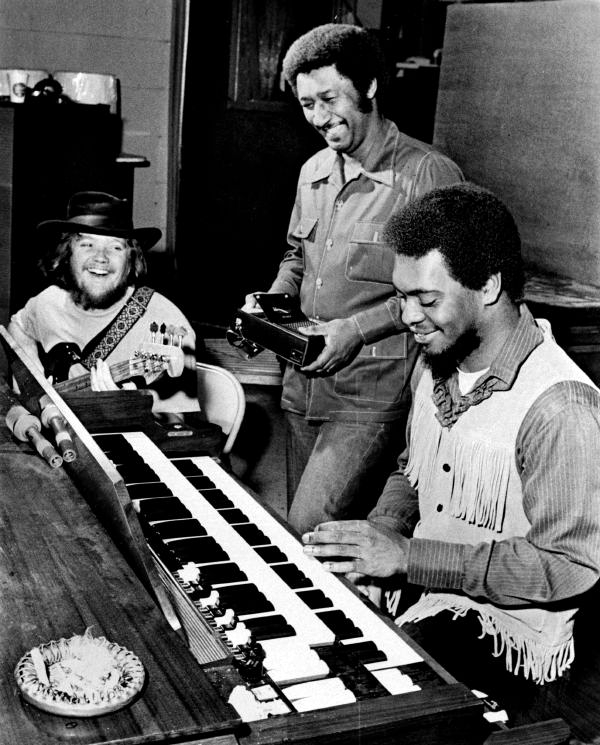
It’s June of 1976 in Manchester, England, and a small group of people gather in a tiny venue called the Lesser Free Trade Hall to see a band play. There’s nothing really remarkable about this group of 42 people, and that evening’s featured musicians are unknown at the time.
The band calls themselves the Sex Pistols.
As I mentioned, there were no famous people in the crowd at this show, or at the follow-up show that happened about a month later. The Sex Pistols had not yet caused an uproar throughout Britain with songs like Anarchy in the UK and God Save the Queen, and it was well before they invaded the US in 1978.
Attendees ranged from the local mailman to a few rebellious school children. But a handful of others in that small audience became some of the most influential people in independent and now mainstream music.
A gig attended by a few dozen in a venue that could easily hold hundreds would normally be considered a flop, but turned out to be anything but an ordinary concert. The influence of the Sex Pistols and the punk rock movement they helped kickstart can still be heard today in every band that features a spikey-haired youngling beating rapid power chords on a guitar. Johnny Rotten would later found the more experimental Public Image Ltd, and manager Malcolm McLaren would cast his musical net even wider, branching out into disco, funk, hip, electronic music, world music, and even opera.
That “handful of others” in the audience were just as important. Among them were:
Mark E. Smith of The Fall, whose influence can be heard in later acts such as Pavement, Sonic Youth, Guided By Voices, Faith No More, and even the electronic act LCD Soundsystem.These output of the bands that arose from this one gig would help define alternative rock and its subgenres, from punk to goth to synthpop to grunge, for decades to come. All this came from a concert that almost nobody cared about at the time, attended by people nobody had heard of at the time.
“The gig that changed the world,” as alt-rock aficionados sometimes call it, did so because it brought together people with similar interests who were passionate about what they did. Its attendees saw that popular music was changing, and after being inspired by a group of troublemakers, decided that they could be part of that change. They went on to create music their way, and make their mark on the world.
The people behind Tampa Bay Startup Week (pictured above) may not look punk rock, but they’ve most certainly got its DIY, “we have an idea and we’re going for it” spirit. Like the Sex Pistols, they’re a band of troublemakers putting on an event on a shoestring budget (yes, Chase is sponsoring, but without them, the budget would likely go from shoestring to none), and at the moment, it isn’t being noticed by most of the world outside “the other bay area”.
Like the music scene in Manchester the mid-1970s, the work-life dynamic in Tampa Bay in the mid 2010s is undergoing some big changes:
If you look carefully, you can see the initial rumblings of change here, from the One Million Cups gathering that takes place every Wednesday to all the local interest in The Iron Yard to places like The Hive, Tampa Hackerspace, and Eureka! Factory to the ex-Marine who’s doing good and helping your beard feel good at the same time. I see a lot of the necessary ingredients for change here that I saw in Toronto in the mid-2000s, and so does GeekWire…and with a subtropical climate to boot!
I hope that like those 42 people who attended that Sex Pistols concert in 1976, that some of the people at Tampa Bay Startup Week’s events will get inspired, start their own businesses, and shake the universe.
(I’ll be at tonight’s tech cocktail mixer with my accordion. If you ask, I’ll gladly play you my rendition of Anarchy in the UK.)
Today:
Tomorrow:
Freshman Republican (why am I not surprised?) Senator Thom Tillis of North Carolina ended his talk at the Bipartisan Policy Center yesterday in such a bizarre way that it sounds like a piece from The Onion. He started with an assertion that “you can get regulations to a point where you preserve the environment, you keep the workplace safe, you can do all that; we want to!” So far, so good.
That’s when things got weird. He told a story where he and a colleague were at a Starbucks in his district were discussing business regulations. “Maybe you should allow businesses to opt out. Let an industry or business opt out, as long as they indicate, through proper disclosure, through advertising, through employment literature, through whatever else…there’s this level of regulations that maybe they’re on the books, but maybe you can make a market-based decision as to whether or not they should apply to you.”
Around that point in the conversation, a Starbucks employee emerged from the restroom. The colleague asked if Tillis thought that the employee should be required by regulations to wash his hands after going to the bathroom.”
His response: “I don’t have any problem with Starbucks, if they choose to opt out of this policy as long as they post a sign that say ‘we don’t require our employees to wash their hands after using the restroom’…the market will take care of that!“
“That’s probably one [case] where every business that did that would go out of business, but I think it’s good to illustrate the point that that’s the sort of mentality we need to have to reduce the regulatory burden on this country.”
In case what you just read sounds too unreal to be believed, here’s the video:
I have no quarrel with market-based solutions for market-based problems. I have a problem with market-based solutions for issues of health, safety, and proven science. The battle cry of “let the market decide” is often used to cover up the fact that a business is too cheap or too lazy to implement some measure that would protect its customers. Remember, the Invisible Hand is more than happy to give you the Invisible Finger; letting the market decide issues of health and safety may require people to get sick or die in order for the Hand to do its magic.
The market is also often quite dumb and pigheaded; consider the rash of anti-vaccine people, who’ve managed to ruin everything from school to Disneyland, or the people who insist on listening to Dr. Oz and buying his products, even though he’s been proven to be little more than a snake oil salesman.
Besides, what’s he’s doing is replacing one regulation (restaurant employees washing their hands after using the bathroom) with another (posting some kind of announcement that you can’t be bothered to clean up after taking a dump, and would you like fries with that?).
I know he’s using this edgy example to gain attention, but there are likely enough people who’ve too much Ayn Rand and think this would be a splendid idea. His idea is so bad that it’s positively Florida, and when I looked at his Wikipedia page, I found out why: he was born in Jacksonville.
Someone needs to borrow a page from Mallrats and give him…the stink palm:
Photo by David Betz.
Monday marked the beginning of Tampa Bay Startup Week, a five-day-long series of events meant to bring creatives, techies, entrepreneurs, and anyone who’s a combination of any of those together to meet, plot, and party. There’s a small but interesting tech scene here in the Tampa Bay area, and a number of factors including the subtropical climate, low cost of living, and the influx of people to the area — you might call it a brain gain — could help it grow dramatically over the next few years.
Me and Anitra, working the room. Photo by Laicos.
The week’s kickoff party took place at the Chase Basecamp, a rented venue on 7th Avenue, the main street of Ybor City (pronounced “EE-bor”), Tampa’s nightlife and party neighborhood. The Basecamp (located at the corner of 7th Avenue and 20th Street), serves as the central meeting place for Startup Week participants, as well as a venue for many of the scheduled events.
Photo by Laicos.
While chatting up the people from local mobile development shop Sourcetoad, I was introduced to the friendly-looking gentleman below, who went up to me and said “I just have to tell you, I love that accordion!”
Photo by Laicos.
As he walked away, Anitra told me that I just shook hands with Bob Buckhorn, mayor of Tampa. I’m a relatively recent transplant from Toronto, so I’ve never seen a photo of him, and I’m too used to picturing the mayor as either a sweaty, drug- and booze-addled, embarrassing mess, or too attached to highfalutin’ extravaganzas that are full of sound and fury but ultimately signifying nothing to care about a small grassroots effort like this one. I’m also not used to a mayor with his approval rating.

Photo by Yours Truly.
He gave a short speech to the crowd, in which he encouraged everyone to meet other people of like minds and ambitions, do what we do, “be a little crazy”, disrupt things, and start businesses. He talked about the brain drain that existed until recently, when people would leave Tampa in search of their fortunes. The situation has been turned around, what with Florida being one of the most moved-to states in the U.S. (as of this writing, it’s the third most populous state, after California and Texas), the population growth in the Tampa Bay/Jacksonville corridor and “Orlampa”, and Penske rental truck data that suggests that the Tampa Bay/Sarasota area is in the top 10 most moved-to locales. He asked the group to keep working to make Tampa a better place to be, if only to make sure that his daughters don’t move away to Atlanta, Austin, or anyplace else.
The money quote that got the audience to really put their hands together:
“I want Tampa Bay to be the economic engine of the southeast.”
It’s bold. It’s ambitious. I like it.
After all the speechifying, he then did what any good mayor would do: take control of the decks and drop a fat beat.
Photo by Laicos.
Anitra and I spent the rest of the evening either catching up with or getting to know the people in attendance, including:
Here’s what’s happening with Tampa Bay Startup Week today and tomorrow. These events are free — just visit the Tampa Bay Startup Week site and sign up!
Today (Tuesday, February 3):
Tomorrow (Wednesday, February 4):

Here’s a brief message that the NFL put on during last year’s Super Bowl, and there’s no doubt that they’ll air something similar this year:
Here’s a transcript of the voiceover:
This telecast is copyrighted by the NFL for the private use of our audience. Any other use of this telecast or any pictures, descriptions, or accounts of the game without the NFL’s consent is prohibited.
Ars Technica points out that the second sentence is “bunk from a legal standpoint”. You can record the Super Bowl (your right to do so was pretty much locked in during the 1984 “Betamax” case) to watch later and skip the commercials, even though they’re often the best part. Fair use lets you use clips for commentary, criticism, and news reporting, and it is your right to give your own account of the game using the medium of your choice.
The NFL is working hard to make sure that you misunderstand copyright law, because they feel that any part of the pro football conversation that isn’t under their control means that they’re losing money that they believe is rightfully theirs. Thankfully, the folks at Ars Technica are making sure that you do understand it. Go and read their article, then feel free to record the game and post highlights on YouTube.
Cyrus Farivar asks if it’s worth $70 to get this piece of historical (hysterical?) memorabilia: a figurine featuring a shirtless Vladimir Putin riding a bear over Russia. If he’s smart, he’ll cough up the money, and years from now, he’ll smile smugly when an appraiser on Antiques Roadshow puts a five-figure value on it.
If you find that you must have this piece of history, point your browser at this site and marvel at its stark beauty:
Here’s their pitch. It’s a Google translation, which is why it sounds like Boris and Natasha plotting to “makink beeg trouble for Moose and Squirrel”:
Statuette “Putin said at Medvedev”
Luxurious Figurine as the head of state who tamed forest brown bear standing on a segment of a great country, symbolizes the victory, the heroic strength and power. Bear has long been considered a symbol of immense Russia, represents courage, strength, courage and rage directed against enemies – this beast could not be better reflects the position of the nation and its principles.
Perfectly executed souvenir – a symbol of Russian fatalism, a symbol of the Russian people, walking through history has always fiercely, bravely, boldly and steadfastly. Statuette reflects the political position of the country, emphasizes its prowess, demonstrating courage of the Russian people, his heroism, rage and desire for achievements, for the protection of its own territory. Sold the original statue in a presentable box inscribed with the colors of the Russian flag and the phrase, President Putin said on one of the forums.
Souvenir is the exclusive, can act as a present a wonderful public servant, military, historians, politicians, boss, collector, patriot of his country, or any strong-willed, imperious and rebellious man who knows how to achieve your goals. This representative will be proud to take the statuette from you on a regular holiday every person from your environment. It not only decorate the interior of your home or office, stately be placed on the table, but will be the subject of conversations and arguments in your circle of friends, which further unify and strengthen your company.