Charity Shine on Me is an earnest, folksy prayer written by Chris Eschete while stuck in a hotel in Shreveport:
And finally, Juan Pastel is playing it up for laughs with Ay Irma (La cancion del Huracan Irma), which he introduces as his only — and possibly last — song. Even with my (very) basic Spanish, I found it amusing.
Plastic sheeting and duct tape to shelter-in-place.
Moist towelettes, garbage bags, and plastic ties for personal sanitation.
Wrench or pliers to turn off utilities.
Manual can opener for canned goods.
Local maps.
It also recommends these additional items, which you may or may not need, depending on your situation:
Prescription medications and glasses.
Infant formula and diapers.
Pet food and extra water for your pet.
Important family documents such as copies of insurance policies, identification and bank account records in a waterproof, portable container.
Cash. (The guide also recommends traveler’s checks, but have you ever tried using one recently? Nobody knows what to do with them anymore.)
Sleeping bag or a blanket for each person.
Complete change of clothing including a long sleeved shirt, long pants, and sturdy shoes. This is no time to do the Florida “shorts and flip-flops” thing.
Fire extinguisher.
Matches in a waterproof container.
Personal hygiene items.
Mess kits, paper cups, plates, plastic utensils, and paper towels.
Paper and pencil.
Books, games, puzzles, and other activities. (The guide recommends these for children, but why should they have all the fun?)
Since this post is about lists, and since I want to include a song on every Hurricane Irma Report, here’s Hall and Oates:
Here’s the NOAA’s estimation of the “earliest reasonable arrival time” of tropical-storm-force winds created by Hurricane Irma.
Click the graphic to see it at full size.
With Hurricane Irma expected to hit Florida on Saturday morning at the earliest, you may be wondering if you should stay put or evacuate. Or, as The Clash put it:
In the end, it mostly (but not entirely) comes down to a single question: Are you near the water?
I’ll leave it to Tampa Bay’s most senior TV meteorologist, Paul Dellegatto from local channel FOX 13, to explain:
I am getting a lot of questions asking about when we should evacuate.
You do not evacuate from the wind unless you live in a mobile home or you are facing a CAT 5 making landfall and you are expecting Andrew conditions right at the point of landfall.
Water is the killer. Wind is not. You run from water. You hide from wind.
We cannot evacuate the state based on the fact there may be strong winds. Given the options you would be better off riding out a storm in a well built home, out of an evacuation zone, then trying to drive up I-75 to a motel in Valdosta. You do not want to become part of the caravan driving up I-75. Trust me. It is a miserable option.
Hurricane Irma as seen from space.
Click the photo to see it at full size.
Anitra and I are always stocked for a hurricane, right down to the camping stove in case the electricity and gas go out. I’ve topped off our supplies, and picked up some extra sandbags. The one thing we don’t have is a generator, and hey, we may get one someday.
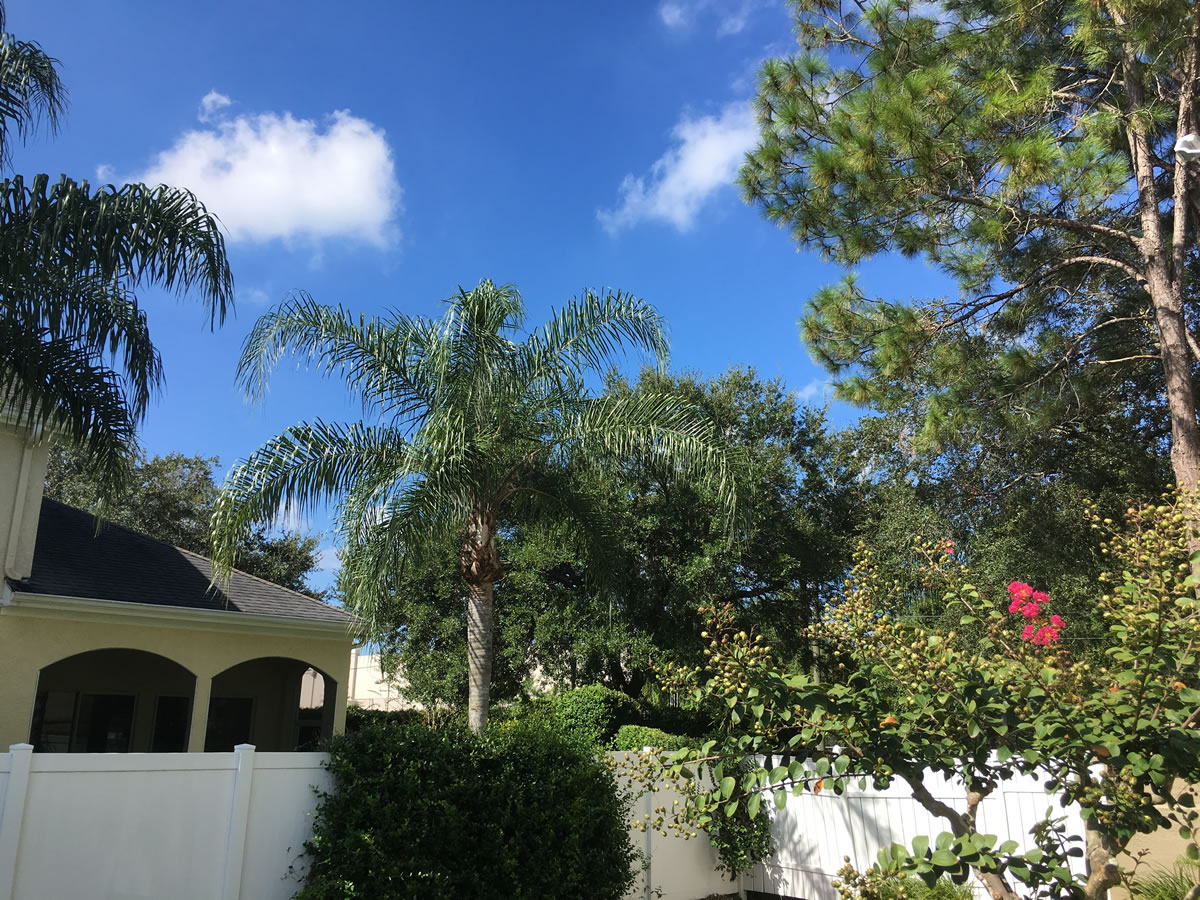
As of this morning, you’d never know that a major hurricane was coming if you didn’t have the benefit of radar. Here’s what the weather was like, as seen from our yard:
The view from our yard, around 10:00 a.m., Thursday, September 7, 2017.
For the benefit of friends and family who are wondering how we’re doing, as well as for the curious and those looking for information, I’ll post regularly here. Watch this space!
“I bought this ages ago,” she said, “and it was still in the packaging. The battery compartment’s all screwed up!”
“Screwed up how?” I asked.
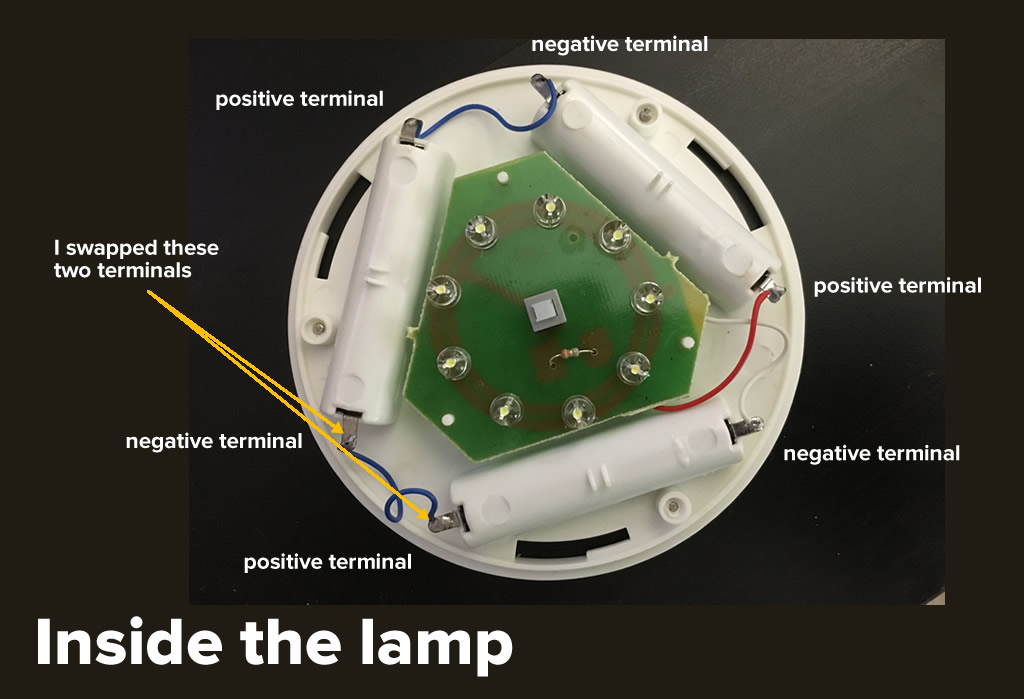
She opened up the back of the flashlight to show me what she meant. This is what I saw:
Click the photo to see it at full size.
In the photo above, the leftmost battery receptacle is set up properly. It has a negative terminal (the one with a spring) and a positive terminal.
The other two terminals are a carnival of half-assery:
One of them has two positive terminals, and
the other has two negative terminals.
“Wow,” I said. “That is screwed up. I should submit this to the You Had One Job Twitter account.”
From an electric circuit point of view, this isn’t really a problem. As long as the terminals can make contact with the battery, current will flow, and the bulbs will light up.
The problem is more about fit:
The battery fit in the receptacle with the two positive terminals is too loose, and the battery won’t make contact with the terminals.
The battery won’t fit into the receptacle with the two negative terminals — two springs takes up too much space.
“I can’t even return it!” Anitra said. “I don’t have the invoice anymore.”
“Maybe we won’t have to,” I said, and I took the flashlight to my desk in the home office. I wasn’t going to be beaten by a simple manufacturing defect.
I removed the three screws holding the flashlight together and saw that the fix was easy. It would be a simple matter of swapping two terminals, which would result in each receptacle having one positive and one negative terminal. The terminals slide out of the receptacle easily once you bend the metal tab holding them in place:
Click the photo to see it at full size.
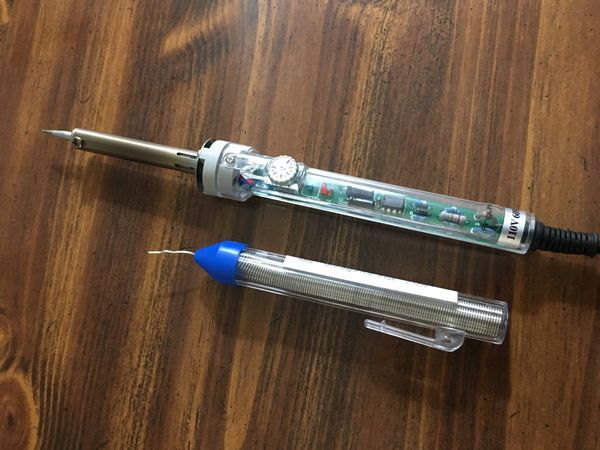
However, in the process of swapping the terminals, you need to disconnect at least one of them from the wire. Once you swap them, you have to reestablish the connection. It was time to break out the Christmas present that my in-laws gave me:
Late last year, they’d asked me what I wanted for Christmas. I suggested that I could use a soldering iron, and they delivered. Then things got crazy, what with suddenly having to search for a job and all the madness that ensued, so this ended up being my first chance to break it out.
I plugged in the iron, let it heat up, and moments later, I unsoldered one of the terminals. I then swapped the terminals, and then reconnected the loose terminal with a proper joint:
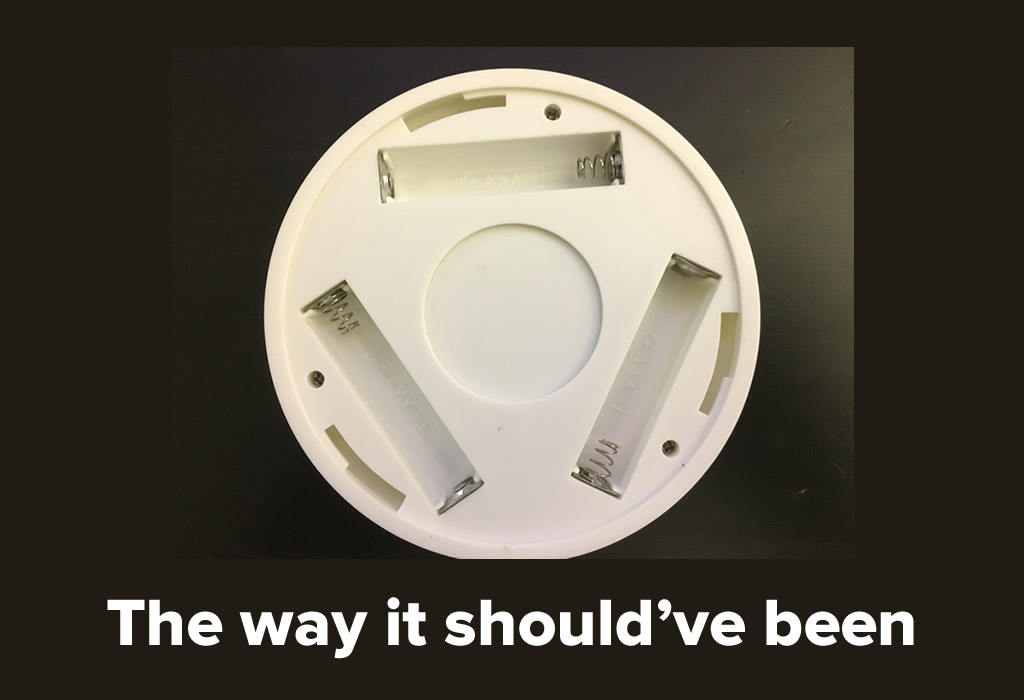
With the repair complete, I screwed the unit back together, and the battery receptacles now looked like this:
Click the photo to see it at full size.
I inserted three fresh AAA batteries into the flashlight, closed the battery compartment, flipped it over, and pressed the power button. Here’s what happened:
Success!
I brought the flashlight to Anitra, who was impressed with my work. Red Green was right:
I am mindful of the fact that I’m fixing only one flashlight at my leisure, in the comfort of the ergonomic chair in my air-conditioned home office, and not hundreds or thousands every day on a barely-maintained assembly line in a non-air-conditioned factory in the Third World for a laughably tiny wage.
The repair I made would be considered laughably simple by an electrician or electronics tech, and I’m willing to bet it would’ve been within the abilities of most of the regulars at Tampa Hackerspace. They might even be amused that I found this incident worthy of writing a whole blog article, complete with photos.
But it is worthy of a blog article. I’m willing to bet that this repair would’ve been beyond most people, who — without a way to return or exchange the flashlight — would’ve simply tossed it in the trash or recycled it. That’s a pity, because in spite of the increasing complexity of our devices, a good number of them are still repairable with a modicum of skill, and as the do-it-yourselfers say, “If you can’t fix it, you don’t really own it.”
Click the poster to see it at full size.
I’m not going to claim that I can do every kind of repair, but I’m glad that I’ve been able to do a number of them around the house, from this flashlight to the sensor in our washing machine to patching the chip in our granite kitchen counter to replacing the faucet in our kitchen sink.
It may actually be easier to perform a lot of household repairs yourself these days, thanks to the proliferation of YouTube repair videos. I wish I’d thought of recording one while repairing the flashlight. If you find yourself needing to fix something, search YouTube — the odds are goods that there’s a “how to fix it” video.
Another good source of “repair recipes” is iFixit, which is home to tens of thousands of electric and electronic repair guides, and they’re the people behind the Repair Manifesto featured above. I don’t know if they’ll ever come close to their stretch goal — a repair manual for every device in the world — but I applaud them for it.
And finally, if there’s a hackerspace or makerspace in your area — here in Tampa Bay, we’ve got places like Tampa Hackerspace, The Hive, and others — check it out, join it, support it, learn, and take control of the things you own.
There’s a price to be paid for fixing things yourself: time. What you save in money and from the landfill, you pay in the time invested in the repair, and if need be, learning how to do it.
But there’s a payoff — being able to fix things helps build a “can do” mindset. That’s something that you’ll bring with you wherever you go, and it’ll take you far in work, life, and play.
Chance Macdonald is student at Queen’s University, considered to be one of the “Canadian Ivy League” and also my alma mater (I often refer to it a “Crazy Go Nuts University”, a term of endearment from some oddball, fun, colorful academic career there). In Canada, if you’re going after a 6-plus-figure career, Queen’s is one of the schools you go to, especially for their School of Business. Chance also played Junior A hockey (similar to Tier II hockey in the U.S.), which for many aspiring players is only two steps away from their ultimate goal: playing in the NHL. Once again, in Canada, hockey players in school enjoy the same stature as football players in U.S. schools.
Justice Allan Letourneau is a Queen’s grad, and he was also a junior hockey player in his youth. It appears that his abiding loyalty to Queen’s and hockey overtook his obligation to justice when sentencing Chance.
Chance Macdonald, 22, pleaded guilty to common assault in April after he was initially charged with sexual assault and forcible confinement following a 2015 party. Crown attorney Gerard Laarhuis said Macdonald’s victim accepted the lesser plea in part because she didn’t want to face a trial and the possibility of being disbelieved in court.
According to the Kingston Whig-Standard, Macdonald, then a player on Gananoque Islanders Junior C hockey team, wasn’t sentenced until last week because his lawyer argued a criminal record would ruin his four-month internship, which he needed to continue on as a Queen’s business student. Despite the Crown’s protests that the victim deserved closure, Justice Allan Letourneau sided with the defence and waited until last week to hand down Macdonald’s sentence of 88 days of intermittent jail on weekends and two years of probation.
…
He said the plea deal was “the right way to go in all respects.” He praised Macdonald on his excellence “in employment, in athletics, and in academics.” He noted, “I played extremely high-end hockey and I know the mob mentality that can exist in that atmosphere.” He told Macdonald he had significant confidence that “you will almost certainly never put yourself in this situation again,” describing the assault as a “fork in the road.”
On the flip side, most of Justice Letourneau’s warnings to Macdonald seemed to focus on how the business student may have ruined his future prospects.
“It all could have come crashing down on you,” he noted. Regarding the lesser assault plea, he said, “Good luck finding any meaningful employment with a sexual conviction on your record.”
This is what we mean by rape culture: the fact that when a man, especially one from a well-off family, commits sexual assault on a woman, there’s a tendency — even in this modern day and age, when we should know better — to focus on how it will affect the man’s future than how it will affect the woman’s. And, in case I have to point it out, that is wrong.
To their credit, Deloitte Canada, where Chance had his internship, made this statement:
No statement has yet been issued by Queen’s University or its Smith School of Business. As an alumnus, I’m waiting…
Hey, Canadian businesspeople: You may want to check Chance’s LinkedIn page — Chance was very enterprising and has over 500 LinkedIn connections (a few people I know are connected via LinkedIn to him). You probably want dissolve that connection; if not for ethical reasons, at least for the pragmatic one of distancing yourself from this walking public relations nightmare. Here’s how you remove a LinkedIn connection.
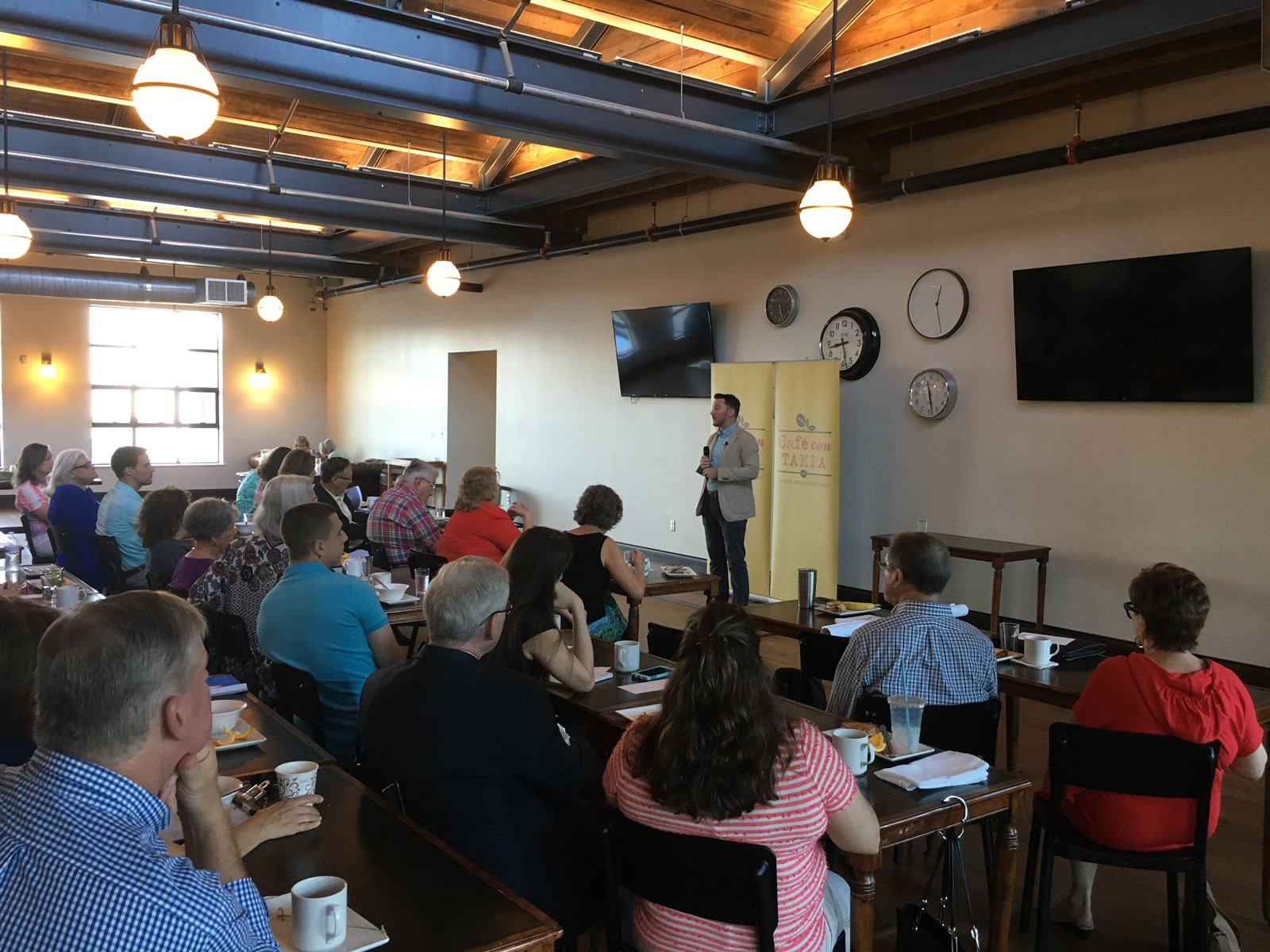
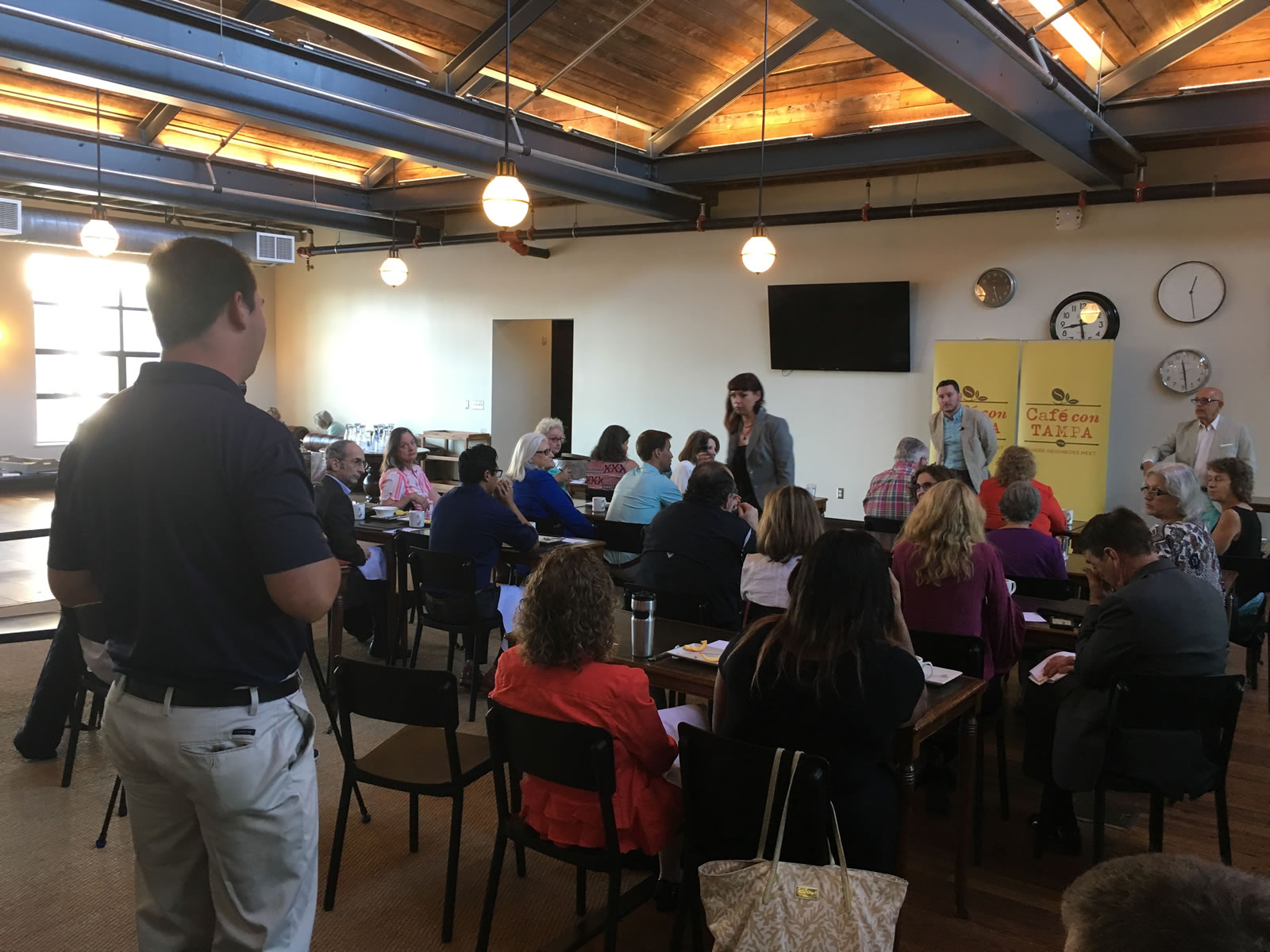
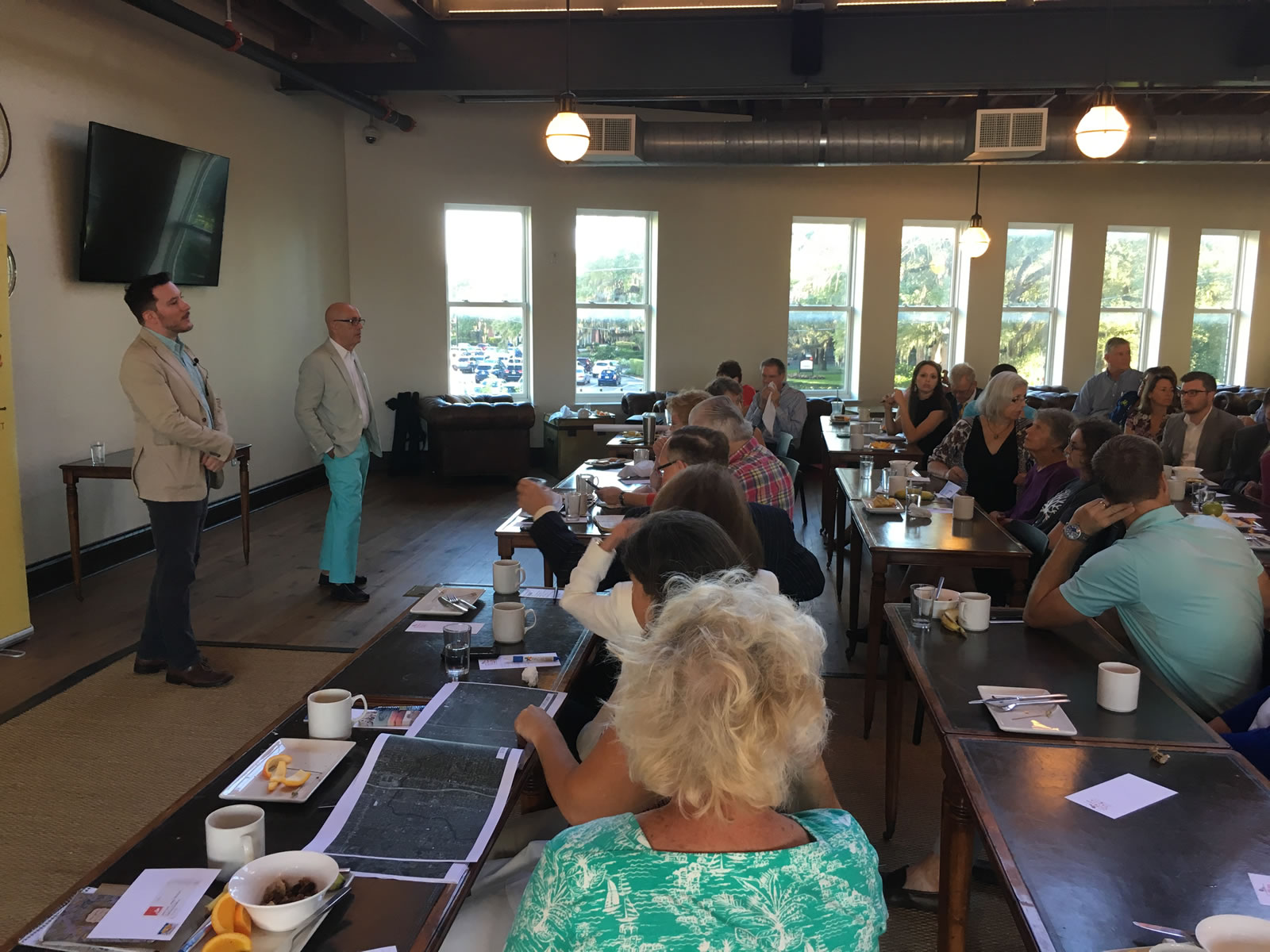
Every Friday morning at 8:00 a.m., some of Tampa Bay’s most engaged citizens come to the main room in Oxford Exchange’sCommerce Club to attend Café con Tampa, a weekly gathering where guest speakers talk about issues that the Bay and the world beyond. It’s attended by an interesting audience that’s often a mix of movers and shakers from the worlds of arts, business, academia, and government, and put together by local heroes Del Acosta,President of the Historic Hyde Park Neighborhood Association, and Bill Carlson, President of the communications agency Tucker/Hall.
Sat at tables with various people who would be affected, talking to them about what they liked and didn’t like about their neighborhood
At the end of the process, I left feeling dissatisfied
Spent next 6 months on my urban community thesis, which focused on people’s interest in community, walkability, safer streets
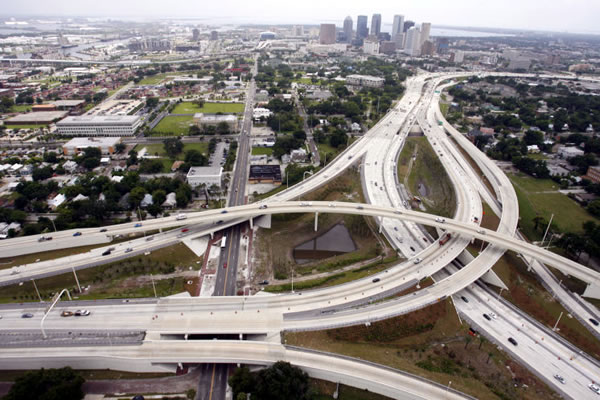
That’s when I came to the conclusion that it’s feasible to turn the stretch of 275 from a highway into a boulevard at grade with transit
It allows more cross streets, which you can’t have right now
It makes the areas around 275 more walkable
Right now, without cross streets, there are certain parts where it can take an hour to cross 275
It opens the question “What if you had more transit and light rail?”
Click the photo to see it at full size.
Of all the traffic on 275, only 35% is “regional” — people from Wesley Chapel and other areas outside the city
The other 65% is local
DOT is studying alternatives, and replacing 275 with a boulevard is one of 7
By 2019, they will conclude the study and start the decision-making
I totally get the frustration of seeing this area flounder when it comes to choosing a solution
DOT would have us study other cities, I would rather have other cities study us!
We have the opportunity to be leaders in urban design
We’re going to spend billions on TBX
Think of this way: what can we do given those funds?
I don’t want to see that money wasted on a project that at its end, “fills up”, and then requires another project to address its shortcomings
That’s what will happen to TBX
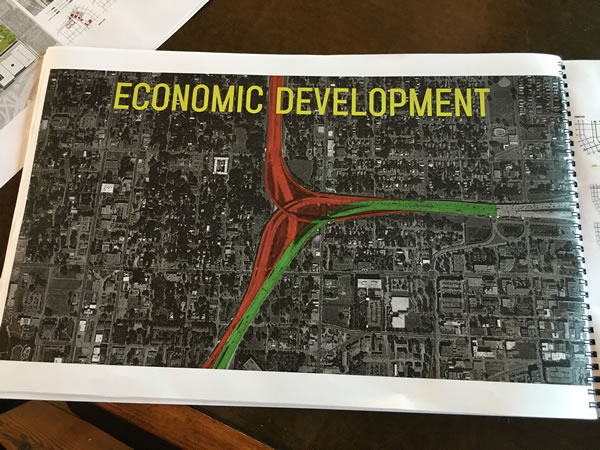
Click the photo to see it at full size.
The boulevard would increase the economic potential of those areas around it
It’s an opportunity to lift people out of depressed economic situations
Take away the interstate, you get 37 acres of developable land
In those areas around 275, the people who live there spend 33% of income spent on transport
Compare that with people in similar economic circumstances in Boston: they spend only 18% of their income on transport
Imagine what they could do with 15% of their income freed up
Q&A
Click the photo to see it at full size.
Did your studies include health-related data?
Yes
Studied fine air particulates and air quality around 275
If you can’t walk from your house in Tampa Heights to a couple of blocks away in Ybor because of 275, you’ll walk significantly less — you’ll always opt for the car, even for traveling walkable distances
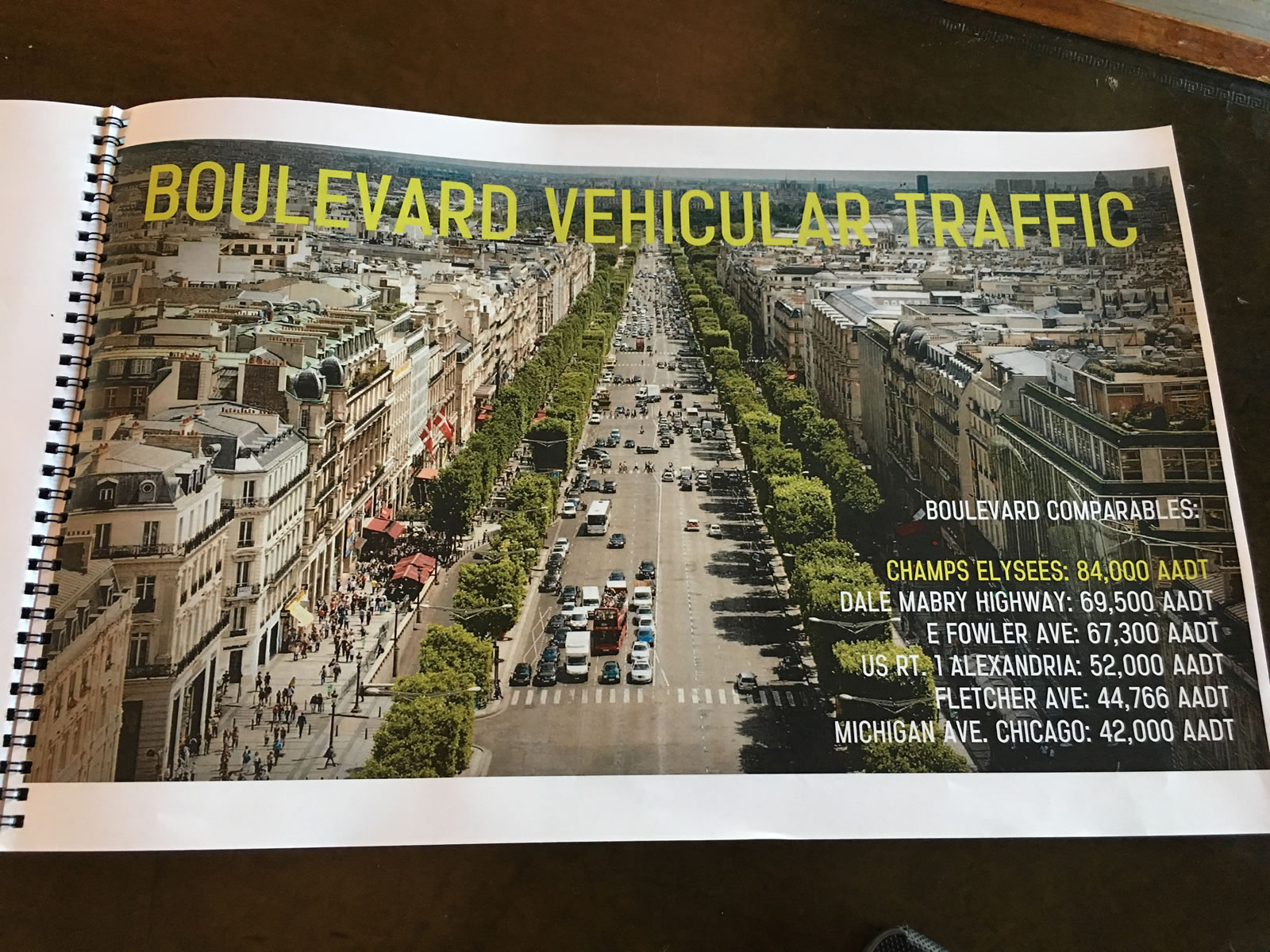
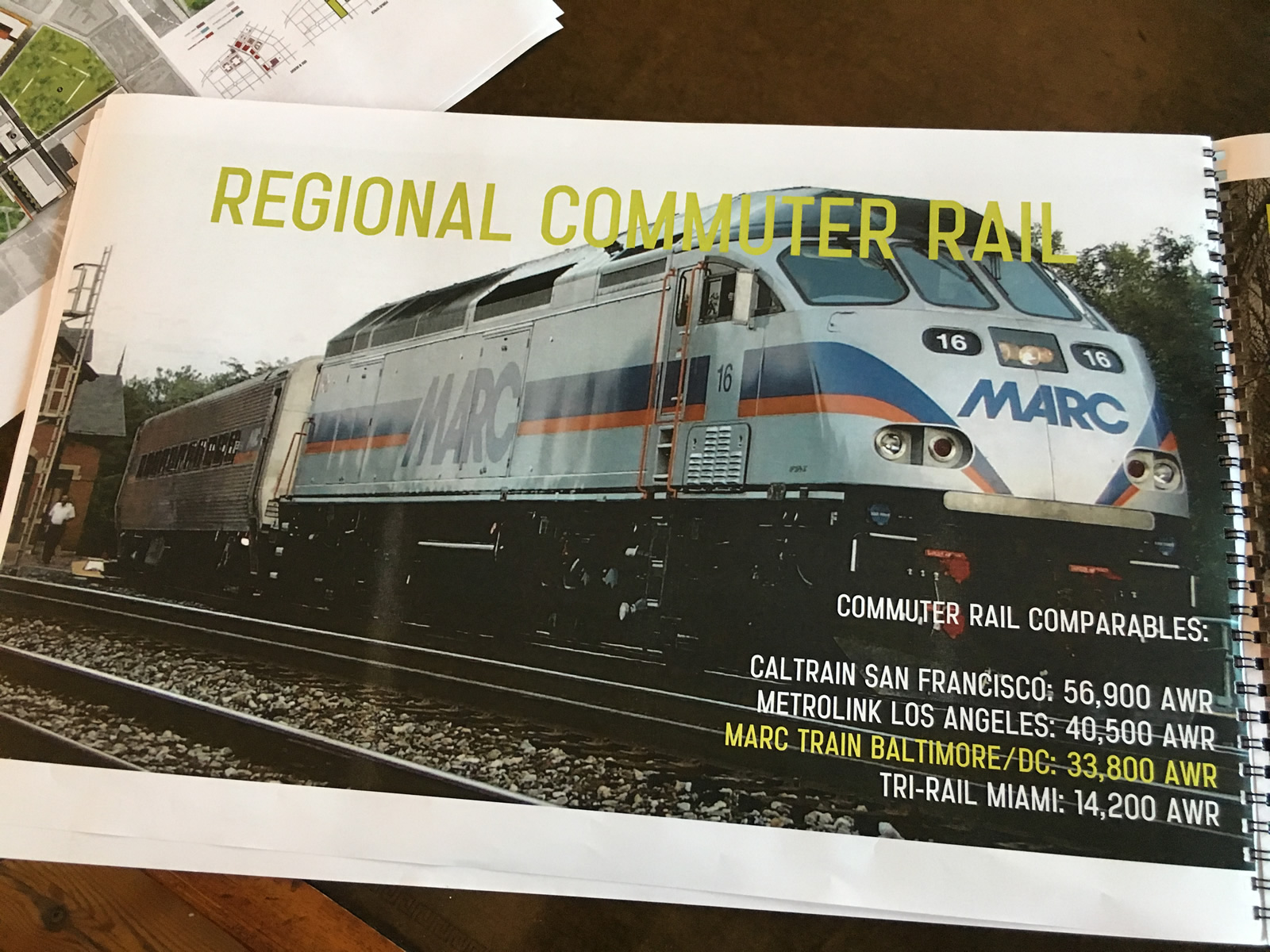
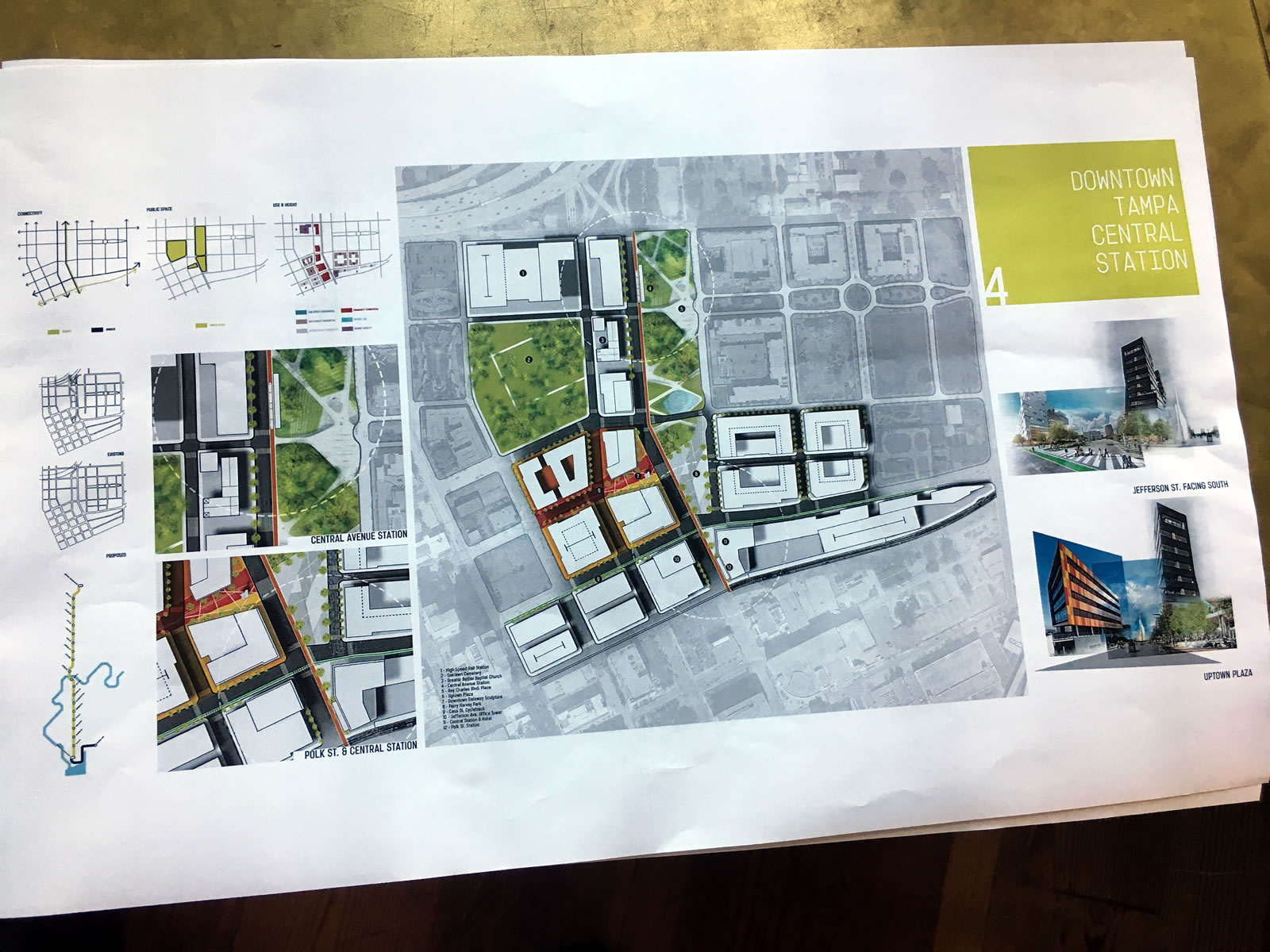
A page from the documents that Josh passed around. Click the photo to see it at full size.
Would there be an elevated expressway for fast-moving cars?
In the boulevard design, there’s a median in the middle, which you can use for all sorts of things, including transit, or an elevated expressway
Why not just have all the fast-moving traffic using 75?
It parallels 275, and is close enough to 75 that travel time between the two is negligible
There’s less environmental and property value impact
My design tries to solve as many problems as possible
Other uses for that median:
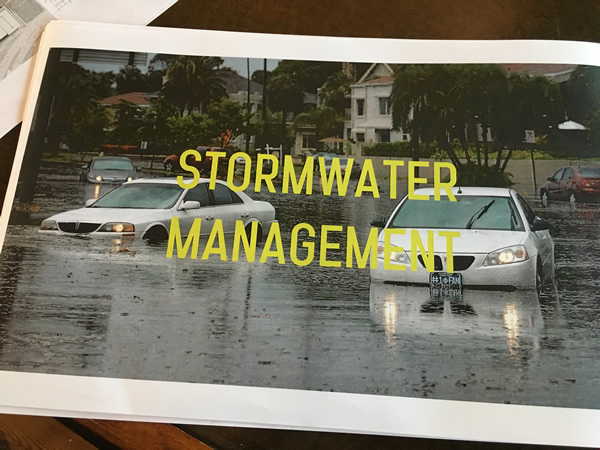
A large storm drain to help control flooding
Municipal fiber / Google fiber
It’s a big blank slate that’s ripe for creative ideas
The Embarcadero, San Francisco, before and after.
Where else have they done a conversion of a highway into a boulevard?
The reality is that interstates are expensive to maintain, and people ask they’re the best way to move people around
With 275 turned into a boulevard, Malfunction Junction goes away
You remove the knot, which removes the congestion and increases efficiency
It also frees up a ton of land for neighborhoods to develop
You don’t get 37 acres in a prime area opening up very often
It’s an opportunity for us to think about the bigger picture
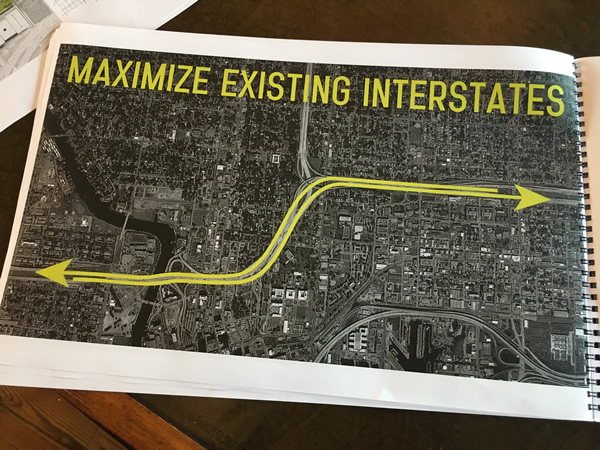
A page from the documents that Josh passed around. Click the photo to see it at full size.
What impact would a downtown baseball stadium have on your project?
Any stadium that gets brought into downtown needs to be strongly transit-oriented
Simply adding more roads will lead to what I call the “Fat guy, bigger pants” problem: the guy buys bigger pants while trying to lose weight, and never sheds pounds
Will the boulevard project be completed in my lifetime? I’m 59 now.
I’m 28, I’d love to see it completed before I’m 40
The problem is that here in Tampa Bay, we don’t work so well together
There are so many organizations involved, and each wants a specific thing
In San Francisco, a project like this would be done in 10 years
In order to succeed, it would require so many agencies to work together on a scale that hasn’t been done before
It would take:
One person with enough sway
Or one group with enough interest
Or a large enough group of people to agree to work together
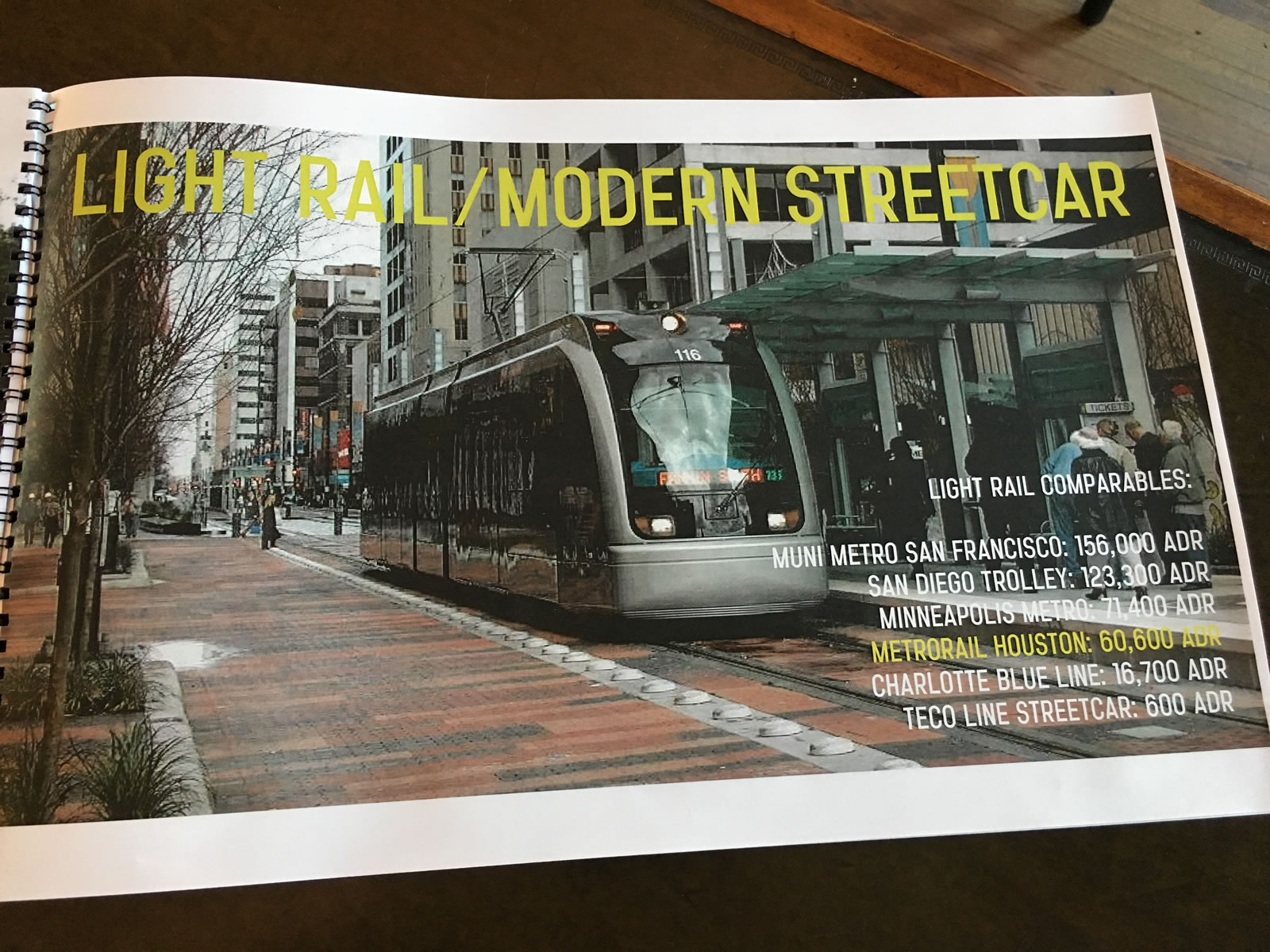
A page from the documents that Josh passed around. Click the photo to see it at full size.
Is there an adequate amount of visionary leadership to support this?
I wish there was
Any urban solution takes a champion
Some people would say Jeff Vinik is that champion, but he’s not a publicly elected person — he’s serving his commercial interest and those of his investors
We wouldn’t have built 275 today the way we did 40 years ago
A page from the documents that Josh passed around.
Did you include hurricane evacuation routes? The 275 intersections at Nebraska, Florida, Busch are all failed intersections, and in a hurricane, the intersection at Waters would be submerged.
Have not been able to cover all the angles in my plan
Turning 275 into a boulevard would allow for managing those intersections, which you can’t do right now
Evacuation isn’t always the solution, either: more people died as a result of the Hurricane Rita evacuation rather than from
If you design the boulevard as an economic development engine, developers will want to come in and build their units around it, and not Wesley Chapel or South Hillsborough
Bringing people into dense mixed-use developments is as important as hurricane evacuation
A driverless shuttle bus under consideration by HART (Hillsborough Area Regional Transit Authority). Click the photo to find out more.
What about the autonomous vehicle argument?
Autonomous vehicles are brought up a lot in the planning profession
I think autonomous vehicles have a purpose, especially for the “first mile” and “last mile”
I don’t see Jeff Vinik building Channelside around autonomous vehicles
Instead, he’s building around streetcars to aid in density
I think autonomous vehicles are fascinating and have plenty to offer for future transport
We don’t have to do autonomous vehicles all at once, but phased in
We could have country’s first autonomous bus pilot program
A page from the documents that Josh passed around. Click the photo to see it at full size.
Why wasn’t transit included as part of the Crosstown Expressway plan?
It was planned by a DOT of a different era
The DOT is different today
It takes a lot of time before transit gets implemented in a city
As far as transit in concerned, Tampa’s in that “awkward teenager” phase, a growth phase
We can either come out of it with a transit plan like that cities like Charlotte have, or we end up in car-centric gridlocks like Atlanta and LA
Minneapolis has same problem that we have: 2 cities, and many counties. Yet they managed to build an independent body to handle transit. Is there something like what they have brewing here?
I haven’t heard of anything like that here
Keep in mind that unlike Minneapolis/St. Paul, there’s a huge body of water separating our cities, so our situation’s not quite the same
I’d love to have the ferry as a transit option
In the end, our transit problem will require not just one, but a bunch of solutions
“There is no silver bullet, but there is silver buckshot”
Other discussion
FDOT is rolling out a variety of things, including a regional transit study next year
There are local groups, like Citizens’ Acedemy, who are working on webinars explaining transit planning and its terminology to laypeople, so they know what city planners are talking about
We have an opportunity: What other ways can we adopt a better conversation? How else do we engage in the conversation and engage citizens? How do we get people involved?
I lament a lot about how there isn’t much citizen representation at these meetings
There are great initiatives:
People uniting to ride the bus more often
There are a lot of community design session where you can give feedback on transportation and walkability
We have to start valuing this as business owners and entrepreneurs
I could easily pack up and move to Denver or Portland, but I want to stay here
If you’re building a building, consider how the building affects the public realm before the bottom line
If you hire architects and engineers, consider best practices
Photo by Chris Vela, Sunshine Citizens.
Click the photo to see it at full size.
I-275 lowers property value
The City of Tampa is funded primarily via property tax
Lowered property values mean lowered tax revenues
Any high capacity roadway lowers property values
A study of realtors’ outcomes and the effects of noise pollution showed that for ever decibel over 55 (about the same level of noise as in a restaurant or office), you lose $1800 off property value
The 275 corridor’s average noise level is 85db, which means 275 lowers property values by $54,000
That means that 11 miles of property is depressed
At the same time, property values increase around transit stations
The boulevard’s combination of noise reduction and transit could bring surrounding property up from depressed to market value to above market value
Maybe that’s how you fund HART or extend the streetcar
275 is a massive anchor
More about Café con Tampa and Oxford Exchange
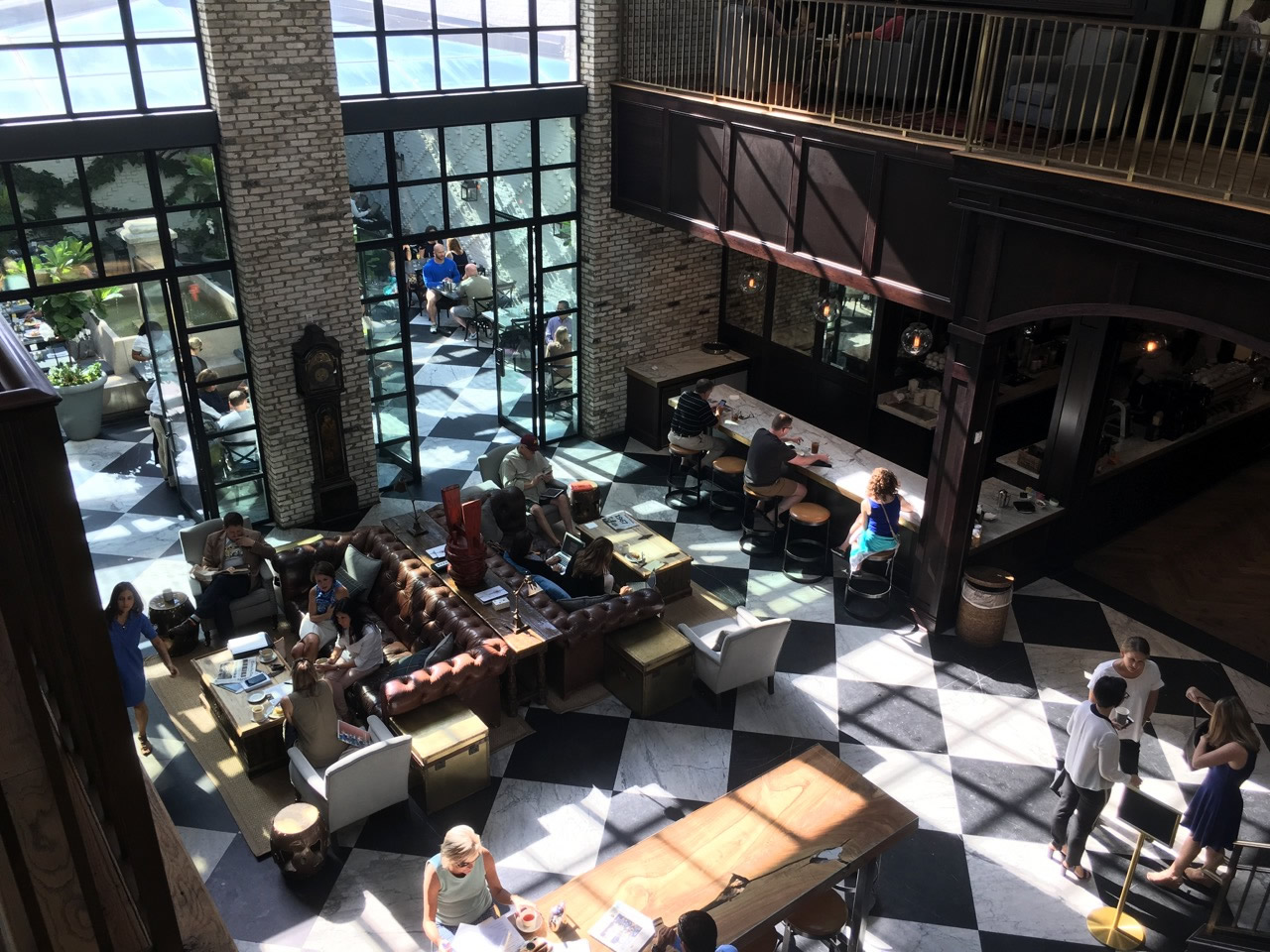
Café con Tampa takes place in the wonderful setting of Oxford Exchange, a combination of restaurant, book store, gift shop, co-working space, design studio, event venue, and one of the best “third places” I’ve ever set foot in. Every Friday between 8 and 9 a.m., Café con Tampa features not only interesting guest speakers, but an interesting audience that’s often a mix of movers and shakers from the worlds of arts, business, academia, and government. If you want to have interesting conversations with some of the area’s movers, shakers, and idea-makers (and enjoy Oxford Exchange’s delicious breakfast spread), you should come to Café con Tampa.