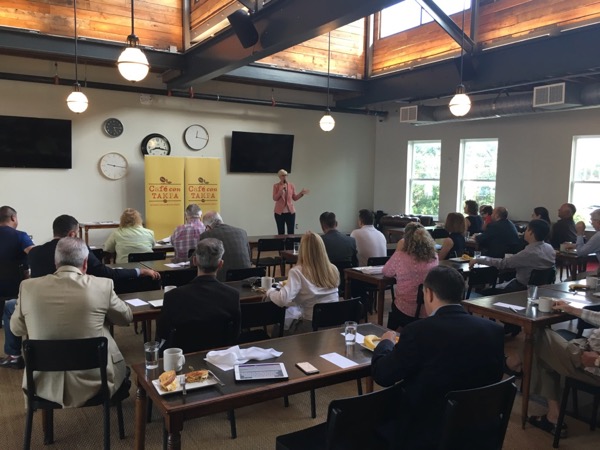
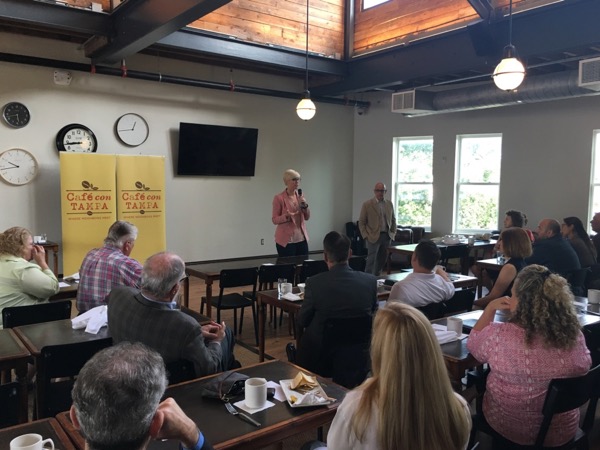
Café con Tampa is a weekly gathering where people interested in the issues that affect Tampa Bay and the world beyond meet to learn and share ideas with interesting, entertaining (and sometimes infuriating) guest speakers. It takes place every Friday between 8 and 9 a.m. in the wonderful setting of Oxford Exchange, a combination of restaurant, book store, gift shop, co-working space, design studio, event venue, and one of the best “third places” I’ve ever set foot in. It’s attended by an interesting audience that’s often a mix of movers and shakers from the worlds of arts, business, academia, and government. If you want to have interesting conversations with some of the area’s movers, shakers, and idea-makers (and enjoy Oxford Exchange’s delicious breakfast spread), you should attend!
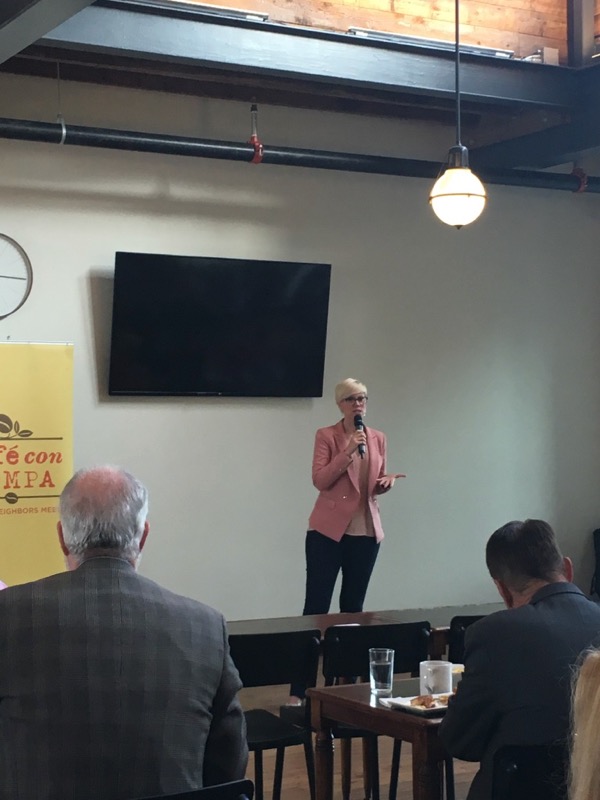
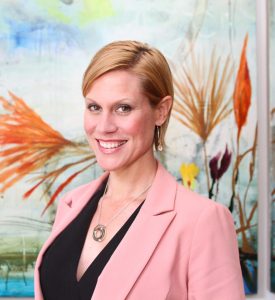
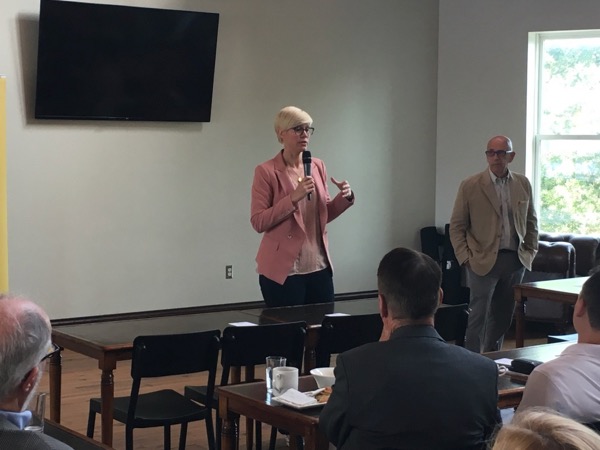
Today’s speaker at Café con Tampa was Michelle Royal, CEO and founder of RIDG, which is pronounced “ridge” and short for Royal Innovation Design Group. A consultant, entrepreneur, and speaker based in St. Petersburg, she helps people and organizations create breakthroughs in the way they think and act, which are very necessary in this day and age. She gave an interesting talk and started some lively discussions today. Here are my annotated notes…
I work in innovation and disruption
I was raised in the Subway franchise world. My family owned first the Subways in Arkansas, well before it had caught on in the U.S., never mind the world, and learned a lot of business and entrepreneurship
When I first moved here, I changed lines of work — from psychology and therapy to real estate
That’s how I found Tampa Bay’s creative economy, just as it was getting ignited
During that time, I attended conference that changed the trajectory of my life, launching me into the world of innovation and design
I landed in the perfect suite of mentors, who taught me how to engage in the innovation process
We love to use the word “disruption” a lot these days
There’s currently an overload of data, so it’s not surprising that data analysis is now a big field
To me, the big issue these days is the workforce
I’m an engineer, but not of software or hardware, but humans. That’s where I’ve chosen to innovate.
The work we do is around innovation is to help us hedge against intractable problems coming our way
Accenture’s CEO recently said that half the jobs there did not exist 4 years ago
There are new roles – the transition is happening
Over the next 10 years, both our workforce and the nature of work will transform
I’m concerned about automation and augmentation
My passion around disruption is to tap into things that empower us
In order to take on disruption, you need to cross these five thresholds:
Commitment: The willingness to understand and do what it takes to move beyond the effects of disruption, using our most powerful tool, our mind. This is largely about reality setting, and it will be required as digital and human worlds collide.
Alignment: Ensuring that all parties concerned are together in understanding and direction. It’s the right answer to the question “Do we see things from the same perspective?”
Focus: Attention paid to and around immediate risks and opportunities that you want to take advantage of.
Capabilities: How much time, talent, and money can we pour into the disruption opportunity?
Network strength: What network resources are there to help you tackle this risk opportunity? Can your customers handle the change?
For a little more context, here’s RIDG’s video (it’s 6:35 long) about what it means to be “disruption ready”:
Dealing with disruption requires many kind of intelligence working concurrently:
Cognitive intelligence
Emotional intelligence
Social intelligence
Human problems require a level of interpretation and collaboration that cannot be done by machines — at least not by machines now or near future
There’s a lot of work to do, but we came out of an educational system that didn’t completely teach us how to do so
Remember: Machines cannot create meaning, nor can they motivate action to bring about change
My passion is for human engineering and preparing us for the future
Q&A
How would you suggest we re-orient Trump past his “prom fixation” — the need to be the most popular, the most talked-about person — in order to get him to make positive changes?
There’s a thing called synthesis genius that I like to use in this sort of situation
Ask yourself this: Was Trump the only disruptor in this election? Definitely not — so was Bernie, and even Hillary, in her own way
We had an election campaign rife with disruptors, and the biggest disruptor won
To get past an uncomfortable state, we need reality setting, which requires listening to others and understanding their realities. This is valuable, especially when faced with scenarios and complexities that are upsetting and terrifying
This calls for both “the right kind of crazy” and an environment of trust
Because trust is involved, innovation requires a character and integrity that we haven’t emphasized recently
How would I shift Trump’s mindset? I would point him in the direction of things that he wants. That’s going to be tricky, since right now, he’s getting exactly what he wants.
With all the current forces and factors affecting work, jobs are under threat. How do we have a society without jobs?
We have to shift our perspective and redesign what “work” is
The Singularity University in California has aligned with the UN’s Sustainable Development Goals
Silicon Valley is not our savior! It will not save us from changes in workforce, food sources, or job opportunities. They’re solving some challenges, but only those that they deem worthwhile.
You need to be aware of where the U.S. stands on social progress? According to Social Progress Index, the U.S. is in the top 4 for innovation, but 19th or 20th in social progress
By “social progress”, we mean availability of basic human needs and foundations for well-being, including healthcare, some work to support family, basic education, opportunities for advancement
What about blue-collar work? Why is it being ignored or given less stature when there are many blue-collar jobs that pay as well as many white-collar ones?
We should look at Germany, and how they invest in trade schools
No matter what the work is — blue-collar or white-collar — the question to ask is: Can it be automated and replicated?
I’m fascinated by the use of the word “disruption”. How do you distinguish between disruption and just plain old evolution?
The difference between the two is the speed at which things have changed
There are all sorts of disruptive technologies that have appeared not that long ago: consider Facebook and Bitcoin
A lot of disruption is being driven by Moore’s Law
A note from Joey:Moore’s Law is named after Intel co-founder Gordon Moore, who observed in 1965 that the number of transistors you could pack onto a chip doubled every two years. It’s since been diluted into the more layperson-friendly summary that computer power doubles every 18 months.
I’m in the restaurant business, where the predominant narrative is that there aren’t enough people to do the work. How do we attract people to do the work, which requires standing for a long time in “fire and ice”?
Millennials have a work ethos: they want work with meaning, that matters, and has an impact
I have an accounting client that’s afraid that their work in boring their workers, but in fact it’s helping their customers and making a lot of things for them possible
Either you know how you’re changing the world, or you’re not
It’s all about human engineering: knowing what motivates people and how to get it to them
We have to be passionate and care about what customers need
That’s what my work is: I’m in the business of reassurance
There’s a religiosity about entrepreneurs in the popular media
I see the same 5 faces over and over on Wired and Fast Company talking about the same things
Silicon Vally will not save us, neither will companies whose prime objective is to raise value for shareholders
I read a recent Wired article on dealflow [the rate at which investors receive business proposals and investment offers] — Silicon Valley had 1,500 last year, New York had 800, and Florida’s not even on the map
Small communities cannot compete with Silicon Valley; our solutions have to be local and unique to our needs in order to properly serve us
We have to find things together as a business community, work together and support each other
Certainty comes from capital, or grit and grind — and grit and grind needs community support!
In a world with increasing automation and an Orwellian corporate presence, with everything monitored and measured, how do we maintain a good quality of life and disrupt disruption?
This calls for something I mentioned before: alignment, between organizations and the communities they serve
Can or will government play a role in disruption or mitigating its effects, especially with Millennials not having had an impact on government yet?
If government is obsolete, we might as well throw in the towel
The landscape of policy and politics needs to change, and it’s up to us to define that change
Consider the question the electorate just asked: What if government was run more like a business? The answer, of course, is the current administration.
What experiments can we try? One possibility is micro-initiatives – $500 projects
Another experiment: the one in Times Square, where they put chairs in the middle and shut it off to traffic, before making the superblock investment, which is a way of reorganizing flow and making cities more liveable. They did this in Barcelona.
That’s one of the ideas we can borrow from Lean Startup — teaching people to think differently
Bill Carlson: I’m concerned about the messages we’re getting out to young people. I was recently at a meeting with local leaders, and one of them suggested taking all university funding, focusing it on solely STEM, and getting rid of “stupid [non-STEM] degrees”. What do we do about this, especially since in 10 years, it’s the white collar jobs that will get wiped out?
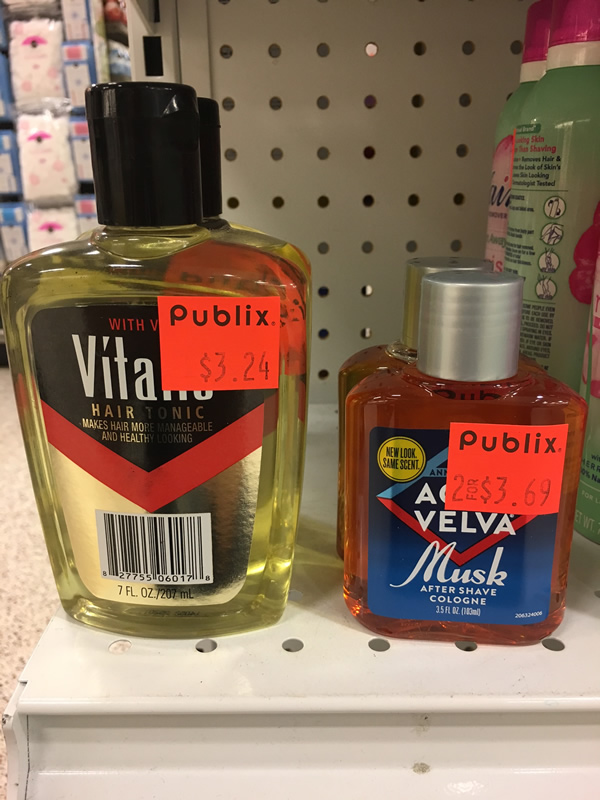
If you’re under 30, chances are you’ve never heard of Vitalis. It’s an old-school hair product called hair tonic, and it provides a little hold, a lot of shine, and a scent that you’ll either love or hate (it’s a sort of antiseptic, aftershave-y smell). If you’re cosplaying as Archer or Don Draper, you’ll want to get some of this in your hair.
As for Aqua Velva, I think of it more as something that desperate winos drink rather than aftershave.
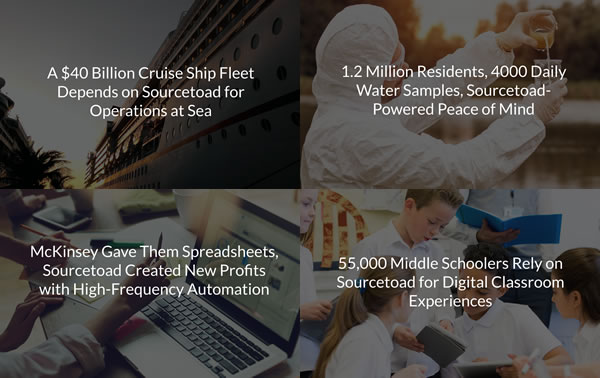
I’ll be providing Sourcetoad with technical, strategic, and customer management leadership as we enter a growth phase. We’re currently in the process of expanding the business, the customer base, and the office — and yes, our headcount too — as we move into some interesting and promising markets. My job will be to shepherd all our products (which I’ll talk about a little later) through their development lifecycle, from the moment when we first sit down with the customer and find out what they need, all the way to the maintenance and upkeep of happy customers’ working software.
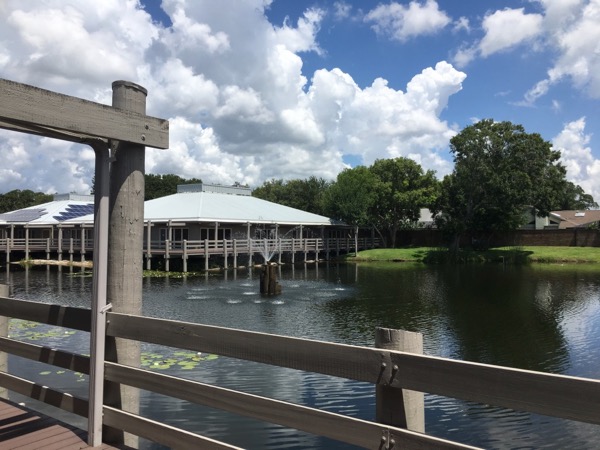
In the meantime, I’ll have a little over a week to finish some freelance projects for friends and associates at the home office before I report for my first day at the office. It’s a short drive — in fact, a bikeable distance — from home, and it’s in a pretty nice spot, too! Here’s a view from Sourcetoad’s front door:
I’m quite pleased with the way things have worked out!
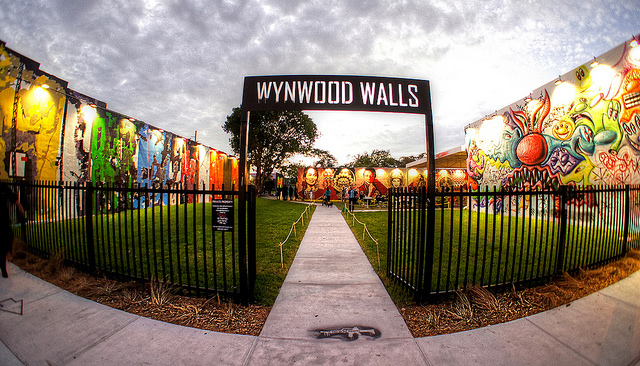
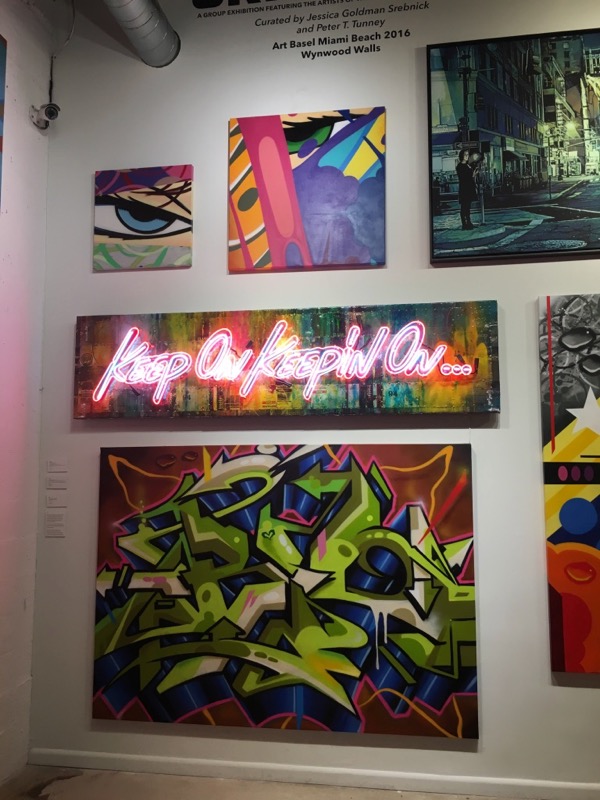
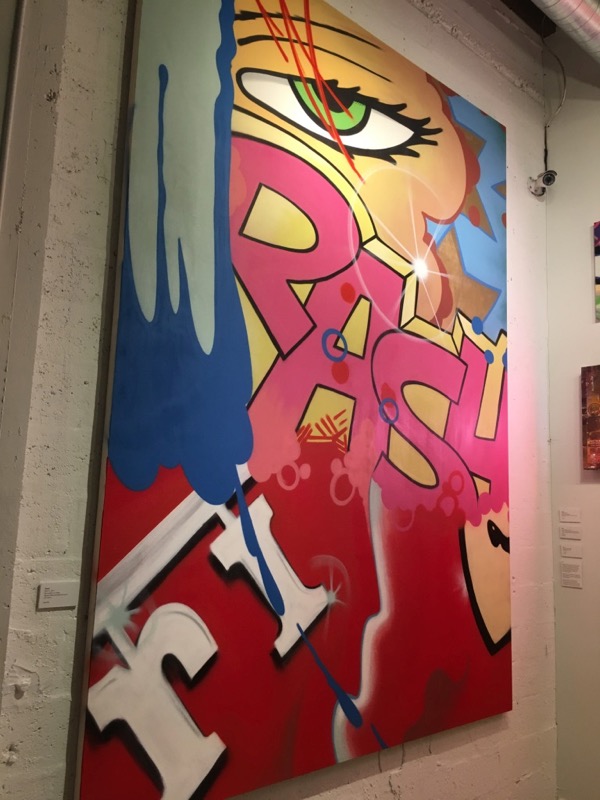
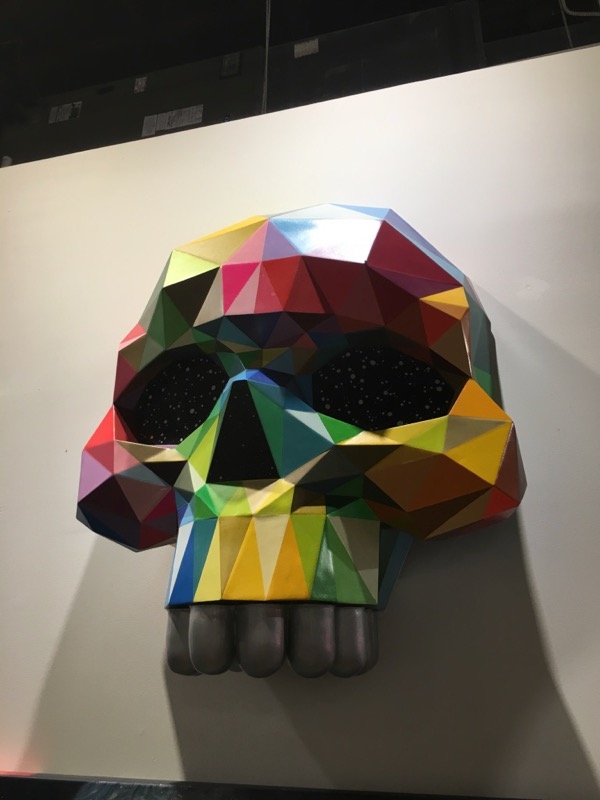
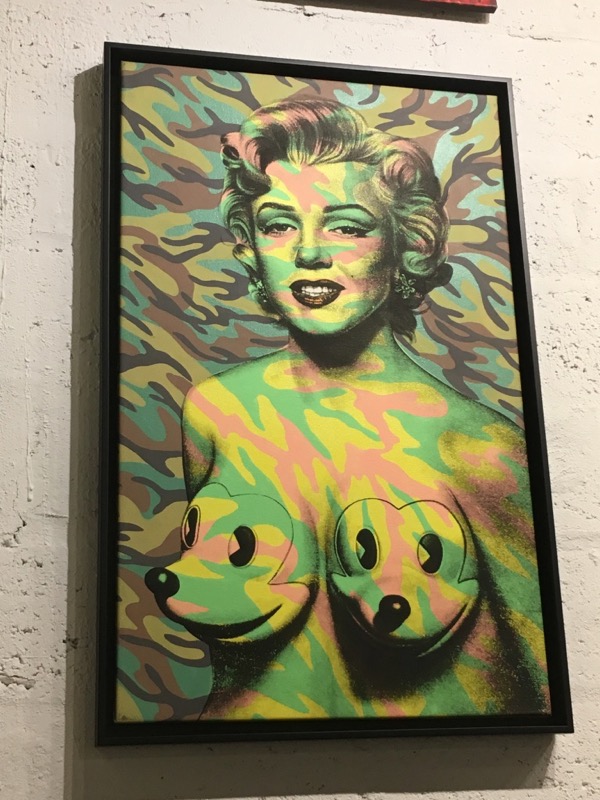
After dinner with our friends Bob and JR at KYU (see the previous post in this series), we followed their recommendation and walked around the corner to get a look at the Wynwood Walls, a gorgeous collection of murals created by graffiti and street artists.
The Wynwood Walls was conceived by the renowned community revitalizer and placemaker, the late Tony Goldman in 2009. He was looking for something big to transform the warehouse district of Wynwood, and he arrived at a simple idea: “Wynwood’s large stock of warehouse buildings, all with no windows, would be my giant canvases to bring to them the greatest street art ever seen in one place.” Starting with the 25th–26th Street complex of six separate buildings, his goal was to create a center where people could gravitate to and explore, and to develop the area’s pedestrian potential.
The Wynwood Walls became a major art statement with Tony’s commitment to graffiti and street art, a genre that he believed was under appreciated and not respected historically. He wanted to give the movement more attention and more respect: “By presenting it in a way that has not been done before, I was able to expose the public to something they had only seen peripherally.” In 2010, building on the momentum of the year before, Goldman Properties added 10 more artists to their roster of Walls. They opened the Wynwood Doors, Tony Goldman’s nod to traditional portrait galleries and expanded the mural program outside the Walls.
The Wynwood Walls has brought the world’s greatest artists working in the graffiti and street art genre to Miami. Jeffrey Deitch co-curated the first successful year of the project in 2009, collaborating with Tony before his appointment as museum director of MOCA Los Angeles. “We have strived for a diverse representation of both American and international artists that encompasses everything from the old school graffiti artists to the newest work being created around the world. The project has truly evolved into what my friend Jeffrey Deitch calls a Museum of the Streets,” Tony had summarized.
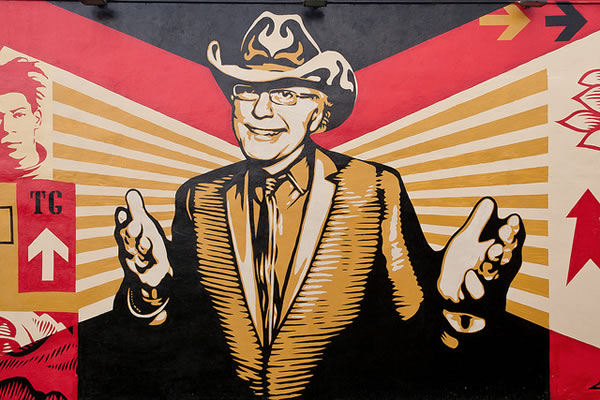
This mural commemorates Tony and his work:
Photo from Midtown Miami Magazine. Click to see the source.
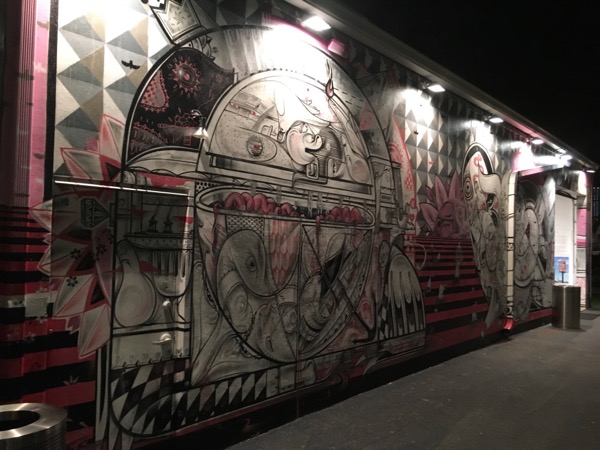
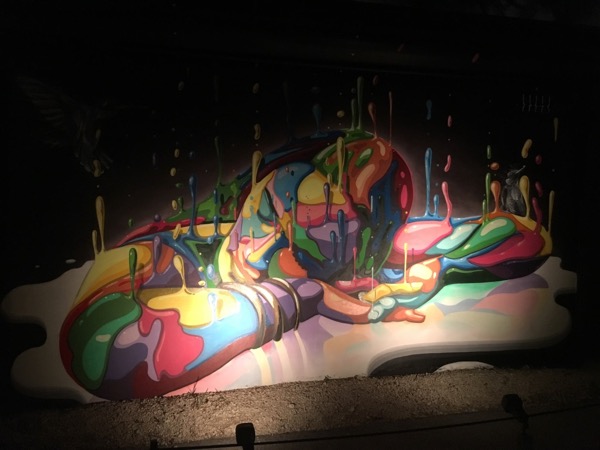
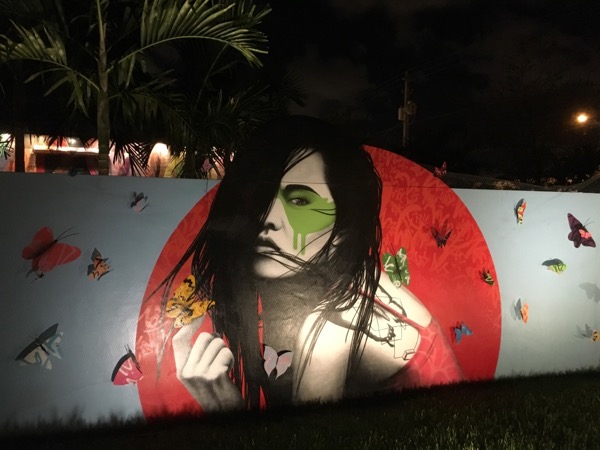
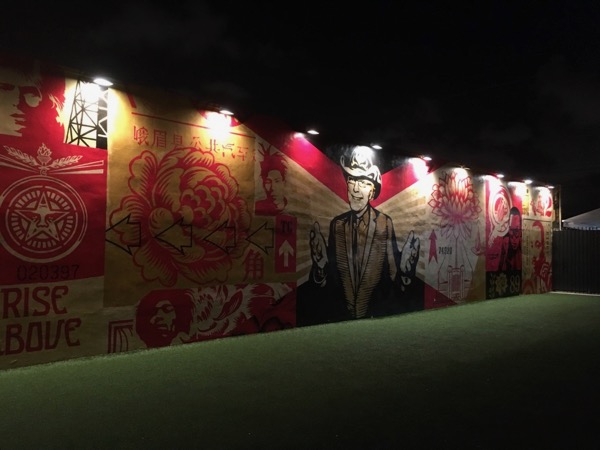
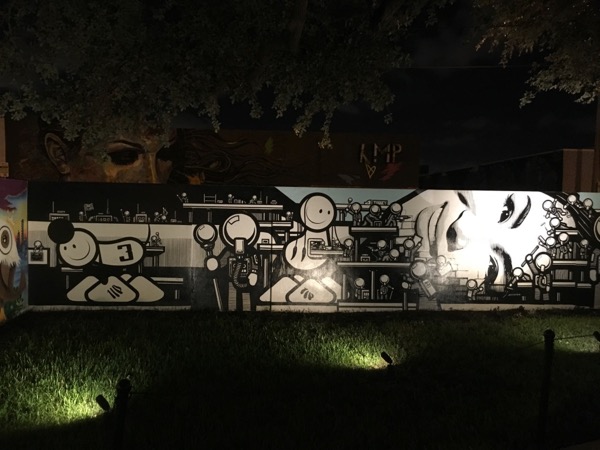
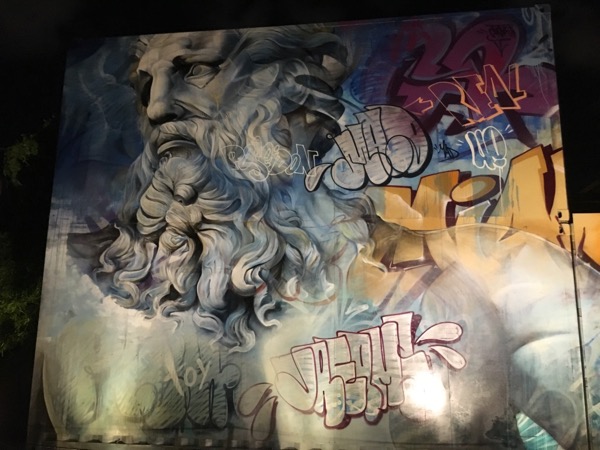
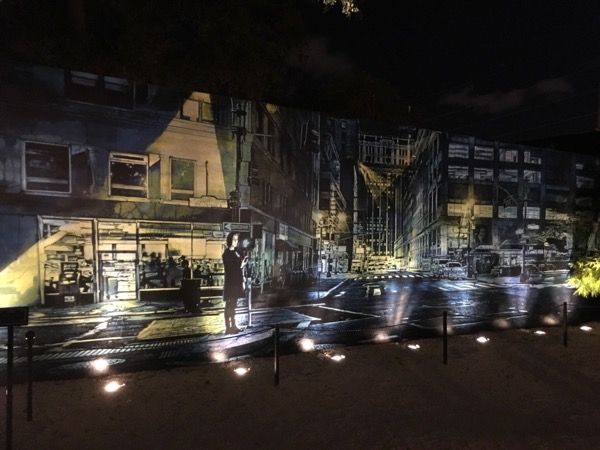
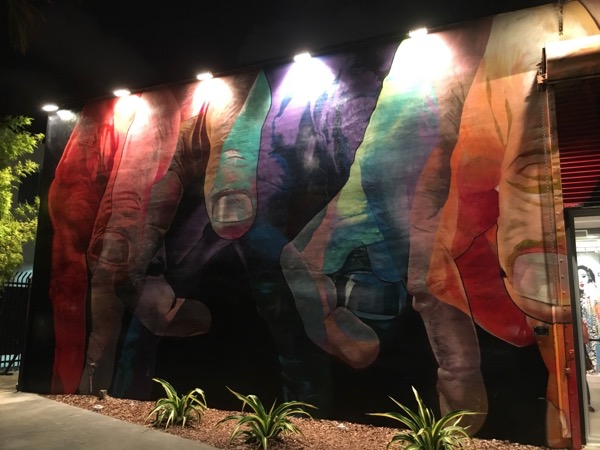
We wandered through the murals, taking in the art, as well as a lot of photos…
There are also a couple of indoor galleries, which we checked out:
After taking in the art, we made our way back to South Beach and headed straight for Mac’s Club Deuce, Miami’s oldest bar. Mac Klein, who was born in 1914, had owned the bar since 1964, and was running it even at the age of 101 (alas, he passed away last year). After seeing him and his bar featured in the Miami episode of Anthony Bourdain’s Parts Unknown, we had to stop by for a drink.
We took in the vibe, which was provided by a mixed crowd: a couple of people who were just getting off their shifts, some older locals nursing their cocktails, a handful of twentysomethings shooting pool and shotgunning Mich Ultras, and a few sports fans watching the Manny Pacquiao biography on TV before his July 2 match in Australia against Jeff Horn. Of course I watched my kababayan’s bio.
I’m imagining a conversation between two developers going something like this:
Developer 1: Ahhh, South Beach. What a treasure trove of art deco architecture!
Developer 2: Mmm-hmm. Y’know, we could do something really great with one of these buildings. Fix it up, bring it back to its jazz era grandeur, put our mark on South Beach and make something really…special!
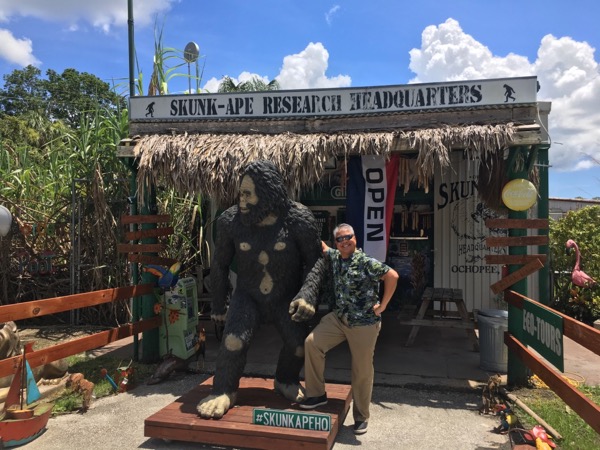
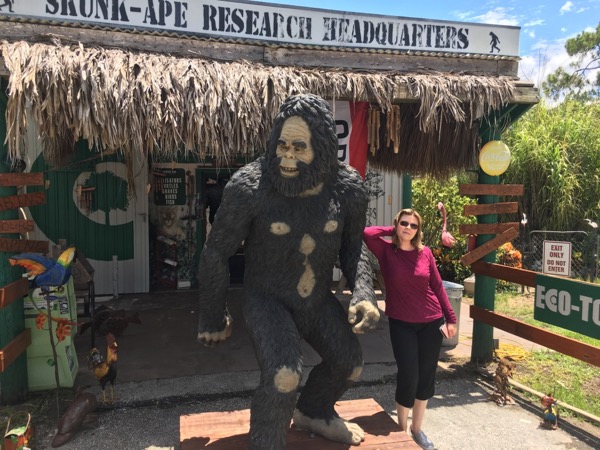
Those of you not from Florida may be asking: “What’s a Skunk Ape”?
Simply put, it’s Florida’s answer to the creature of popular legend known in other places as Bigfoot, the Yeti, or Sasquatch. It’s described as a large ape-like creature with glowing eyes and a strong, unpleasant, skunk-like stink. Skeptics have said that it’s probably a misidentified creature, possibly a black bear or an escaped orangutan.
But not Dave Shealy, who’s behind Skunk Ape Research Headquarters. He says that when he was ten years old, he had his first of three confirmed sightings of the creature, and for the past 30 years, he’s been researching these mysterious creatures.
Depending on your point of view, Skunk Ape Research Headquarters is either an amusing sideshow tucked into the Everglades or an overlooked center of serious research. If you’re having trouble deciding between the two, ask yourself this question: how many places of serious research have a gift shop as their lobby?
The place also has a reptile and exotic bird exhibit, but we simply opted to stick to the gift shop, where I made this purchase:
I thought I might need it for a second line of work when this “computers” fad blows over.
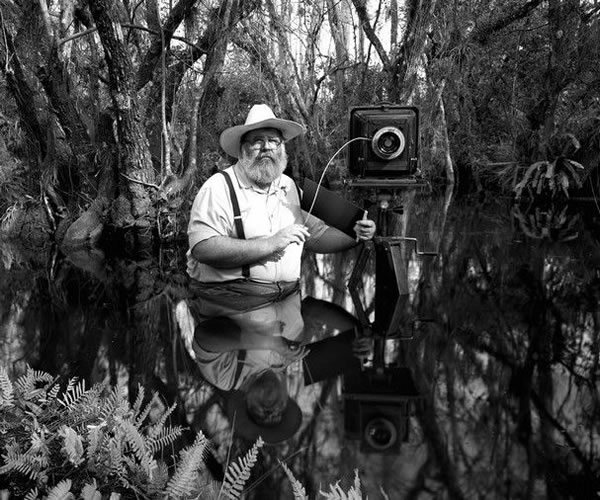
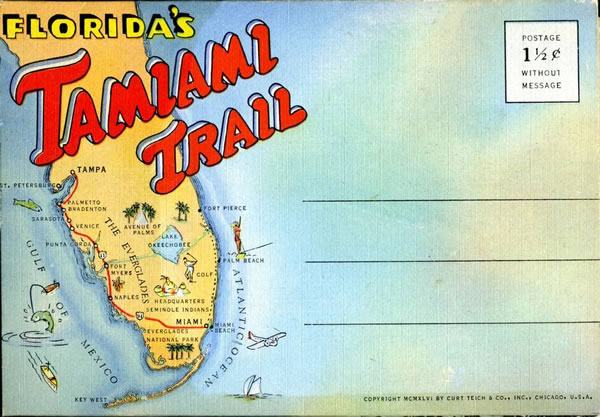
Another unexpected gem in the swamp is the gallery of photographer Clyde Butcher, who’s famous for his large-format black-and-white photos of the Florida landscape. If you’re ever going down the Tamami Trail, make sure to stop by the gallery and get a look at his gorgeous, giant photos that so wonderfully capture the beauty in this state.
We talked with the people at the gallery and learned that Butcher recently suffered a stroke. The told us that he’s resting, recuperating, and raring to get back to what he loves and does best as soon as possible.
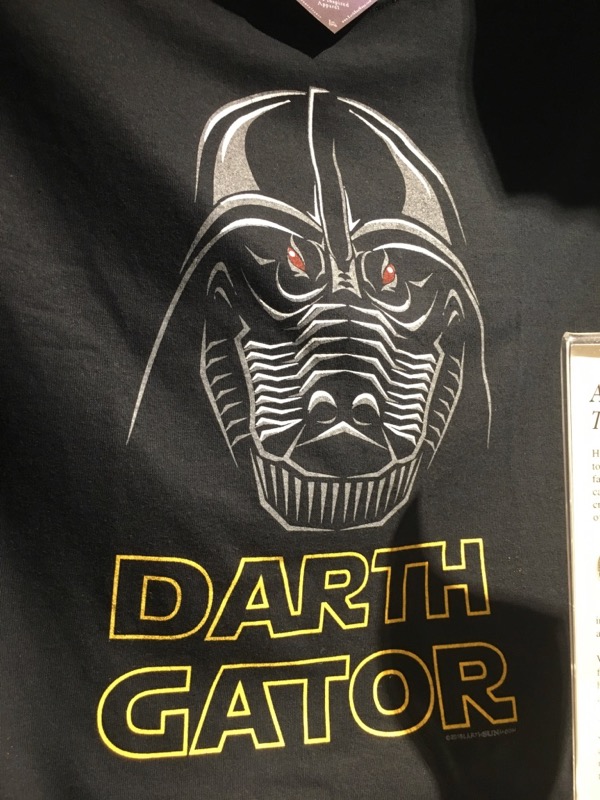
This is a gallery in a swamp in Florida, so they’re entitled to a little swap humor in their gift shop. Perhaps I should’ve bought this T-shirt:
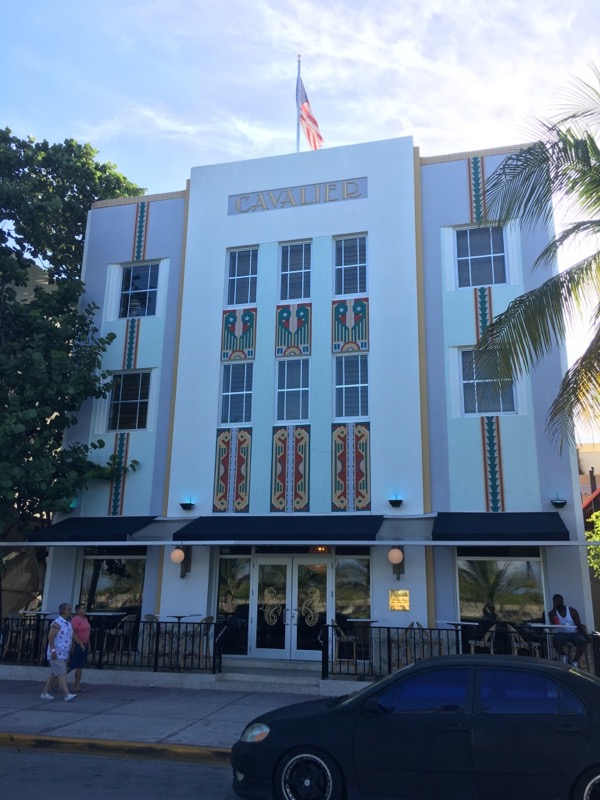
The Tamiami trail evaporated into Miami’s suburbs, and soon after that, we were on the bridge to Miami Beach, where we arrived at our hotel, the Cavalier:
The Cavalier is one of the art deco buildings on Miami’s South Beach, and it’s gorgeous not only on the outside, but on the inside as well. Here’s its lobby…
…and here are a couple of shots of our room:
The Cavalier doesn’t have its own parking, so we had to put the car in a lot a couple of blocks away, which gave us a chance to quickly explore the neighborhood…
…but we couldn’t do it for long, because we had a dinner appointment.
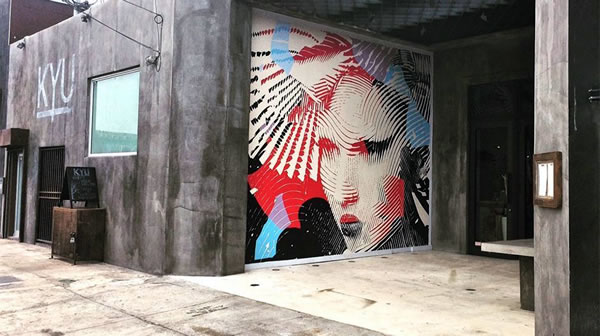
We caught up with our local friends Bob and JR for dinner at the “wood fired, Asian inspired” restaurant KYU in Miami’s arts/hipster district, Wynwood.
KYU is one of the hottest restaurants in Miami; Miami New Times has said that it’s quite tricky to get a reservation between 7:00 p.m. and 9:30 p.m. at the place, no matter what day it is. Luckily for us, Bob and JR are pretty well-connected, and landed a table for the four of us at 7:15 on a Saturday night.
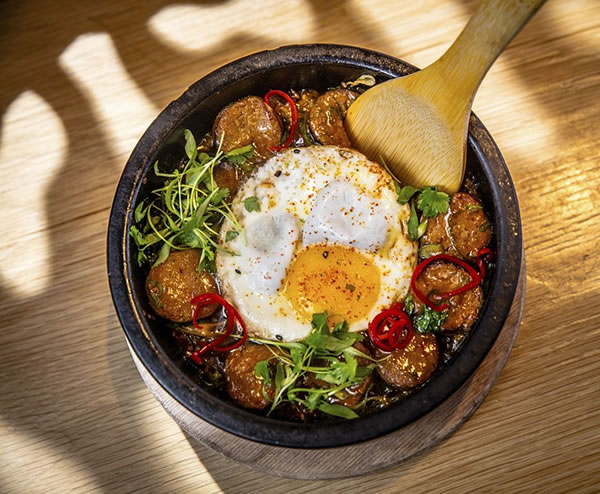
KYU gets its name from both the English word barbecue and its Japanese equivalent, yakuniku (it literally means “meat on the grill”). They have a lot of great food here — we ordered plenty and shared it family-style — but what I was interested in was the Thai fried rice. Here’s Miami New Times’ description:
A signature dish at Kyu is Thai fried rice, which pairs well with any of the barbecued meats (duck, brisket, baby-back ribs, and short ribs). Lewis didn’t want to fry the rice in a wok, so he took a cue from the Korean favorite bibimbap and decided to prepare it in a stone pot — then have all the ingredients mixed tableside. The result is crispy and crunchy rice with a lovely element of creaminess. Guests can enhance the dish with king crab or pork sausage, though the latter was devoid of any interesting flavor.
We had the king crab version, and it was amazing.
If you want to know how good the food at KYU is, take a look at these happy diners’ faces: