
Author: Joey deVilla

Continuing the Star Wars furniture theme (see my earlier posts about the TIE fighter desk and AT-AT bookcase), here’s a Darth Vader desk available for pickup from Riverview that can be yours for $20. See the Facebook marketplace page for details.

Take a look at this scene from an outdoor concert that took place Saturday night, and note what the musicians from the alt-folk-roots-rock band Have Gun Will Travel are wearing. From left to right, one guitarist is wearing a leather jacket and hoodie, the other guitarist is wearing a jean jacket, and the bassist is wearing a flannel shirt (a.k.a. “Kenora Dinner Jacket”).
The temperature was about 10° C, which is 50° in Herr Doktor von Fahrenheit’s old-timey system for measuring phlogiston in the atmos-sphere. By Tampa standards, this is downright frigid. By Canadian standards, it’s would be light jacket weather, except for the fact that “It’s a wet cold!”. The humidity for which Florida is known, combined with that evening’s breeze, made it feel considerably chillier, even for me.
Here’s another photo of the concert from farther back.
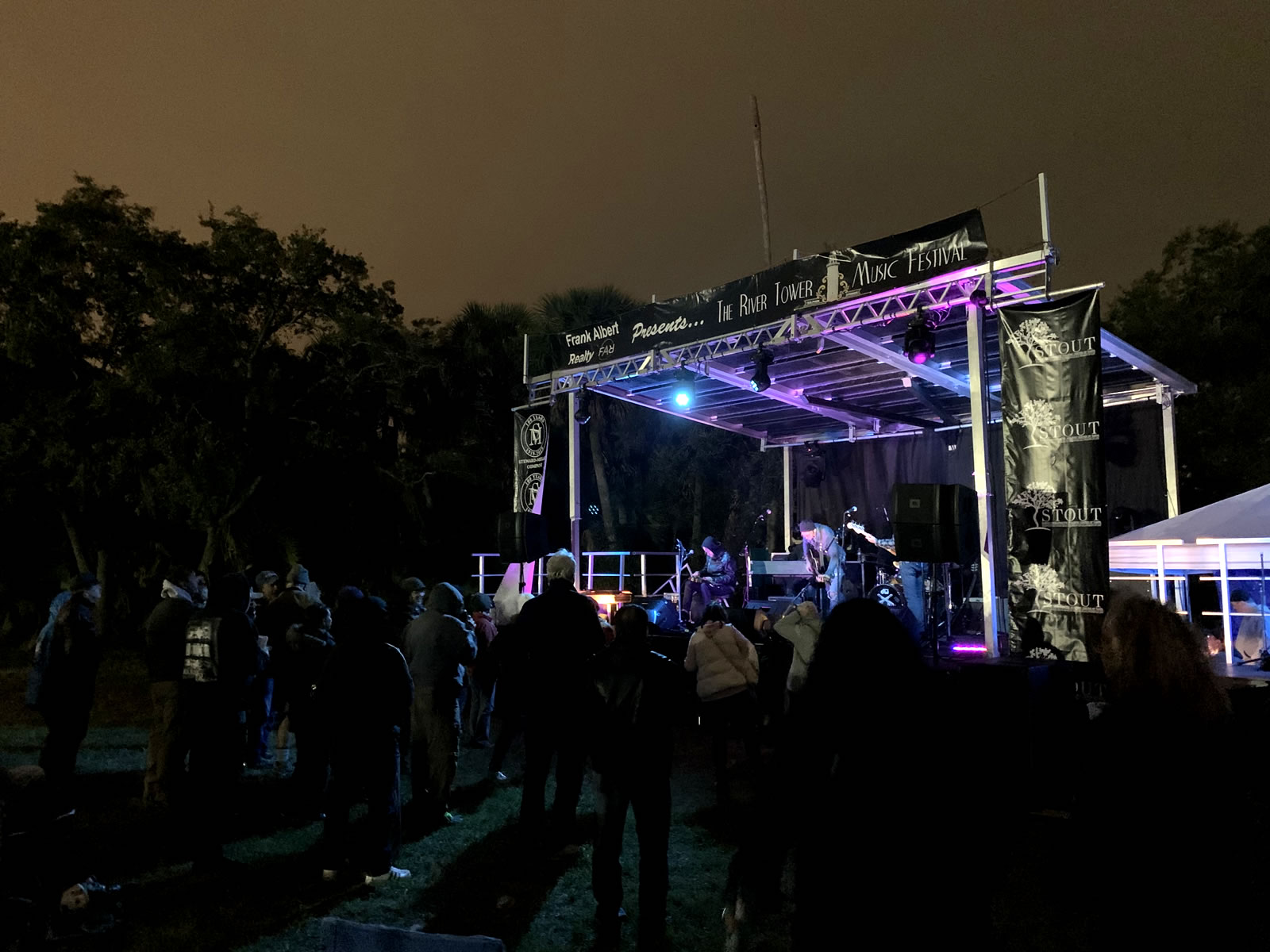
What also added to the “Toronto in the fall” feeling included:
- Everyone in the audience bundled up in different ways: winter coats, flannel, blankets, and those baja hoodie things that people used to call “drug rugs”,
- a conversation with Chris, a local who’d just come from a hockey game and who was still wearing his hockey jersey and describing Tampa Bay Lightning’s loss to the Winnipeg Jets, and
- the park’s complete lack of palm trees or other sub-tropical flora. If I didn’t know any better, I’d swear I was at Sandbanks Provincial Park in Ontario, and nowhere near Florida.

The event was a concert for the Sulphur Springs River Tower Festival, whose goal was to raise funds to help restore this structure:

It’s the Sulphur Springs Water Tower, located in Sulphur Springs, a historic district of Tampa that’s just north of my neighborhood, Seminole Heights.
Here’s a drone’s-eye view of the tower:
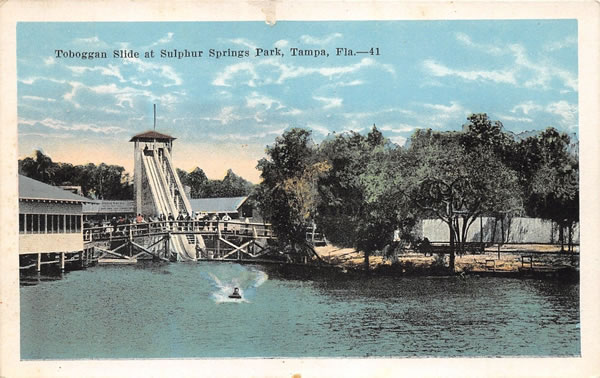
Back in the 1920s, Sulphur Springs was seven miles north of what was considered to the city of Tampa, and it was an amusement park. People traveled there by trolley to enjoy the spring and pool, do some canoeing on the Hillsborough River, and see the alligator farm “with thousands of live alligators on display.” It was the subject of many a postcard:

The tower was built in 1927 to supply water pressure to the nearby Sulphur Springs Hotel and Apartments (pictured below)…
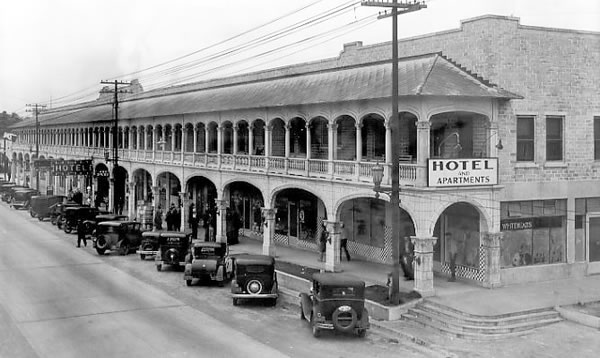
…as well as Florida’s first shopping mall, Mave’s Arcade:
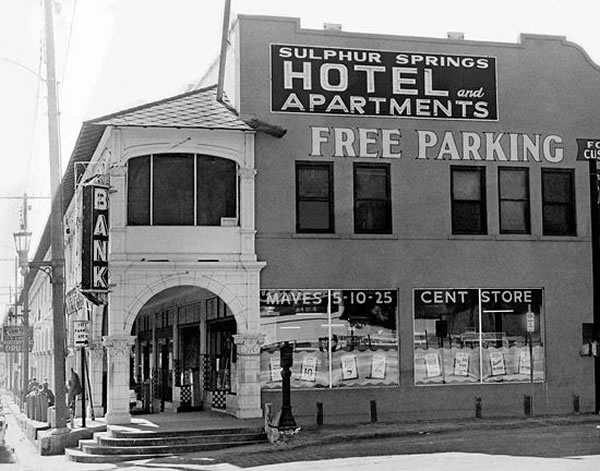
In 1933, a break in the Hillsborough River dam caused a flood that destroyed the arcade. The park later became home to the Tower Drive-In Theater from 1952 to 1985, when the city condemned the site. Abandoned, the tower fell into disrepair and became a graffiti target. The city purchased the tower in 2005, installed lights to illuminate the tower, and since then have done nothing.

Sulphur Springs Tower is a Tampa icon and landmark. I navigate by it whenever I drive down I-275 or bike around the neighborhood. You might think it’s an imitation of San Francisco’s Coit Tower, but it predates Coit, which was in 1933, a good six years and one stock market crash later. It’s been 30 years since the Tower’s been given any love, and it’s long overdue for some.
Here are some news items about the tower and the festival:
- ABC Action News Tampa Bay: Tampa’s iconic Sulphur Springs Water Tower might get a makeover from a preservation group
- WTSP: Save the Sulphur Springs river tower
- WUSF: Sulphur Springs Raising Money To Save Its Water Tower
- WTSP: River Tower Festival creates fun and funds for restoration project
My thanks to Tom Leber for the tickets! I’d also be happy to throw a couple of bucks towards restoring the tower.

Are you kicking yourself over missing last week’s deal on a TIE fighter desk? You can now make up for it by buying this Pottery Barn bookcase shaped like an AT-AT (All Terrain Armored Transport, a.k.a. “Imperial Walker”)!
The seller, who’s based in Largo, says they bought it for $1500 and are selling it for $450 OBO. Find out more here.

Gasoline seems more like a Festivus thing, particularly for the Airing of Grievances.
Categories
The truth about steampunk

McKiosks are popping up in McDonald’s everywhere, but they don’t accept cash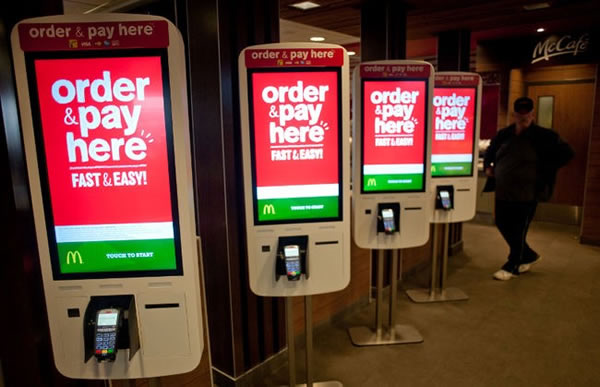
The kiosks are part of renovations that McDonald’s has been pushing stores to adopt, with the lion’s share of the costs being paid by the franchisees. Business Insider reports that many restaurant owners have had to shell out as much as $750,000 per store for these upgrades.
Given that they make a considerable portion of McDonald’s target markets, the “unbanked” — people without a bank account or debit or credit card — account for about 6.5% of U.S. households. That’s 8.4 million people.
Many businesses are going cashless — here are the pros and cons
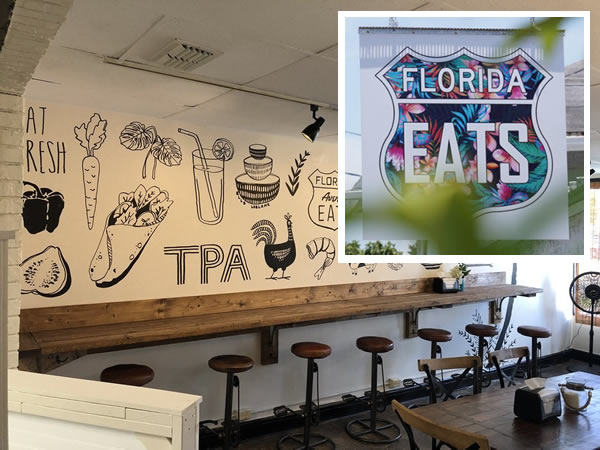
It’s not just big businesses that are going cashless. Even small mom-and-pop and hipster establishments (including Florida Eats, which recently opened on my neighborhood — and then closed soon after, despite being popular) are no longer accepting cash.
There are a number of reasons for going cashless:
- People buy more when paying with a card. Given the number of people who say they’re not “math people”, the abstract nature of paying with a card, versus the more concrete nature of handing over bills to a cashier, means that the amount paid seems less “real”.
- It makes accounting easier. If you’ve ever worked at a cash register, you know the pain of dealing with the amount in the cash drawer not lining up with the amount shown on its printout. Going cashless eliminates this problem: every transaction is properly accounted for.
- It’s convenient for both payer and payee. They’re no counting bills or change. Retailers report that it speeds up transactions, which increases throughput (the number of transactions you can do in a given amount of time).
- Cash makes you a target. Having to deposit a large amount of hard-to-trace currency at the end of each day is an opportunity for criminals. There are also risks in letting your employees deal with cash, especially in larger amounts.
There are downsides to going cashless:
- You’re going to pay credit card fees. These can be as high as 4%. Worse still is the fact that it doesn’t cost the banks that much to process credit cards — they’re just charging that rate because they can.
- You’ll lose some customers. Remember that 6.5% of people in the U.S. are “unbanked”, and if they make a significant portion of your customers and you don’t take cash, they’ll take their money elsewhere. Even among people with bank accounts, there are people who use cash for reasons such as privacy (which I’ll cover in a moment) or as a money management technique (one example: finance advisor Dave Ramsey’s envelope system).
- When the system goes down, how will you collect money? There are workarounds, and all of them are a pain.
Why I pay for fast food with cash: Data mining

I’m not a regular fast food customer, but there are times when it’s unavoidable. When that happens I pay in cash only, and it’s for an increasingly important reason: so that insurance companies can’t find out.
Companies are increasing their reliance on data mining for all sorts of things (that’s why I’ve been sharpening my Python and Jupyter Notebooks skills), including reducing risk. Insurance companies, whose entire business model is based on betting when you’ll die or get robbed, are gathering as much data about you as they can, which includes your credit card purchase history. That’s why any fast food purchase I make is done with cash.
I got the idea from Kevin Pledge of Toronto-based Insight Data Solutions:
Insurers’ interest in data mining will only grow, says Kevin Pledge, the boss of Insight Decision Solutions, an underwriting-technology consultancy based near Toronto... Insurance firms will also analyse grocery purchases for clues about policyholders, he predicts. But that raises some sticky questions about privacy. Mr Pledge himself has begun to forgo his supermarket loyalty-card discount on junk food and pay for his burgers in cash. Promising as data mining is, much will depend on how regulators, and consumers, react.
I’m not so worried about my grocery purchases — we cook, so we tend to buy ingredients rather than pre-packaged food, and we don’t buy much junk food. I do have a gym membership (and I actually go at least a couple of times a week) but I’ve been toying with the idea of getting a subscription to a fitness magazine, if only to improve my insurance risk profile.