If you live in the Tampa Bay area, which has been my home for the past dozen years, you already know we’re a weird, beautiful, heat-soaked paradise of chicken-walking Ybor streets, Cuban sandwiches, unapologetic swagger, and no small amount of Florida weirdness. Also, it’s the long-time home of the reason I’m here: Anitra!
But if you want to understand why this town exists at all, grab yourself the largest cafe con leche you can get your mitts on and watch (or listen to) Paul McAllister’s excellent 40-minute deep-dive video, The Most Impossible Rise of a City Ever: Tampa, Florida.
It is a glorious love letter to the absolute absurdity of Tampa history.
Here’s the TL;DW summary of how a mosquito-infested swamp went from a ghost town to the center of the universe.
In 1869, after surviving Seminole Wars, yellow fever outbreaks, hurricanes, and the Civil War blockade, the 180-ish residents of Tampa looked around at their bankrupt village and did something almost unheard of in American history: they voted to un-incorporate and dissolve their own government.
By 1880, the U.S. Census counted a whopping 720 people living here. No railroad, no major industry, and yellow fever so bad that ships refused to dock. Tampa was a dying backwater on a bay nobody wanted.
Within a two-year window, three completely unrelated forces crashed into our sandy shores and sparked a 670% population boom in a single decade:
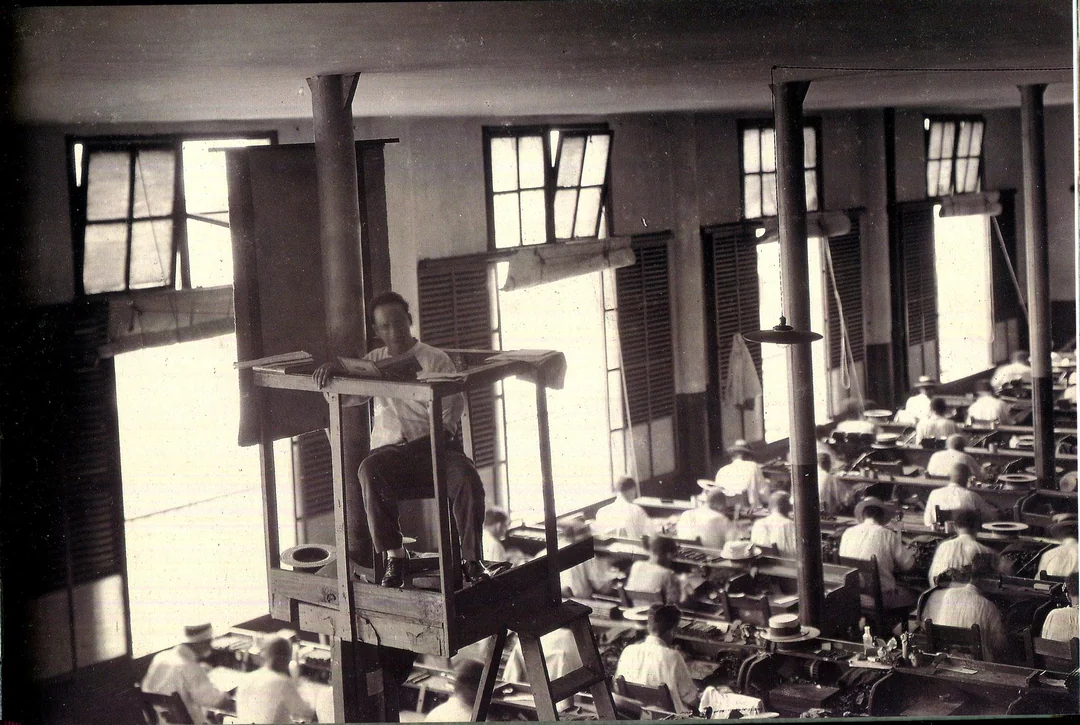
My favorite detail in the video is the story of the lectors. Ybor’s cigar rollers each chipped in 25 cents a week to hire a reader to stand on a raised platform in the middle of the factory floor.
While 400 workers rolled cigars in silence, the lector read aloud: newspaper headlines in the morning, and Victor Hugo (Les Misérables was a massive hit), Alexandre Dumas, and political philosophy in the afternoon. Because of this, Tampa’s immigrant cigar workers were among the most educated, politically engaged laborers in the entire country.
Think about it: If you listen to podcasts while working, you’re continuing a great Tampa tradition!
The video says that you needed stage presence and a great voice to be a lector. It sounds like the sort of job I would’ve taken had I lived here back then.
The video runs through the sheer gauntlet of Tampa “firsts” and flexes:
Tampa didn’t grow because of some master corporate strategic plan. It grew because a Connecticut rail baron, a exiled Cuban cigar mogul, prehistoric fossil beds, and thousands of passionate immigrants all converged on this bay at the exact same time.
Today, while interstate highways and urban renewal tore down pieces of our history in the ’60s, the spirit is still here. You can still see the silver minarets catching the morning light over the Hillsborough River, and over on 16th Street, J.C. Newman still rolls cigars by hand—with the lector platform proudly restored.
Watch the video, get your local pride on, and remember: we’re living in a city built on pure, unadulterated Florida audacity.
It’s Sunday, and it’s time for another “picdump!” Here are the memes, pictures, and cartoons…
It’s Sunday, and it’s time for another “picdump!” Here are the memes, pictures, and cartoons…
It’s Sunday, and it’s time for another “picdump!” Here are 500+ memes, pictures, and cartoons…
Need context? The Star Trek: Deep Space Nine reference The news
“Bakery”, “road trip”, and “tradition” are often associated with certain geographies in literature and tourism…
The teaser image for this article in the British online newspaper The Independent about the U.S.S.…