Malcolm Gladwell — who’s been described as “Joe Rogan for people who read The New Yorker” — is taking a lot of (richly deserved) dunking for his “Do what I say, not what I do” take on working from home.
In the podcast series “The Diary of a CEO”, Gladwell told host Steven Bartlett that office workers should stop “sitting in their pyjamas” and return to the office and gather in one place in order to have a sense of meaning and belonging:
“It’s very hard to feel necessary when you’re physically disconnected. As we face the battle that all organizations are facing now in getting people back into the office, it’s really hard to explain this core psychological truth, which is we want you to have a feeling of belonging and to feel necessary.
And we want you to join our team and if you’re not here it’s really hard to do that.
It’s not in your best interest to work at home. I know it’s a hassle to come into the office, but if you’re just sitting in your pyjamas in your bedroom, is that the work-life you want to live? Don’t you want to feel part of something?
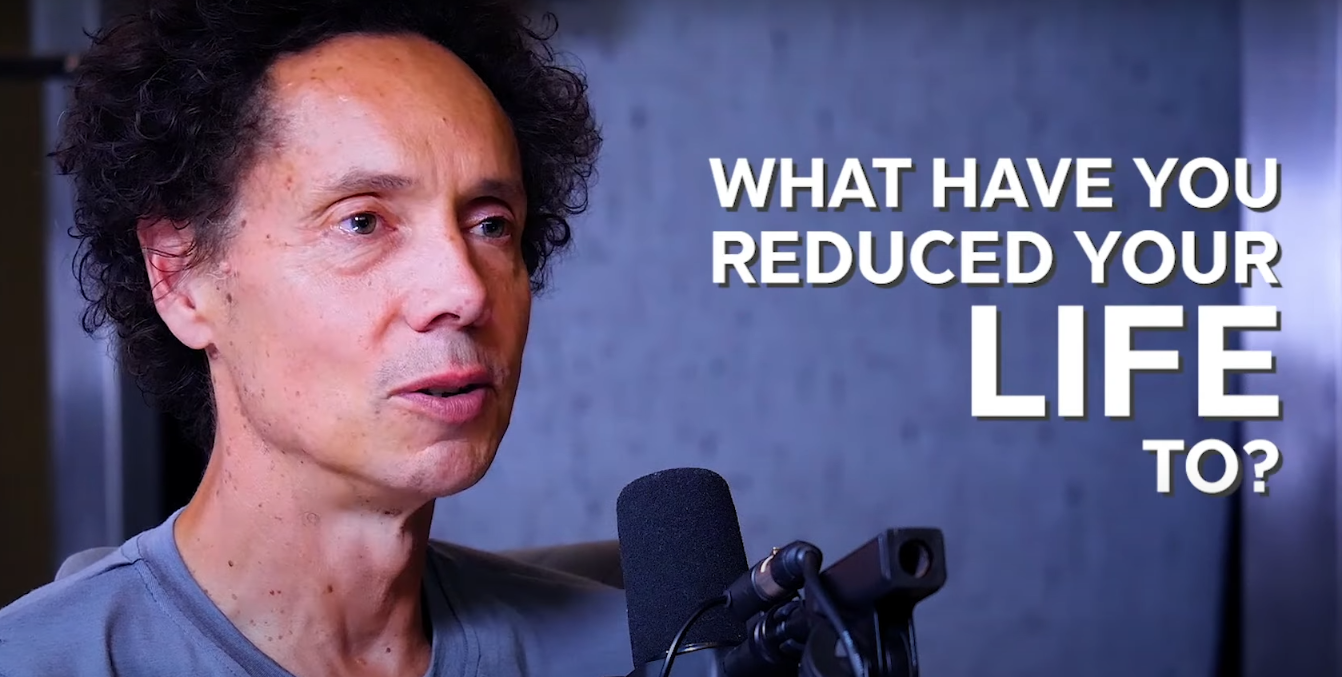
I’m really getting very frustrated with the inability of people in positions of leadership to explain this effectively to their employees. If we don’t feel like we’re part of something important, what’s the point? If it’s just a paycheck, then it’s like what have you reduced your life to?”
“The Diary of a CEO” seems aimed at the sort of striver that watches Alux.com videos (home of such classics as “15 Things Poor People Do That The Rich Don’t”) and Gary “Capitalism’s youth pastor” Vee but has an a longer attention span than a goldfish. Gladwell’s schtick — long on storytelling but short on analysis — is perfect for this podcast:
Needless to say, the internet was having none of Gladwell’s pampered nonsense. The dunking was swift, harsh, and high-larious.
For your enjoyment, I’ve gathering some of the best tweets on the topic and spread them throughout this article. Here’s the first set:
First of all, the “Diary of a CEO” podcast, where Gladwell gave his terrible take, isn’t recorded at a traditional dedicated workspace, but in the host’s home.
Take a look at the set where “The Diary of a CEO” interviews take place. It’s not a recording studio, but a dining room in a house or condominium.
It’s a rather upscale house or condo with more product placement than you’d encounter in real life, but a house or condo nonetheless. It’s most decidedly not the office environment that Gladwell insists we return to.
Let’s enjoy more tweets about Gladwell:
There’s also the fact that Gladwell doesn’t go to an office.
Gladwell doesn’t go to an office because he doesn’t have to. He had a desk at The New Yorker, but you weren’t likely to find him there:
If you go back into The Guardian’s archives, you’ll find a piece from March 2005 titled My work space, in which he makes it very clear that office work isn’t for him:
“He’s away from his desk” is something that’s now true of New Yorker writer Malcolm Gladwell. When he wrote his bestseller The Tipping Point, he remained shackled to his desk, mainly from habit. But while writing his new book, Blink, he unleashed his lust for wandering, in New York, Rome and London.
Malcolm says: “I hate desks. Desks are now banished.” He starts the day writing at home, but this is always done from his sofa, using his laptop. “I work better when I’m comfortable,” he says. After a stint on the sofa, it’s out into the world.
“I refer to my writing as ‘rotating’. I always say ‘I’m going to rotate’ because I have a series of spots that I rotate.”
The article goes on to list Gladwell’s decidedly non-office workspaces:
He also said that he’d love to work at the Monmouth Coffee Company in London’s Covent Garden, which he describes as “warm and idiosyncratic.” And hey — having been there and done some quick coding and developer relations work there — can attest that it’s a decent place to get work done. But it’s not an office.
The Guardian article’s final paragraph tells us about one of the biggest benefits that Gladwell gets from ditching his office desk: he enjoys his job more!
By leaving his desk behind, Malcolm says that he’s been able to disassociate writing from work. “It seems like a fun activity now. Kind of casual. It’s been more seamlessly integrated into my life and that’s made it much more pleasurable. I never want to be at a desk again.”
Simply put: Office job for thee, but not for me!
And now, more dunking:
Even when he shows up at an office, it’s a much better setup than most of us have.
His company, Pushkin Industries Inc., is one of those companies whose name evokes images of “blue collar” and heavy lifting name, but which actually specializes in the kind of white collar work where people have a nervous breakdown when the Nespresso machine is broken (namely, podcasting and audiobooks).
Pushkin lists hybrid on-premises/remote jobs at the time of writing. While Pushkin’s main office is in Manhattan’s Union Square and the job description says that they’ll eventually get everyone back to on-premises work, if Gladwell shows up at an office, it’s Pushkin’s satellite office in Hudson, the small upstate town where he lives:
So when he does show up at the office, it’s the office that’s conveniently close to home.
Because there’s never enough: MORE DUNKING!
…in closing, here’s the opening theme from the ’90s TV show from which this post gets its title. Enjoy!
I’m from a culture that mixes sweet and savory all the time (examples include marinades…
First, a little background... There’s a guy who lives a short bike ride from our…
It’s Sunday, and it’s time for another “picdump!” Here are the memes, pictures, and cartoons…
It’s Sunday, and it’s time for another “picdump!” Here are the memes, pictures, and cartoons…
It’s Sunday, and it’s time for another “picdump!” Here are 500+ memes, pictures, and cartoons…
Need context? The Star Trek: Deep Space Nine reference The news

View Comments
Gladwell tries to be a contrarian, but he doesn't seem to be able to pull a coherent argument together. He often gets his facts wrong and contradicts himself, sometimes within a single paragraph. As a thinker, he's about as superficial as they come.
Let's hope he's burned his credibility with the last few of the credulous with this latest idiocy. This won't stop him from being published. He clearly has friends in the industry, so he'll always get good advances and lots of publicity, but if fewer people take him seriously, he might do less harm.